The architectural remnants of soft power between Moscow and Berlin are officially gone. Russia announced the immediate closure of all Goethe-Institut cultural centers across Moscow, Saint Petersburg, and Yekaterinburg, responding directly to the German government’s decision to shutter the Russian House in Berlin and expel a regional consulate. This retaliatory diplomatic breakdown traces back to a thwarted explosives-laden drone discovered on August 4 near a Ukrainian-linked transport aircraft at the Leipzig/Halle freight hub.
Berlin pinned the infrastructure sabotage attempt squarely on Kremlin operatives, citing technical signatures and detonator configurations matching prior hybrid warfare campaigns. Moscow rejected the findings as a staged fabrication intended to deflect from domestic political pressure. Yet, the elimination of cultural channels marks a permanent shift. Intelligence analysts and veteran foreign service observers recognize this tit-for-tat expulsion as the final severing of institutional safety valves that survived decades of prior geopolitical strain.
The Mechanics of Shadow Warfare
Modern infrastructure attacks rarely feature explicit declarations of war. Instead, intelligence agencies deploy deniable disruptions designed to degrade logistical backbones while keeping hostilities below the threshold of a direct NATO-Russia military response. Leipzig/Halle Airport functions as an essential logistics artery for international freight, particularly the heavy cargo streams supporting Ukraine's defense apparatus.
Placing an explosive drone payload near a Ukrainian-designated aircraft on German soil represents an operational escalation from cyber intrusions or disinformation campaigns. German interior security officials noted that the structural components recovered from the device exhibited manufacturing traits identical to hardware recovered from previous eastern European sabotage operations.
For years, security planners warned that Europe's open societies provided an asymmetric advantage to foreign intelligence assets. Open transit networks, commercial freight hubs, and accessible municipal infrastructure create infinite surfaces for covert interference. When Berlin responded by shuttering the Russian consulate in Bonn alongside the capital's cultural bureau, the administration signaled that the era of treating hybrid attacks as mere law enforcement anomalies has expired.
The Total Collapse of Institutional Bridges
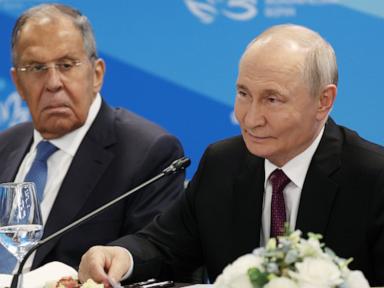
Cultural outposts like the Goethe-Institut and the Russian House historically functioned as ideological weather vanes. Even during periods of acute military tension, these institutions remained open to preserve communication channels between civil societies. Sergei Lavrov’s announcement at the Eastern Economic Forum in Vladivostok ended that exception. Asserting that any alternative response would betray a lack of national self-respect, Moscow targeted the very assets designed to project German language and arts into Russia since the early 1990s.
This institutional erasure carries long-term consequences. Cultural diplomacy operates on generational timelines. Once language institutes are evicted, archival collections seized, and academic exchange programs terminated, rebuilding that mutual comprehension requires decades of patient political normalization. By extinguishing these footprints, both capitals have institutionalized a permanent state of mutual estrangement.
European Union foreign ministers meeting to weigh broader economic countermeasures now face a fractured continent where traditional diplomatic mediation has no operational space left to occupy. As visa restrictions tighten, maritime shadow fleets face intensified enforcement, and remaining consular outposts lock their doors, the threshold between active deterrence and unmitigated friction continues to thin.