When state authorities find themselves forced to deploy military units onto domestic asphalt, the contract between civilian governance and public order has already frayed past its breaking point.
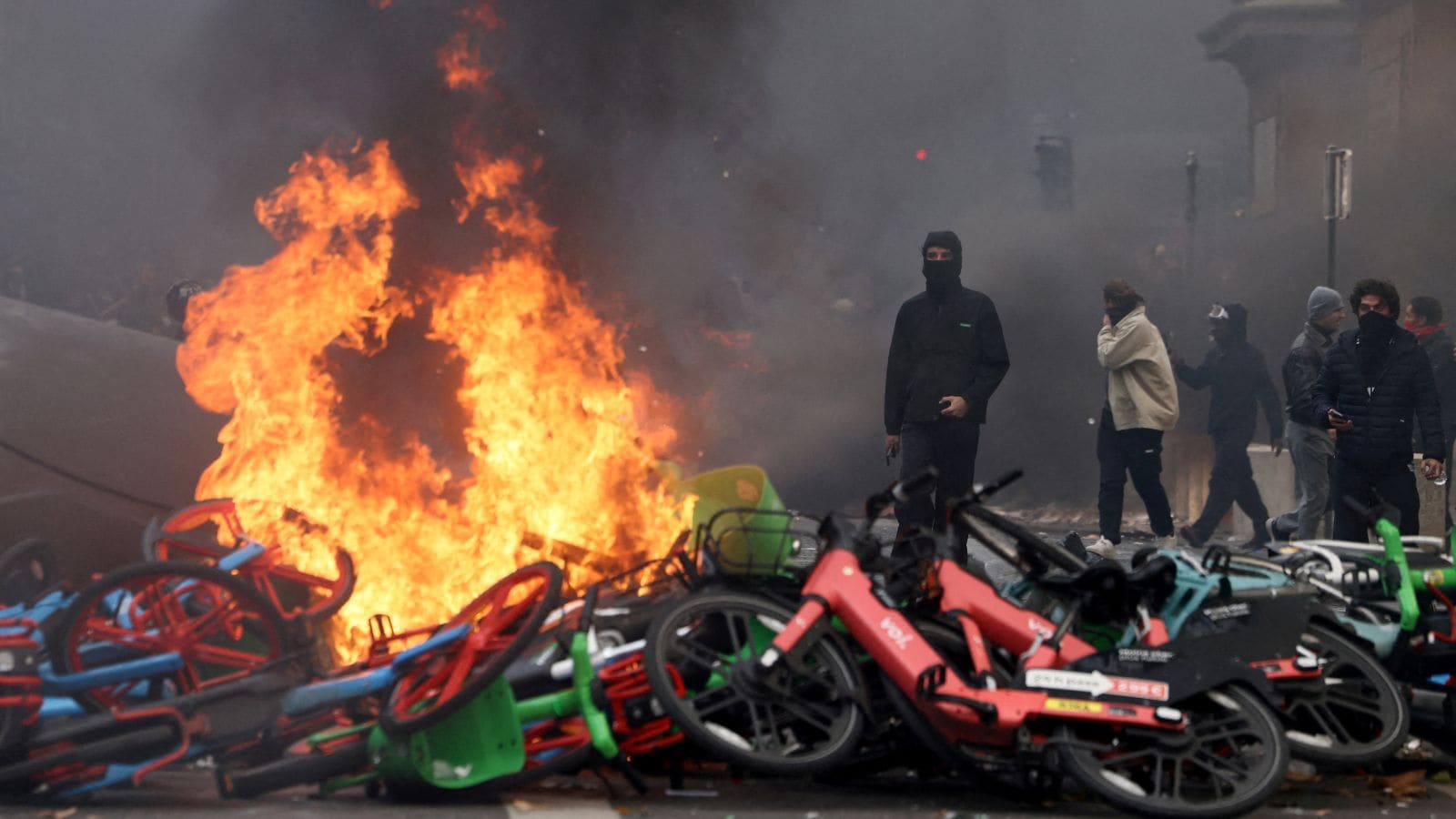
Recent operational failures across major metropolitan centers in Europe have exposed deep structural vulnerabilities in how modern states handle rapid civil breakdown. This is not merely an issue of miscalculated police response or underestimated crowds. It represents a systemic failure of intelligence gathering, operational agility, and institutional foresight. When weekend demonstrations escalate into widespread looting, arson, and direct confrontations with law enforcement, the knee-jerk deployment of military personnel serves as a visible bandage over a chronic hemorrhage.
Governments often frame troop deployment as an assertion of strength. In reality, it is an admission of exhaustion.
The Anatomy of an Intelligence Breakdown
Security analysts looking into recent urban disruptions point to a recurring blind spot within predictive policing models. State apparatuses rely heavily on digital surveillance and algorithmic threat assessment. However, these systems struggle to interpret fluid, decentralized movements organized through encrypted messaging channels.
When hundreds of disparate actors converge on a specific urban node within minutes, traditional command structures freeze. By the time tactical units receive authorization to mobilize, the operational environment has shifted completely.
Consider a hypothetical scenario where an authorized protest gathers in a central plaza. Within an hour, disaffected splinter groups break away, exploiting narrow side streets to bypass static police cordons. Local precinct commanders find themselves outmatched not by superior numbers, but by hyper-mobile anonymity. Standard riot control tactics—designed for static defense and linear crowd dispersion—become obsolete against fluid urban guerrilla tactics.
The state’s reliance on rigid bureaucratic chains of command compounds the issue. While field officers require immediate tactical autonomy, authorization for higher-level intervention often sits on the desk of civilian authorities hesitant to sign off on heavy-handed optics. This hesitation creates a vacuum. In that vacuum, violence spreads unchecked.
The Myth of the Quick Fix
Deploying soldiers to secure national landmarks or patrol transit hubs relieves immediate pressure on municipal police forces, but it introduces a hazardous operational mismatch. Regular military forces are trained for state-on-state combat, counter-insurgency, or high-intensity stabilization missions abroad. They are fundamentally unsuited for domestic crowd control in a democratic society.
A soldier's primary directive involves neutralizing hostile threats with decisive force. A gendarme or police officer operates under a legal framework emphasizing graduated response, de-escalation, and civil rights preservation. Blurring these lines degrades public trust. When citizens see armored vehicles parked outside municipal buildings, the psychological atmosphere shifts from civic life to a state of siege.
Furthermore, prolonged deployment cycles drain military readiness. Troops pulled from specialized training exercises to stand guard at railway stations or government ministries experience morale fatigue. This misallocation of resources weakens national defense posture while failing to address the root socioeconomic grievances driving civil unrest.
Structural Decay and the Failure of Prevention
Security failures rarely originate on the weekend they occur. They are the cumulative result of years of institutional neglect in peripheral urban zones. When public infrastructure decays, economic mobility stalls, and trust in public institutions hits rock bottom, urban spaces become powder kegs.
Governments frequently confuse symptom management with problem resolution. Pouring additional security forces into a volatile neighborhood treats the smoke while ignoring the electrical fire behind the walls. True stability requires sustained investment in local community mediation, educational reform, and judicial transparency—measures that yield no immediate political dividends.
As long as political leaders prioritize short-term containment over structural reform, urban unrest will remain a recurring cycle. The deployment of troops is never a solution. It is simply the final marker before a complete breakdown of the civic contract.