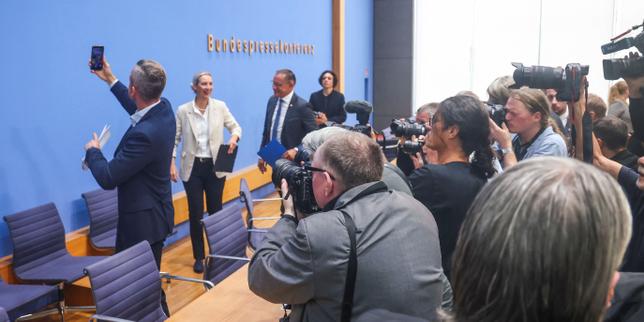
The political architecture of Western Europe is fracturing under an accumulating weight of voter disenfranchisement and structural economic stagnation. When the nationalist Alternative for Germany secured a commanding 43.8 percent of the vote in the eastern state of Saxony-Anhalt, the shockwaves extended far beyond the regional parliament in Magdeburg. Across the Rhine, French political establishments watched the returns with acute anxiety. The electoral earthquake in eastern Germany serves as a terrifying preview for French leaders preparing for an unpredictable presidential contest.
Decades of center-ground governance have created a profound vacuum. Traditional parties in both France and Germany assumed their institutional firewalls would permanently contain the populist surge. That assumption is now dead. The Chatham House analysis highlights how the political appeal of insurgent nationalist platforms has shifted from defensive grievance to aggressive mobilization. Voters are no longer casting protest ballots simply to voice annoyance; they are systematically dismantling the old consensus because mainstream economic and social policies failed to protect them from inflation, industrial decline, and social fragmentation. Meanwhile, you can read other events here: Stop Blaming Climate Finance For The Himalayas Disaster And Look At The Engineering Arrogance.
The Mechanics of Normalization
How did a political force once treated as a toxic fringe move to the threshold of regional governance? The transformation was not accidental. Mainstream conservatives and center-left coalitions routinely misdiagnosed the appeal of radical platforms, dismissing every electoral advance as an ephemeral flash in the pan. Meanwhile, the Indian Express report details how successive governments in Berlin struggled with sluggish economic growth and acute polarization over migration.
By co-opting portions of nationalist rhetoric to stave off electoral losses, establishment parties inadvertently sanitized the very ideas they claimed to oppose. This dynamic is mapped extensively in reporting by outlets like The Guardian, which notes that the normalization of far-right policies by mainstream media and politicians has legitimized fringe perspectives into mainstream voting decisions. Voters realize that the institutional taboos protecting the political center are hollow when unemployment rises and public services degrade. To see the full picture, check out the excellent report by Reuters.
In France, the parallels are stark. As the Financial Times investigation points out, the Rassemblement National under Marine Le Pen sits comfortably atop opinion polls ahead of the national presidential showdown. French strategists recognize that what happened in Magdeburg can easily replicate itself in French municipalities and, eventually, at the Elysée Palace. The traditional cordon sanitaire is fraying because voters no longer care about the moral panics of the political elite.
The Breakdown of the Firewall
The immediate aftermath of the Saxony-Anhalt ballot exposed the paralysis gripping European Christian democracy. Chancellor Friedrich Merz’s center-right union suffered a catastrophic defeat, plummeting to 17.2 percent. For over two decades, the Christian Democrats governed the region without serious challenge. Now, they are relegated to a minor player in a landscape completely rewritten by populist momentum.
Despite capturing nearly 44 percent of the electorate, the victorious nationalist party fell just three seats short of an absolute majority in the 83-seat Landtag. This arithmetic creates a bitter paradox. The party commands a massive mandate from the public yet faces an entrenched alliance of minor parties scrambling to keep them from executive authority.
Political analysts interviewed by TIME magazine emphasize that maintaining this exclusion strategy becomes increasingly difficult when nearly half of a regional population votes for a single movement. Excluding a dominant political entity through complex multi-party coalitions alienates voters further, feeding a narrative that the system is rigged by distant bureaucrats who refuse to respect democratic outcomes.
The French Panic
In Paris, the reaction was immediate and visceral. French officials understand that the French presidential election is operating on borrowed time. The economic pressures fueling discontent in eastern Germany—high energy costs, deindustrialization, and public service strain—are identical to the grievances voiced on French picket lines and suburban housing estates.
When foreign leaders like Spanish Prime Minister Pedro Sánchez characterize the German result as an urgent continent-wide warning, they are speaking directly to Paris. The traditional center in France has relied on the argument that only they can prevent democratic collapse. Yet, as centrist economic policies fail to deliver tangible improvements for working-class families, that defensive argument loses its persuasive power.
The anxiety in Paris stems from the realization that political gravity cannot be defied indefinitely. When voters experience a permanent decline in their standard of living, institutional loyalty evaporates. The ideological boundary separating mainstream conservatism from radical nationalism is thinning into irrelevance. Every electoral cycle chips away at the institutional walls, leaving traditional parties exposed to an electorate that has stopped believing in empty promises of reform.
The structural decay is visible in every municipal council meeting and parliamentary vote. The political class continues to debate procedural rules and coalition formulas while the underlying social fabric frays beneath their feet. There are no clean bureaucratic fixes for a population that feels economically abandoned and culturally displaced. As the political calendar moves toward next year's decisive French ballot, the tremors from Saxony-Anhalt serve as a stark reminder that the old order is not merely being challenged; it is being systematically replaced