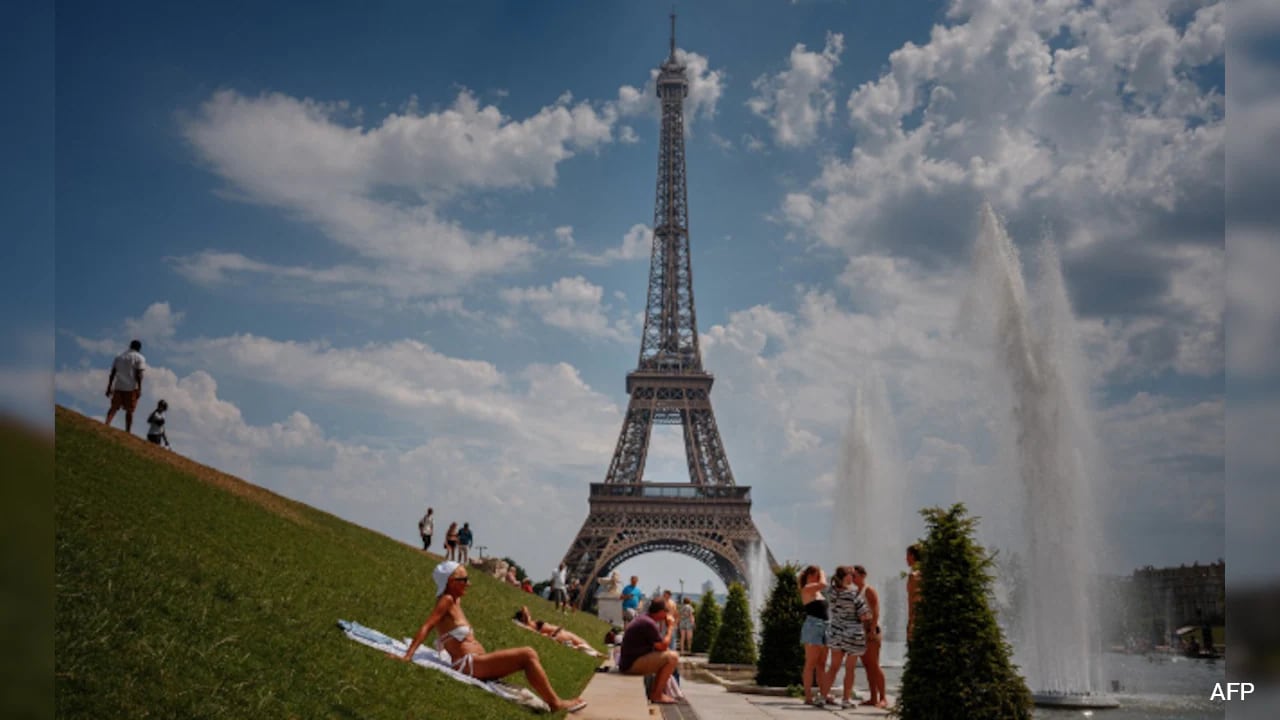
France has recorded approximately 1,000 excess deaths since June 24, 2026, driven by a record-breaking heatwave that shattered temperature markers across Western Europe. While public focus centers on climate models and melting infrastructure, the real crisis lies in a devastating combination of urban isolation and systemic medical strain. Data from Santé Publique France reveals that 85 percent of these fatalities occurred among citizens aged 65 and over, with a critical surge happening not in hospitals, but behind the closed doors of private urban apartments.
The crisis is expanding beyond France as the high-pressure weather system pushes eastward into Germany and Poland, leaving a trail of overwhelmed municipal services and exposed infrastructure gaps in its wake.
The Isolation Trap in the Capital Region
The sharpest increase in mortality occurred within the Île-de-France region, encompassing Paris and its surrounding suburbs. This concentrated spike highlights a structural vulnerability in modern European cities. It is the phenomenon of urban isolation.
Unlike the rural elderly who often belong to tighter community networks, aging city residents frequently live alone in multi-story brick or stone buildings. These structures absorb thermal energy throughout the day and radiate it inward at night. During this June 2026 heatwave, Paris hit a historic high of 40.3 degrees Celsius. At night, temperatures failed to drop significantly, denying the human body its vital window for thermal recovery.
When an older individual lives alone under these conditions, heat stroke and severe dehydration escalate rapidly. The transition from discomfort to cognitive disorientation occurs quietly. Because there is no one present to notice the decline, call an ambulance, or simply provide water, many succumb in silence. Public health data indicates that home fatalities spiked sharply during the peak heat days of Thursday and Friday, precisely when digital death certificates began to overwhelm regional tracking systems.
The True Mortality Toll Is Delayed
The published figure of 1,000 excess deaths is an underestimation. French health officials explicitly noted that these numbers are preliminary and unconsolidated, relying primarily on digital death registries that capture roughly 60 percent of national mortality in real-time.
The full scope of the tragedy will take weeks to surface. Historically, comprehensive mortality reporting from rural medical practices, specialized care facilities, and non-digitized municipal offices lags significantly behind urban centers. Furthermore, extreme heat acts as an accelerator for pre-existing conditions. A cardiovascular event or renal failure triggered by heat stress on a Thursday may not be coded as a heat death when the patient passes away a week later.
The Failure of Regional Infrastructures
The crisis has exposed deep structural vulnerabilities across French public services, ranging from emergency medical response to basic municipal logistics.
Mortuaries and Funeral Systems Collapse
By the end of the week, the sheer volume of fatalities pushed the Paris funeral infrastructure to its absolute limit. Representatives from the National Funeral Services Federation confirmed that both of the capital's primary municipal mortuaries reached maximum capacity by Thursday afternoon.
Families are currently being advised to transport deceased relatives to facilities far outside the Île-de-France perimeter. Local authorities are reviewing contingency protocols established during the peak of the pandemic, which include the deployment of temporary refrigerated storage units and the requisitioning of industrial buildings. This is not a simple logistical delay. It is a profound breakdown in civic dignity forced by a predictable seasonal event.
The 100 Million Euro Band-Aid
In response to mounting political pressure, the French government announced an emergency allocation of 100 million euros to equip public hospitals with air conditioning units, industrial fans, and localized cooling infrastructure.
While politically expedient, this spending reveals a deeper systemic failure. Decades of underfunding have left public hospital wards ill-equipped for predictable climate shifts. Health Minister Stéphanie Rist acknowledged that the medical impact of this heatwave will persist for weeks after the atmospheric temperatures drop. Heat stress creates a long tail of medical complications, particularly for individuals managing chronic respiratory and metabolic illnesses. Emergency rooms, already operating under structural deficits, are now facing an extended wave of post-heatwave admissions without permanent staffing increases.
Secondary Crises of the Extreme Heat
The physical impact of the atmospheric block extends far beyond the elderly population, creating secondary public safety crises that have caught regional authorities off guard.
- A Drowning Epidemic Among Youth: Driven by internal urban temperatures that turned apartments into ovens, younger populations flocked to unmonitored waterways. The Ministry of the Interior reported 74 drowning fatalities within a ten-day period, primarily involving individuals between 15 and 25 years old. Most occurred in rivers, industrial canals, and agricultural ponds where swimming is strictly prohibited and rescue services are nonexistent.
- Infrastructure Failure and Rail Disruption: The intense thermal energy has compromised physical infrastructure across the continent. As the heatwave progressed toward Germany, national rail operator Deutsche Bahn was forced to offer penalty-free cancellations for long-distance travel. Continuous solar exposure pushed track and overhead wire temperatures beyond safe operational thresholds, presenting immediate risks of track buckling and signaling failure.
- Nuclear Power Curtailments: To protect river ecosystems from thermal pollution, French authorities were forced to reduce power output or completely shut down multiple nuclear reactors. The cooling water discharged from these plants would have pushed river temperatures past ecological breaking points, forcing a choice between grid stability and environmental protection.
The Myth of the Unprecedented Event
Meteorologists point to an Omega block—a slow-moving, high-pressure atmospheric pattern that draws scorching air directly from the Sahara across the Mediterranean—as the immediate driver of the crisis.
Yet, calling this event unprecedented ignores twenty years of clear public health data. Ever since the historic 2003 European heatwave claimed over 15,000 lives in France alone, the structural vulnerability of the region’s housing stock and social care systems has been well documented.
The state's response has relied heavily on public awareness campaigns: color-coded weather alerts, automated phone calls to registered vulnerable citizens, and television spots advising people to drink water. This week proves that awareness campaigns are entirely insufficient when faced with structural poverty, systemic urban loneliness, and an aging population trapped in uncooled housing.
A 100 million euro injection into hospital budgets does nothing to fix a top-floor apartment in Paris that reaches 50 degrees Celsius under a zinc roof. It does nothing for a person with mobility issues who cannot access a public cooling center. Without a fundamental overhaul of urban building codes, mandatory cooling infrastructure in residential buildings, and a permanent reinvention of neighborhood social services, these 1,000 deaths will simply become the new baseline for a typical Western European summer.
The heatwave is now tracking toward Central Europe, with Germany and Poland preparing for temperatures expected to surpass 41 degrees Celsius. The script will likely play out in identical fashion there, proving that Europe’s true climate crisis is not the weather itself, but a persistent refusal to adapt the infrastructure of everyday life to a permanently altered planet.