A wave of high-profile business closures sweeping through downtown Edmonton has triggered an emergency response from local business groups, who warn that the city's commercial heart is reaching a breaking point. The Edmonton Downtown Revitalization Coalition, backed by the Edmonton Chamber of Commerce, is demanding immediate municipal action to stem a growing exodus of long-standing restaurants, bars, and retailers. While city officials point to multi-million-dollar vibrancy grants and long-term infrastructure investment, business owners describe a daily environment compromised by endless construction detours, declining foot traffic, surging overhead, and unresolved public safety issues.
The numbers signal a systemic crisis. According to data highlighted by the Edmonton Chamber of Commerce, the closure rate for downtown businesses currently doubles the opening rate. Iconic names like Khazana, an Indian dining fixture on 107 Street for nearly three decades, shuttered their doors after being encircled by simultaneous municipal infrastructure projects. Entertainment venue Greta Bar announced its exit, with co-founder Chris DeCock calling the situation a slow burn of accumulating friction rather than a single catastrophic failure. Other establishments, including Bündok, PlayWright, kb&co, and Kommune, have joined the list of exits.
The disaster unfolding in Edmonton’s core is not an act of nature. It is the predictable outcome of disconnected municipal policies colliding with changing post-pandemic consumer behavior.
The Exodus from O-day'min
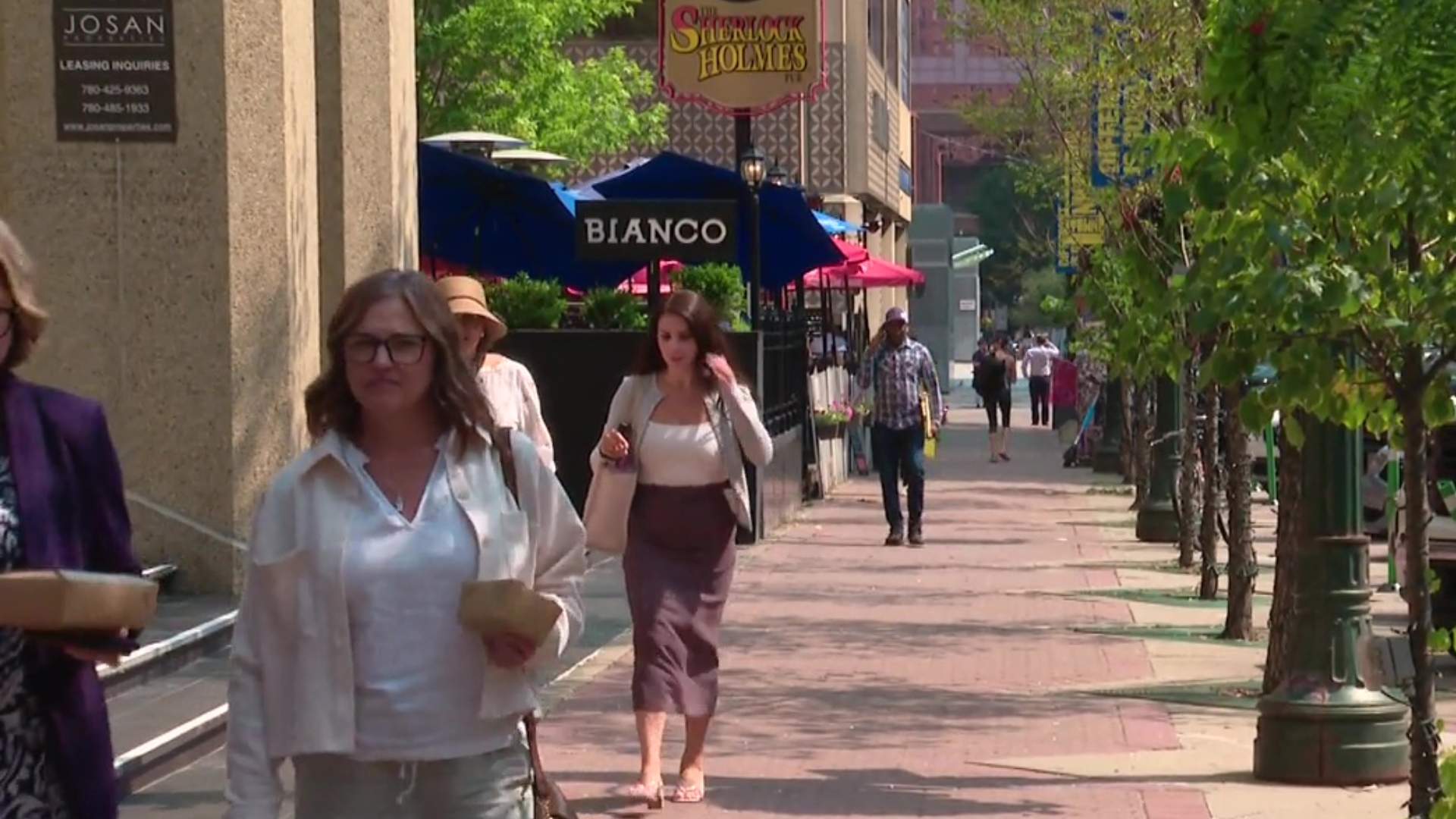
Walk down 102 Avenue or Jasper Avenue on a weekday afternoon, and the silence is stark. The streets surrounding City Hall and the Ice District—the ward officially named O-day'min—were supposed to be the jewel of Edmonton's modern urban density. Instead, a string of vacant storefronts and locked doors tells a story of mounting operational distress.
When Khazana closed, its former operations manager Maheik Bhasin pointed out that the restaurant spent its cash reserves surviving city infrastructure projects rather than building a future. Bhasin detailed how the simultaneous construction of O-day'min Park to the south, alongside bike lanes and the Valley Line West LRT to the north, effectively blocked vehicle access and turned pedestrian foot traffic into a confusing labyrinth of detours. Customers simply stopped trying.
Recent Summer Closures in Downtown Edmonton Core
-------------------------------------------------------------------------
Establishment    Location          Years Active   Primary Drivers
-------------------------------------------------------------------------
Khazana          107 Street        28 Years       LRT/Park Construction, Access Loss
Greta Bar        109 Street        7 Years        Foot Traffic Collapse, Access
Bündok           104 Street        8 Years        Rising Costs, Margin Pressure
PlayWright       99 Street         2 Years        Construction Barriers, Foot Traffic
Kommune          Jasper Avenue     Independent    Street Works, Operating Overhead
-------------------------------------------------------------------------
The story repeats across sectors. When Greta Bar announced its July departure, management noted that while their locations in Calgary, Vancouver, and Toronto remained viable, the Edmonton branch suffered from a prolonged loss of vitality. It was not a single property tax hike, a patio fee, or a parking rate increase that killed the business. It was the compounding burden of every single operational friction point added together year after year.
For smaller operators, margins evaporated even faster. Independent cafés and high-end dining spots rely heavily on predictable lunch hour crowds and steady weekend evening volume. When those revenue streams drop by 30 to 40 percent due to structural shifts, zero safety net remains.
The Infrastructure Paradox Turning Main Street into a Maze
Urban renewal requires construction. No civic leader or business owner disputes that infrastructure must be modernized. The fatal flaw in Edmonton's strategy lies in execution, sequencing, and contractor accountability.
For years, city planning administration has treated major capital works—such as the Valley Line West LRT, streetscape upgrades, bike network additions, and park development—as isolated projects. In practice, these projects overlap in time and space, creating choke points that isolate entire commercial blocks for months or even years.
   [ Suburban Core ] ------------> [ Ring Road Retail / Suburban Hubs ]
          |                                     ^
          | (Avoids Construction,               | (Captures Shifted
          |  Paid Parking, Transit Safety)      |  Consumer Dollars)
          v                                     |
   [ Downtown Core ] ---------------------------+
     - Multi-year LRT work
     - Fenced-off sidewalks
     - Reduced office occupancy
When street access vanishes, the burden falls entirely on the private merchant. While municipal policy asserts that local governments are not legally liable to compensate private businesses for construction impacts, this legal shield ignores economic realities. A city can legally win the right to disrupt a street for three years, but if every storefront along that street goes bankrupt before the ribbon-cutting ceremony, the completed project serves a graveyard.
The Edmonton Downtown Revitalization Coalition has put forward a direct stabilization framework. Their demands highlight basic operational fixes:
- Enforcing strict site maintenance, clean perimeter fencing, and daily trash removal around construction zones.
- Requiring clear, accessible, and well-lit pedestrian pathways to every front door during roadwork.
- Coordinating utility cuts and transit construction so the same block isn't torn up twice in consecutive seasons.
- Offering temporary relief on municipal friction, including free street parking and waived patio permit fees during heavy construction windows.
These proposals are not radical subsidies. They represent standard mitigation efforts to keep commercial ecosystems alive while public works take place.
Beyond Construction Shifting Habits and Empty Office Towers
Focusing entirely on jackhammers and orange cones misses a broader structural transition. Edmonton’s downtown is suffering from an acute structural hangover left by the rise of remote and hybrid work models.
The core was engineered around a simple flow: thousands of white-collar workers arriving at office towers at 8:30 AM, buying coffee at 9:00 AM, eating lunch at noon, visiting a pub at 5:00 PM, and driving back to the suburbs. That rhythm is permanently broken. Major corporate employers and public sector offices maintain hybrid schedules, leaving towers at reduced occupancy on Mondays and Fridays.
       TYPICAL WEEKLY FOOT TRAFFIC PATTERN IN URBAN CORE

       High |             [Tue]   [Wed]   [Thu]
            |              ||      ||      ||
            |              ||      ||      ||
            |      [Mon]   ||      ||      ||   [Fri]
            |       ||     ||      ||      ||    ||     [Sat/Sun]
       Low  |_______||_____||______||______||____||_______||______
When office workers stay home three days a week, spending shifts away from downtown restaurants toward suburban neighborhood hubs. A restaurant built to service 500 covers a day cannot survive on 150 covers concentrated solely between Tuesday and Thursday lunch hours.
Compounding this demand drop is severe consumer budget fatigue. National economic pressures—ranging from high interest rates to elevated grocery and wholesale fuel costs—have narrowed discretionary spending. Diners are trimming eating-out budgets, cutting back on alcohol purchases, and questioning menu price increases forced by soaring food supplier costs. When a suburban family evaluates spending $120 on dinner downtown—factoring in parking fees, driving through transit detours, and navigating street-level safety concerns—they increasingly choose a neighborhood bistro ten minutes from home.
Public safety perceptions reinforce this divide. While municipal officials often point to statistics showing crime rates fluctuations across districts, the daily visible reality of unhoused individuals in crisis, open substance use, and vacant spaces deters casual visitors. Safety and vitality are symbiotic. Empty streets feel unsafe, which drives away visitors, leaving the streets even emptier.
Why Municipal Band-Aids Fail to Stop the Bleeding
City Hall’s standard response to downtown anxiety has historically relied on grant programs and curated weekend festivals. The city administration points to its Downtown Vibrancy Fund, which allocated over $14 million to dozens of events and activation projects between 2022 and 2024, alongside a $3 million Downtown Action Plan Fund for 2026.
While street festivals and weekend food events bring welcome bursts of foot traffic, they offer little structural relief for brick-and-mortar operators carrying year-round commercial leases. A food truck festival or street concert on a Saturday afternoon might fill a plaza for six hours, but it does not pay the September rent for a dining room located three blocks away behind construction barriers.
Furthermore, economic development initiatives often focus heavily on attracting new business openings while ignoring retention. Mayor Andrew Knack noted that ten new businesses opened downtown in recent months, suggesting a degree of natural turnover. But replacing an established, 28-year culinary destination with a speculative new venture is not an even trade. When seasoned operators leave, they take capital, institutional memory, and loyal customer bases with them.
MUNICIPAL VIBRANCY GRANTS vs. OPERATIONAL REALITIES
-----------------------------------------------------------------------
City Action                      Business Reality
-----------------------------------------------------------------------
Weekend Street Festivals         6 hours of foot traffic once a month
Downtown Action Plan Funds       Project-based grants, not rent relief
New Business Opening Incentives  High failure rate for unproven spots
Accelerated Roadwork Timelines   Future promises while current street is closed
-----------------------------------------------------------------------
City Council’s current structural timeline offers little comfort. Ward O-day'min Councillor Anne Stevenson indicated that an accelerated roadwork strategy and a new business-friendly construction policy are being developed by city administration, but that policy report is not due until late autumn. For a business losing $15,000 every month on low foot traffic, waiting four months for a policy report is an invitation to close shop immediately.
What Genuine Stabilization Requires Right Now
Reversing the erosion of Edmonton’s core requires abandoning the belief that downtown recovery will happen automatically once major capital projects finish. Recovery demands immediate, tactical emergency management.
First, City Council must reform municipal contracting. Construction contracts for inner-city infrastructure should include aggressive completion bonuses and steep daily penalties for delayed work that disrupts commercial access. The practice of closing lanes weeks before active construction begins must be penalized. Contractors operating in high-density areas should be legally bound to maintain clear, clean, and well-marked access points to every adjacent property throughout the project lifecycle.
Second, property tax assessment models need an emergency adjustment for areas directly impacted by long-term public works. Expecting a property owner to pay full commercial property taxes based on pre-construction valuation while the street in front of their entrance is impassable creates artificial insolvency. Tax credits pegged to documented construction disruption would provide immediate operational oxygen to struggling merchants.
Third, parking policy must align with current economic conditions. Reinstating accessible, low-friction parking options during construction phases lowers the barrier for suburban residents deciding whether to visit the core. Parking revenue generated by municipal meters is negligible compared to the property and business tax revenue lost when commercial blocks go dark.
Finally, public safety response requires dedicated, street-level presence rather than passive monitoring. Integrating specialized outreach teams alongside visible peace officers along primary commercial strips directly addresses safety concerns while treating vulnerable individuals with dignity.
Downtown Edmonton does not lack potential, culture, or entrepreneurship. It lacks a municipal operating environment where running an independent business is economically rational. If City Council continues to prioritize long-term capital plans while ignoring the immediate survival of the merchants on the ground, they will eventually finish their shiny new transit lines only to find nobody left to ride them to.