More than 1,000 people have died in the Democratic Republic of Congo as an Ebola outbreak spreads at an unprecedented rate across eastern provinces. The milestone marks this as the second-deadliest outbreak of the virus in human history, surpassed only by the West Africa crisis of 2014 to 2016. Despite the deployment of experimental vaccines and advanced medical treatments, containment efforts are fracturing. Violence, deep seated community mistrust, and political instability have created a perfect storm, allowing a manageable public health emergency to mutate into a protracted humanitarian disaster.
[Image of Ebola virus structure]
The Mechanics of Transmission in Active Conflict
Containing an Ebola outbreak relies on simple, rigorous epidemiology: identify cases, isolate the infected, trace every contact, and administer ring vaccination to anyone exposed. In stable conditions, this protocol stops the virus. In the North Kivu and Ituri provinces of the DRC, the protocol has collapsed under the weight of active warfare.
Dozens of armed militia groups operate in eastern Congo. Attacks on medical transit centers, treatment facilities, and health workers have repeatedly forced the World Health Organization and local responders to suspend operations. When responders retreat, contact tracing stops.
When contact tracing stops, the virus moves unseen.
The rapid speed of this outbreak is directly tied to this operational vacuum. Patients avoid health centers out of fear of targeted violence, opting instead to seek care from informal health practitioners or remaining home. This keeps the chains of transmission hidden from epidemiologists until patients present with severe, end-stage symptoms—often after exposing entire households and burial parties.
| Factor | Standard Outbreak Response | Eastern DRC Reality |
|---|---|---|
| Contact Tracing | ~95% of contacts monitored daily | Frequently suspended due to security alerts |
| Isolation | Voluntary, immediate transit to treatment unit | Delayed due to fear of attack on medical centers |
| Burials | Safe and dignified burial teams deployed | Traditional practices continue in remote zones |
| Vaccination | Systematic coverage of high-risk rings | Intermittent access depending on militia activity |
The Vaccine Dilemma
A key paradox of this outbreak is that it coincides with the most significant scientific breakthrough in Ebola control: the rVSV-ZEBOV vaccine. Proven highly effective in trial phases, the vaccine has been administered to over 100,000 people, primarily healthcare workers and direct contacts of confirmed cases.
Yet the death toll continues to climb.
The issue is not biological efficacy; it is supply logistics and deployment strategy. Ring vaccination depends on speed and precision. Responders must identify a index case, locate every person who came into contact with that case, and vaccinate that specific group within days. In a war zone, identifying the index case often takes weeks. By the time a vaccination team reaches a village, the second and third generations of transmission have already dispersed into surrounding areas.
Furthermore, dose availability limits broader population coverage. Public health agencies must ration the vaccine, creating friction with local populations who do not understand why neighbors receive the shot while others are turned away.
Community Distrust and Historical Grievances
Technological tools mean little without local buy-in. Decades of government neglect, conflict, and foreign intervention have left communities in eastern Congo deeply suspicious of outside authorities.
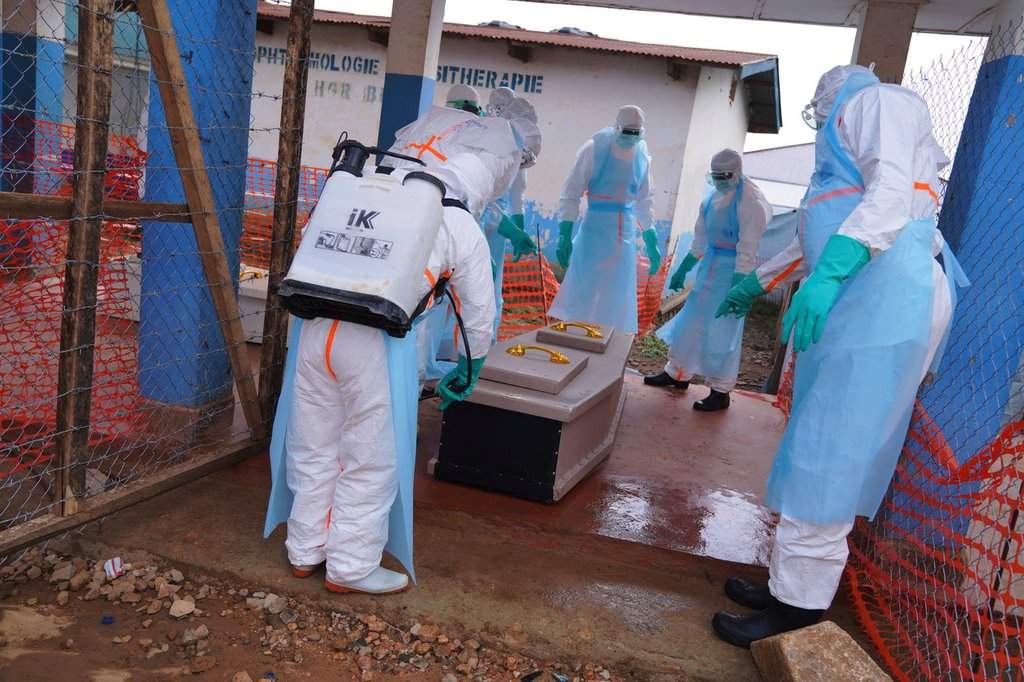
When international responders arrive in high-tech hazmat suits, driving expensive vehicles, and spending millions of dollars exclusively on a single disease, residents ask critical questions. Malaria, measles, and cholera kill thousands in the same region every year without eliciting a similar influx of global funding.
"Why do you care so much about the disease that kills us quickly, while ignoring the diseases and violence that kill us every day?"
This sentiment has fueled conspiracy theories. Rumors that Ebola was deliberately introduced for financial gain or political disenfranchisement have spread rapidly across social platforms and word-of-mouth networks. In some areas, community members have resisted medical teams, driven away health workers, and carried infected relatives out of isolation wards.
The Urban Threat
The crisis reached a tipping point when the virus entered major transit hubs like Butembo and Katwa, cities with populations exceeding half a million people. Unlike rural villages where movement can be somewhat tracked, dense urban environments offer countless vectors for spread.
Urban markets, overcrowded public transport, and informal health clinics act as force multipliers for transmission. A single unidentified patient traveling on a public bus can create dozens of exposed contacts across multiple health zones in a single day.
The proximity of these urban hubs to international borders—specifically Uganda, Rwanda, and South Sudan—elevates the outbreak from a regional crisis to a global security threat. Cross-border trade is the economic lifeblood of the region. Closing borders is economically catastrophic and practically impossible given the porous nature of the frontiers. Yet, keeping them open guarantees that the virus will eventually spill over.
Reevaluating the Containment Strategy
Stopping the death toll from doubling again requires an immediate pivot away from top-down medical interventions. Dropping international experts into security hotspots without deep local integration has reached its limit of effectiveness.
First, response agencies must decentralize operations. Local nurses, traditional leaders, and trusted community figures need to be trained to lead contact tracing and education efforts. A neighbor reporting a case carries authority; a foreign responder in a protective suit instills fear.
Second, medical protocols must adapt to security realities. Integrating Ebola treatment into general healthcare facilities—rather than building isolated, high-profile Ebola treatment centers that serve as targets for armed groups—can reduce stigma and improve early self-reporting rates.
Third, the global health community must address the broader humanitarian context. Delivering clean water, basic medical supplies for endemic diseases, and security assistance alongside Ebola interventions is not optional charity. It is the baseline prerequisite for establishing the trust required to eliminate the virus.
The math of an outbreak is unforgiving. As long as the basic reproduction number remains above one, the virus expands. Technology and vaccines provide the tools, but without security and community trust, those tools remain completely ineffective in the field.