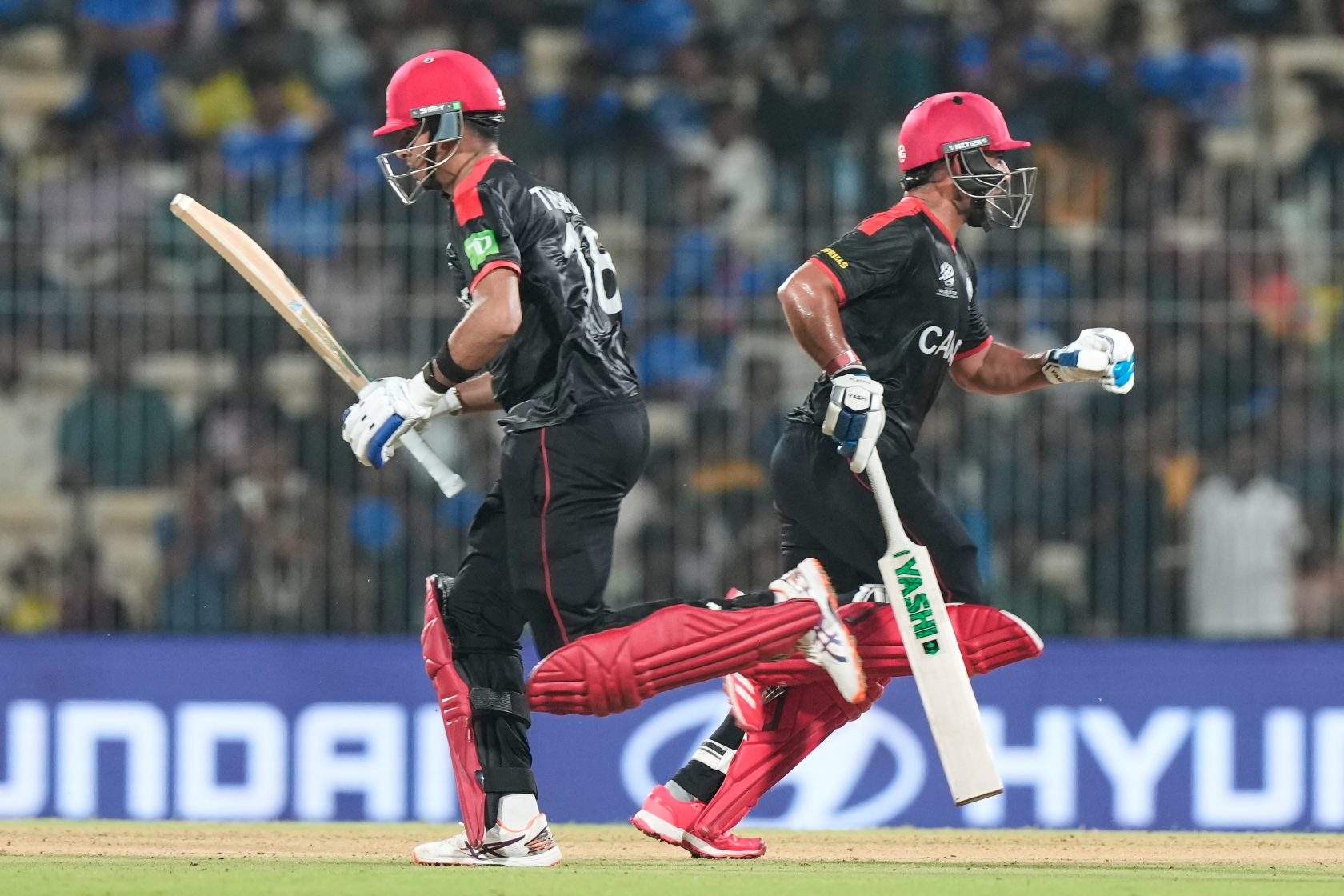
The International Cricket Council officially suspended Cricket Canada’s membership on June 1, 2026, plunging the sport's national body into an unprecedented existential emergency. Following a definitive board meeting in Ahmedabad, India, the sport's global governing body enacted an immediate freeze due to what it termed serious breaches of membership obligations. While the Canadian men’s and women’s national squads will still be permitted to play in international tournaments, their operational financing will now be held in a strict, controlled funding mechanism managed directly by the global body.
This is not a sudden administrative hiccup. It is the culmination of a multi-year rot defined by governance paralysis, unverified balance sheets, and a sweeping anti-corruption investigation that reaches right into the national team’s locker room.
For decades, international observers watched Canada as a sleeping giant of associate cricket. A massive South Asian and Caribbean diaspora created a natural, lucrative market for the sport. Instead of capitalising on this momentum, the administrative side of Canadian cricket has imploded.
The Balance Sheet Black Hole
To understand why the global body pulled the plug, one must look at the money. Most sports federations rely on a mix of corporate sponsorships, domestic ticket sales, and government grants. Cricket Canada does not.
The organization is almost entirely dependent on international subsidies. According to internal data from its 2024 financial reports, the global body provided just over $3.6 million to Cricket Canada, accounting for a staggering 63 per cent of the national board's total annual revenue.
The critical vulnerability was not just the dependency, but the complete lack of financial oversight. The 2024 financial report was never signed off by an independent auditor.
When a sports federation cannot or will not produce clean, audited financials, international bodies react swiftly. By March of this year, the global body had already frozen its core funding allocations to Toronto. The federation was given a clear six-month window to implement basic accounting transparency and fix its broken internal structures.
They failed to do so. The immediate suspension is proof that the governing body ran out of patience with an administration that treated basic corporate compliance as an elective exercise.
Match Fixing Allegations and the T20 World Cup
If the financial irregularities laid the groundwork for the suspension, the explosive findings of an anti-corruption investigation made the administrative collapse inevitable. The sport was shaken earlier this spring by a high-profile documentary expose detailing deep-seated operational corruption and match-fixing vulnerabilities within the Canadian game.
The crisis is no longer confined to boardrooms. It is on the field.
The global body's anti-corruption unit is currently investigating national men’s team captain Dilpreet Bajwa. The investigation centres on an alleged attempt to manipulate specific elements of Canada’s match against New Zealand during the Men’s T20 Cricket World Cup in Chennai, India.
When a national captain is flagged by international match-fixing investigators, the entire infrastructure loses its legitimacy. The cloud over the national squad shattered any remaining goodwill in Dubai, where the international headquarters are located.
The Controlled Funding Trap
The international body took pains to state that Canadian players will not be barred from global tournaments. The decision was explicitly made to avoid punishing athletes for the systemic failures of their executives.
However, the operational reality of this suspension is brutal.
- Loss of Autonomy: Cricket Canada executives can no longer allocate funds, sign vendor agreements, or manage high-performance budgets without international approval.
- Monitored Flow: Every dollar meant for travel, training, equipment, and staff salaries will move through an international oversight mechanism.
- Stalled Infrastructure: Grassroots development and domestic leagues will effectively freeze as money is funneled exclusively into keeping the core national teams functional.
This setup is an administrative dictatorship. Reinstatement will require Cricket Canada to meet an exacting, non-negotiable list of governance conditions. Given the current leadership’s historical track record, meeting those metrics will require a total clean sweep of the existing front office.
The Cost of Professional Failure
The tragedy of this collapse is the timing. Cricket in North America is experiencing an unprecedented surge in public interest. The T20 World Cup cycles have proven that there is a genuine appetite for the sport across the continent, driven by shifting demographics and new broadcast deals.
Instead of building turf wickets, expanding academies, and securing corporate partnerships, the domestic administration spent its energy dodging auditors and managing internal scandals. Corporate sponsors do not want to put their logos on jerseys associated with active anti-corruption probes. Public funding sources dry up the moment an organization cannot produce an audited financial statement.
Canada had a clear path to becoming a permanent fixture on the global cricket stage. Instead, the national body has been reduced to a ward of the international federation, a stark warning of what happens when institutional vanity outpaces basic operational integrity. The road back to compliance will take years, and the sport in Canada will look entirely different by the time it concludes.

.png?width=1200&auto=webp&trim=0%2C0%2C0%2C0)