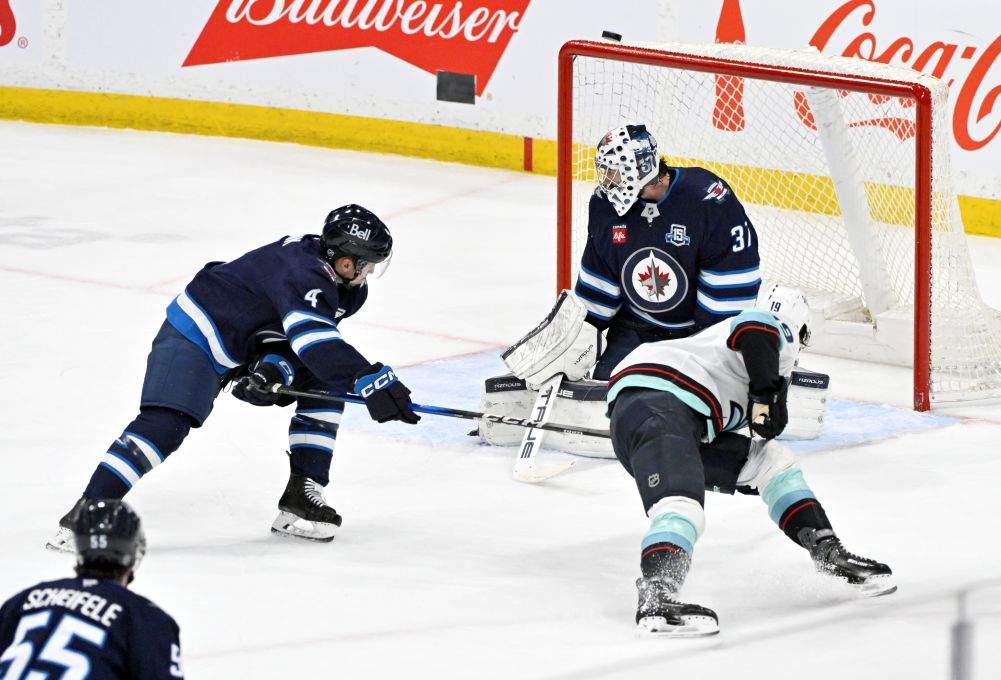
When the Winnipeg Jets shipped three-time Vezina Trophy winner and reigning Hart Trophy recipient Connor Hellebuyck to the New Jersey Devils on October 23, 2026, standard hockey coverage treated it like a typical NHL blockbuster. A superstar goalie wanted out, a contender paid up, and a new general manager flexed his muscles. That surface reading misses almost everything that matters. This deal was not born from ordinary hockey dissatisfaction or a routine roster retool. It was the messy, expensive climax of a personal standoff, a suspension battle, family security alarms, and a rare clash between a franchise's most decorated netminder and a front office that suddenly found itself holding an asset it could no longer keep in the room.
Having covered NHL front offices and locker rooms for decades, I have watched plenty of stars force their way out of small or mid-sized markets. Usually, the script is predictable. A player wants a bigger stage, more money, or a cleaner shot at the Stanley Cup. Here, the timeline tells a much sharper story. Hellebuyck had just helped deliver a Presidents' Trophy in 2024-25 and backstopped Team USA to Olympic gold in 2026. Yet by late summer 2026, his relationship with Winnipeg had ruptured so badly that he requested a trade despite having five years left on his seven-year, $59.5 million extension carrying an $8.5 million average annual value.
The Breaking Point Behind Closed Doors
Trade requests in the NHL rarely explode overnight, even when they look sudden from the outside. Once Hellebuyck's desire to leave became public in August 2026, events spiraled fast. Winnipeg suspended him starting September 16 when he missed training camp, followed by another suspension when he indicated he planned to report for the regular season. Most fans see suspensions in hockey and assume a contract dispute or stubborn holdout.
Hellebuyck pushed back hard on that narrative. He stated that multiple factors drove his request, pointing directly to incidents involving his family that crossed a line and went beyond death threats. He also made it plain that returning to Winnipeg without his family was off the table. When a player of his stature—a guy who holds the franchise records in games played, starts, wins, and shutouts—draws that kind of boundary, the math inside a dressing room changes overnight.
You cannot run a calm, focused NHL locker room when your best player is suspended, skating away from the team, and publicly drawing a line over his family's safety.
There is a gray area here worth acknowledging openly. Front offices guard internal communications closely, and players naturally frame bitter exits through their own lens. Still, you do not walk away from an $8.5 million annual salary—and risk a paycheck dispute carrying a December 1 grievance window over lost salary—unless the friction has moved well past ordinary hockey frustration.
Why New Jersey Pushed All Its Chips In
From New Jersey's side, the move looks aggressive, calculated, and slightly desperate in the best way. New Devils general manager Sunny Mehta had already reshaped the crease earlier in the year, moving Jacob Markstrom to Florida over the summer. When Hellebuyck became available, Mehta did not blink. Talks picked up steam quickly in October and turned into a finished deal in roughly two days.
To land Hellebuyck, New Jersey parted with real assets: forward Dawson Mercer, veteran center Nick Bjugstad, goaltender Nic Daws, first-round draft pick Alexander Command (selected 12th overall in June 2026), a 2027 seventh-round pick, and a 2029 second-round pick. That is a heavy haul. Losing Mercer strips away versatile middle-six speed and scoring punch, while surrendering a recent 12th-overall pick and future draft capital trims organizational depth.
Yet goaltending has a way of exposing every polite theory about "building through the draft." New Jersey had strong pieces up front and on the blue line, including American Olympic connection with Jack Hughes, yet elite goaltending separates contenders from pretenders in tight playoff series. Consider a hypothetical scenario to see why front offices pay up for proven crease stability. Suppose a team has a top-tier offense and mobile defensemen, but its goaltending averages a .895 save percentage across a seven-game series. Even scoring four goals a night becomes a coin flip when every defensive mistake ends up in the net. Hellebuyck gives New Jersey an immediate ceiling raiser, and his early 7-0 start with a .915 save percentage and 2.25 goals-against average shows why the Devils viewed him as a missing piece rather than a luxury.
The Counter-Argument Nobody Wants to Hear
Not every veteran observer buys the idea that this trade automatically crowns New Jersey. There is a real counter-argument here, and ignoring it makes for lazy analysis.
First, Hellebuyck is 33 years old and signed through his late thirties. Goalies age unevenly. One year they look invincible; the next year a subtle dip in lateral quickness or recovery speed turns routine cross-crease saves into rebounds. Even after his historic 2024-25 campaign, Winnipeg missed the playoffs in 2025-26 as Hellebuyck posted a 23-23-11 mark with a 2.86 goals-against average. Regular-season brilliance does not guarantee immunity from mileage.
Second, playoff skepticism still lingers around his resume whenever critics zoom out past his trophies and Olympic gold. A contender does not spend four players and two draft picks just to win games in November. The Devils are betting that Hellebuyck's poise, heavy workload capacity, and Olympic pedigree will hold up under spring pressure in the Eastern Conference.
| Dimension | Winnipeg Jets Angle | New Jersey Devils Angle |
|---|---|---|
| Immediate Impact | Ends a painful standoff and clears a suspended star from the room. | Adds an elite, proven starter to a contender push. |
| Roster Cost | Loses franchise icon and all-time leader in wins and shutouts. | Gives up Mercer, Bjugstad, Daws, Command, and two draft picks. |
| Crease Outlook | Pivots to summer signing Stuart Skinner and waiver claim Clay Stevenson. | Commits heavy cap space and trust to Hellebuyck's prime-tail years. |
| Biggest Risk | Replacing elite top-end goaltending without sacrificing competitiveness. | Paying top dollar for aging goalie years if performance slips. |
How Winnipeg Softened the Fall
Give Winnipeg general manager Kevin Cheveldayoff credit for not standing around flat-footed once the writing was on the wall. The Jets had already begun building a contingency plan over the summer by signing Stuart Skinner to a two-year, $7.5 million deal ($3.75 million cap hit) and later claiming Clay Stevenson off waivers.
That foresight mattered. Skinner gave Winnipeg steady early numbers in net, helping keep the Jets afloat alongside the return pieces from New Jersey. Still, let's be honest about the gap. Going from a Hart and three-time Vezina winner to a committee built around Skinner and Stevenson is a downgrade on paper. A team can patch over that gap with structure, disciplined defensive-zone coverage, and timely scoring, especially if Mercer and Command pan out as long-term contributors. Yet in a tight division race, having a goaltender who can steal three games a month is a luxury Winnipeg no longer possesses.
What This Deal Signals Across the League
More than anything, this trade exposes how fragile long-term stability has become even for marquee players on team-friendly contracts. At $8.5 million per season, Hellebuyck's deal had already begun looking like strong value in a rising cap environment. Money alone did not hold the marriage together. When off-ice strain, public scrutiny, and organizational friction collide, no contract clause acts as a magic shield.
For New Jersey, the clock is officially ticking. Every win Hellebuyck bankrolls early in the season validates Mehta's gamble, while every future draft pick sent to Winnipeg serves as a quiet reminder of what the Devils surrendered to chase a championship window right now. Watch how New Jersey manages his workload between now and spring, because a fresh, rested Connor Hellebuyck in April is the only outcome that makes the full price of this trade feel cheap.