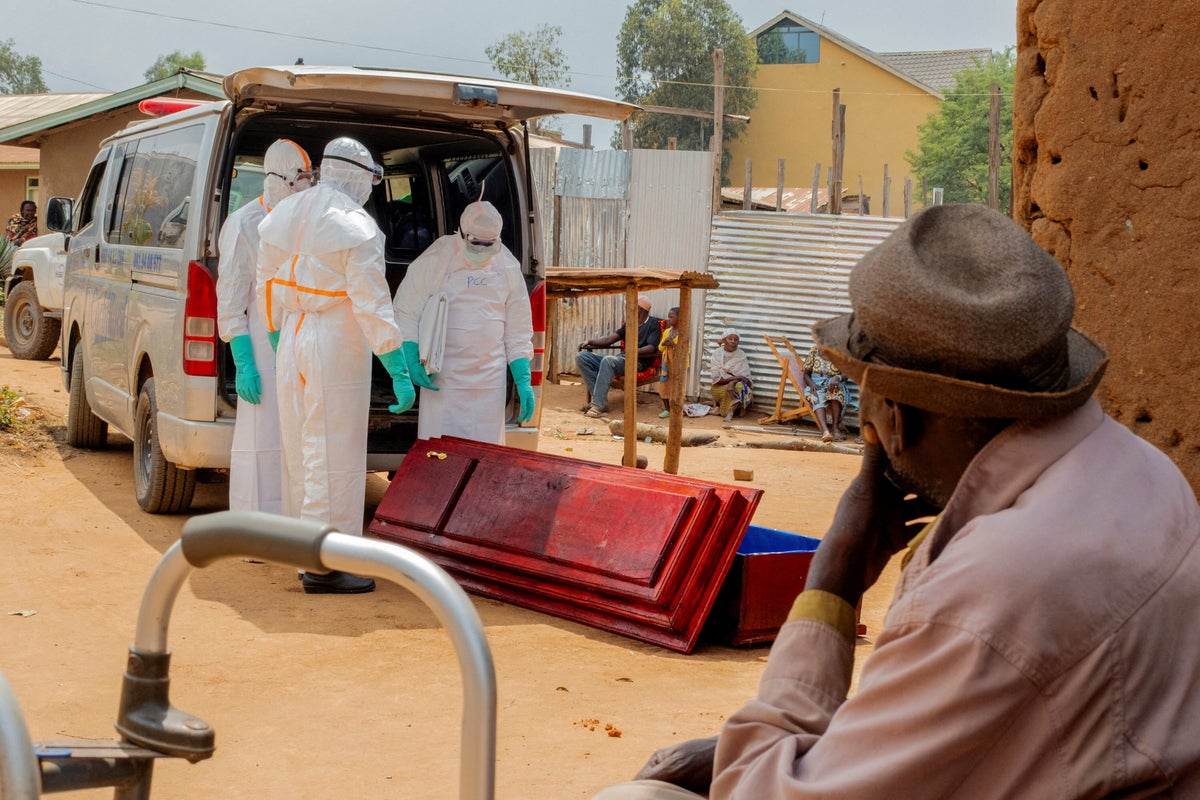
Ebola has claimed more than 1,700 lives in eastern Democratic Republic of the Congo, marking an unprecedented velocity of transmission that has completely outstripped regional containment frameworks. With total recorded cases surpassing 3,800, this epidemic unfolding primarily within Ituri province represents the fastest acceleration of the virus in recorded history. Unlike historical outbreaks that burned slowly through isolated populations before catching international attention, this strain moves with a brutal efficiency. Medical infrastructure is buckling under the weight of active community transmission, where roughly eighty percent of new infections bypass traditional contact tracing pipelines entirely.
To understand why this transmission vector defies containment, one must look closely at the specific viral strain driving the emergency. This outbreak traces back to the Bundibugyo virus. Unlike the Zaire species that dominated previous major epidemics in West Africa and earlier Congolese crises, the Bundibugyo variant presents a distinct clinical and pharmacological hurdle. There are currently no fully approved commercial vaccines or specific targeted treatments universally deployed for this exact strain. Clinical trials for post-exposure prophylaxis and experimental therapeutics are scrambling to catch up inside Ituri province, but science moves at the speed of clinical trials while the virus moves at the speed of human contact.
The Anatomy of an Untraced Origin
Every severe epidemiological disaster starts with an index case, a single patient zero who anchors the web of transmission and allows epidemiologists to trace backward. In eastern Congo, that anchor remains missing. Weeks of retrospective investigation have failed to pinpoint the exact origin of the outbreak declared on May 15. Without a known patient zero, medical teams are forced to fight blindly against a dispersing fog.
Consider a hypothetical example to illustrate the mechanics of this blind spot: If an infected individual travels unnoticed from a remote mining camp into a densely populated trading hub like Bunia, they interact with dozens of people who cross municipal boundaries the following morning. By the time the first symptomatic patient presents at a clinic, secondary and tertiary transmission rings are already spinning outward.
In Ituri, this dynamic is amplified exponentially by regional instability. Armed conflict forces populations into constant displacement. Artisanal gold and mineral mining camps operate outside regulatory oversight, acting as invisible mixing bowls where mobile laborers contract the virus and carry it across provincial borders into major population centers like Kisangani. Tracing thousands of contacts becomes an impossible arithmetic when the population itself is perpetually fleeing violence.
Institutional Fracture and Worker Resistance
A medical response is only as resilient as the people holding the syringes. In the epicenter, that workforce is fracturing. Healthcare workers in hard-hit zones such as Mongbwalu have issued ultimatum strikes over chronic wage arrears and dangerous working conditions. More than one hundred medical professionals have contracted the virus since the outbreak began. When nurses and clinicians are forced to choose between feeding their own families or stepping into an isolation ward without adequate personal protective equipment or guaranteed pay, the operational backbone of the response snaps.
International bodies project grave concern, yet funding gaps continue to starve local clinics of basic supplies. The World Health Organization and the Africa CDC coordinate high-level visits to Bunia, but high-level delegations do not replace frontline operational liquidity. Money tied up in bureaucratic distribution channels fails to pay hazard allowances to local burial teams and community mobilizers.
The Wall of Community Mistrust
Epidemiology is ultimately a social science disguised as virology. When communities harbor deep-seated mistrust toward central authorities and international intervention teams, medical directives are viewed with suspicion rather than relief. Decades of state neglect, combined with active conflict involving multiple armed factions, have left eastern Congolese communities skeptical of outsiders bearing medical interventions.
Resistance manifests in subtle and destructive ways. Safe and dignified burial protocols, critical for interrupting transmission during the final stages of viral shedding, are frequently bypassed. Families occasionally reclaim bodies from healthcare facilities, unintentionally reigniting infection clusters through traditional funeral rites. When nearly eighty percent of new cases originate from community settings rather than known contact lists, it signals that public health messaging has failed to bridge the psychological divide. Enforcement mechanisms only deepen the alienation, driving sick individuals into hiding where they die untreated and infect entire households before diagnostic teams are alerted.
Clinical researchers have initiated enrollment for new therapeutic studies in the region, offering a narrow window of hope for pharmacological intervention. Yet medical innovation cannot outrun social friction. Until the structural drivers of displacement are addressed, frontline workers receive reliable compensation, and community engagement pivots from top-down enforcement to genuine local partnership, the numbers will continue to climb unchecked through the valleys of Ituri