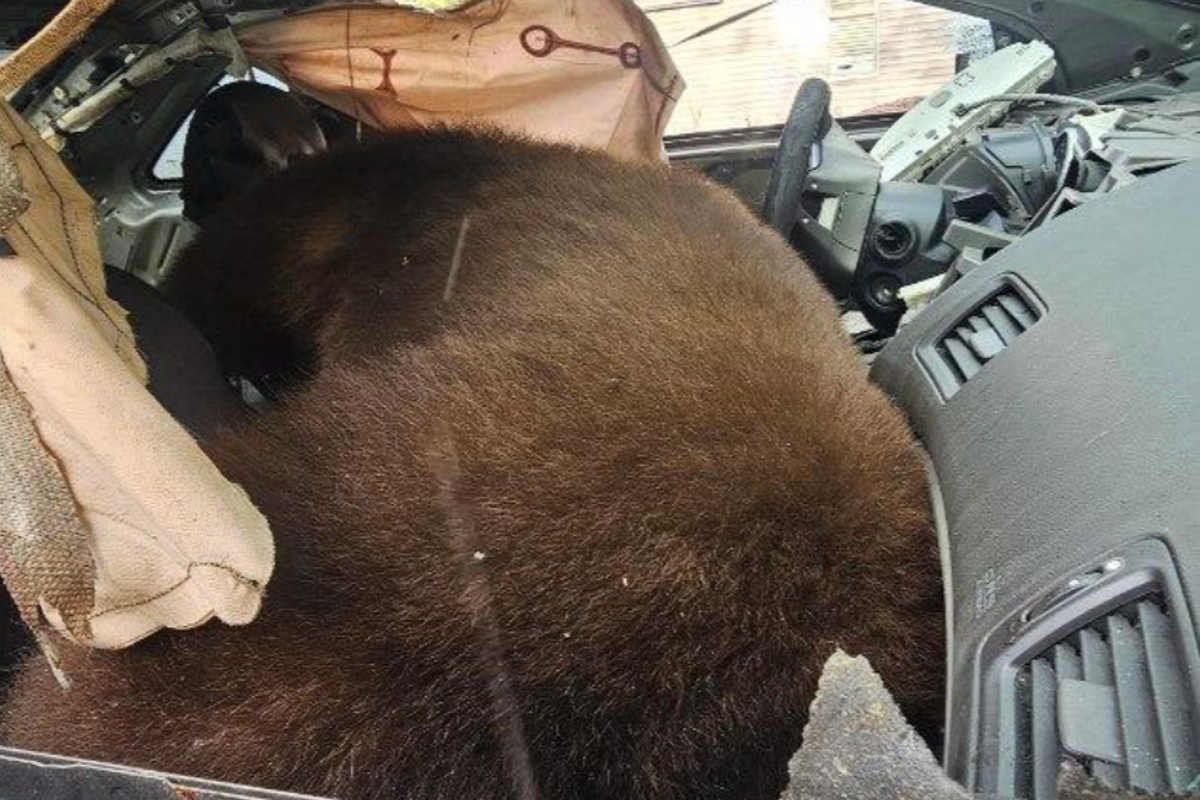
A black bear died inside a locked car in Colorado after managing to trip the door handle, slip inside, and pull the door shut behind it, sealing its fate under the brutal summer heat. Wildlife officers found the vehicle completely destroyed from the inside, bearing witness to a frantic, claustrophobic struggle that ended in tragedy. This gruesome incident is not just an odd wildlife anecdote. It represents a terrifying escalation in human-wildlife conflict across the mountain West.
State wildlife agencies have spent decades preaching a simple gospel. Lock your car doors. Secure your trash. Remove bird feeders. Yet, this recent fatality exposes a grim reality. Locking a vehicle is no longer a foolproof shield against intelligent, highly motivated omnivores. Bears are changing their behavior, shifting from casual nocturnal scavengers into calculated urban foragers. They understand the smell of upholstery, discarded candy wrappers, and air fresheners. They view metal and glass boxes not as impassable barriers, but as mobile pantries. Building on this theme, you can also read: The Glass Corridor Of Power Where Every Footstep Echoes.
The Mechanics of Urban Adaptation
Wildlife biology textbooks once taught that black bears avoided human population centers unless driven by severe drought or historic wildfire seasons. Those assumptions are obsolete. Mountain towns and foothill communities have expanded into traditional seasonal home ranges, fragmenting wildlife corridors and creating permanent urban interface zones.
Bears do not see property lines. They see calorie density. A single residential neighborhood offers more accessible calories per square mile than an alpine forest recovering from pine beetle devastation. Experts at NBC News have provided expertise on this trend.
- Olfactory genius: A black bear's sense of smell is roughly seven times stronger than that of a bloodhound. They can detect a stray wrapper of fast-food cheeseburger grease through closed windows and weather stripping.
- Cognitive mapping: These animals remember specific trash collection schedules, garbage truck routes, and the exact locations of residential vehicles that routinely smell like groceries.
- Dexterity: Heavy paws do not prevent bears from manipulating lever-style door handles, pushing buttons, or rocking vehicle bodies until latches fail.
When a bear gets trapped inside a car, the interior turns into a solar oven within minutes. Temperatures soar far past ambient air readings. Panic sets in immediately. The animal tears apart leather seats, shatters dashboard panels, and rips wiring harnesses in a blind effort to escape. The recent Colorado incident highlights how quickly a momentary lapse in animal behavior management results in a gruesome mortality event. The animal did not break in from the outside; it manipulated its way in, only to trigger a fatal mechanical trap.
When Standard Deterrents Fail
For years, wildlife management agencies relied on public education campaigns centered around habituation prevention. The logic was sound. If humans stop feeding wildlife, wildlife stops seeking humans.
Reality proved messier. Municipalities struggle with enforcement. Vacation rental properties house tourists who treat mountain towns like theme parks, leaving coolers on truck beds and backseats loaded with groceries. Bears adapt faster to municipal ordinances than local city councils can pass them.
Electric fencing remains the gold standard for protecting small apiaries and backyard chicken coops, but motorists cannot wrap their sedans and SUVs in electrified wire every night. The modern commuter faces an impossible dilemma. Park the vehicle outside near the trailhead or driveway, and risk a nocturnal visitor causing thousands of dollars in interior damage. Build a secure garage, and price yourself out of the local housing market.
Wildlife officers note that once a bear successfully harvests food from a vehicle, it crosses a psychological threshold. It loses its natural wariness of human territory. Translocation rarely works for these repeat offenders. Moving a food-conditioned bear into remote backcountry often leads to territorial conflict with resident bears or a long-distance return journey back to the exact suburban neighborhood where the easy calories live.
The Policy Gap and Municipal Blind Spots
Local governments treat wildlife incursions as property damage problems rather than public safety emergencies. Police departments take accident reports for smashed windows and torn upholstery, but few jurisdictions mandate bear-proof vehicle parking ordinances or heavy fines for leaving food inside cars.
Insurance companies view wildlife damage through the narrow lens of comprehensive claims. Payouts happen, premiums rise, and the systemic root cause goes unaddressed. Urban planners design dense mountain subdivisions with zero regard for wildlife permeability.
Property developers clear oak brush and chokecherry thickets, replacing natural forage with ornamental landscaping that inadvertently attracts wildlife right up to front porches. The bear found dead in Colorado was simply navigating a landscape that humans redesigned to invite hungry animals closer while punishing them for accepting the invitation.
Living alongside apex wildlife requires structural changes to infrastructure, not just friendly reminders on neighborhood social media groups. Until communities mandate heavy-duty waste management and redesign suburban parking zones to minimize attractants, vehicles will continue to serve as accidental death traps for wildlife and expensive headaches for residents.
The metal shell of an automobile offers zero protection against an animal driven by an ancient hunger and equipped with modern urban survival skills.