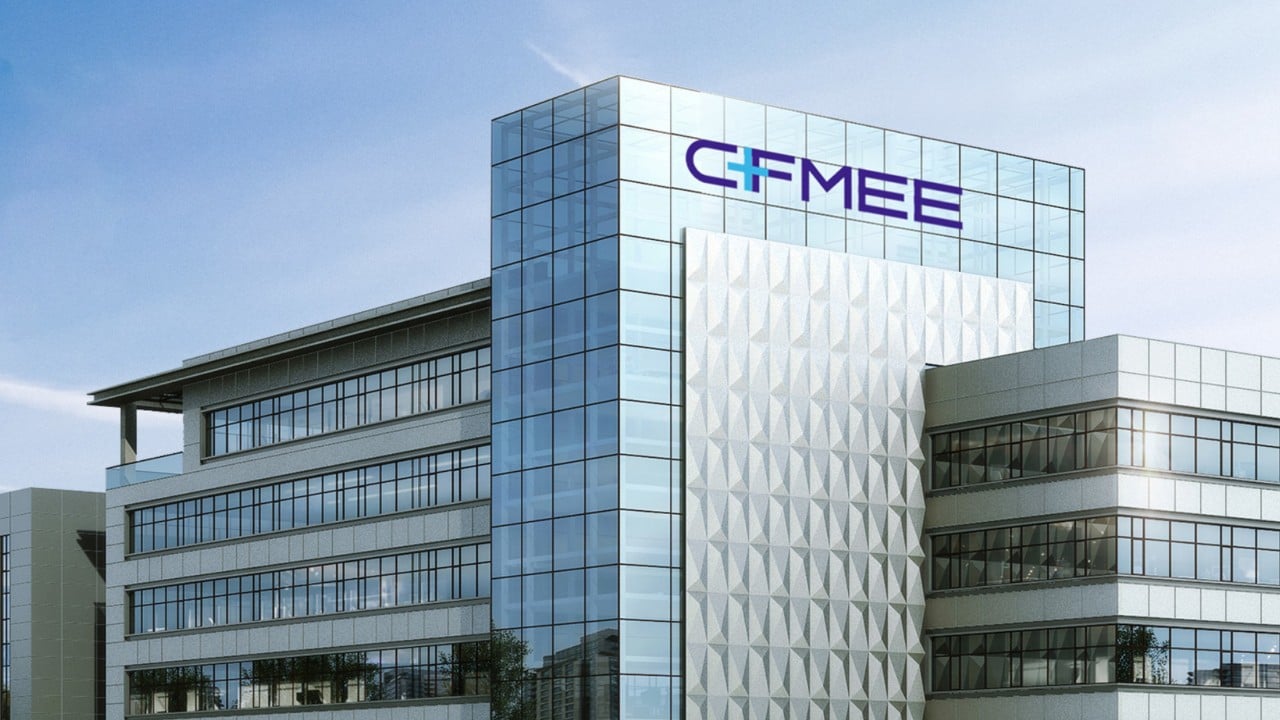
Circuit Fabology Microelectronics Equipment is attempting a financial maneuver that exposes the raw nerve of the global semiconductor race. The Hefei-based lithography specialist, known as CFMEE, has launched a dual-listing attempt on the Hong Kong Stock Exchange to raise up to 410 million US dollars. On its surface, the transaction looks like a standard corporate capital raise by a company already floating on Shanghai’s Star Market. Beneath the regulatory filings lies a more aggressive reality. Chinese semiconductor firms are scrambling to build an alternative capital pipeline before Western financial restrictions lock them out of international liquidity permanently.
The timing is not accidental. Beijing is pumping billions into domestic toolmakers to survive US export controls. Yet, domestic equity markets in mainland China have cooled under tightening regulatory scrutiny and macroeconomic headwinds. By tapping Hong Kong, CFMEE is looking for a crucial bridge to international US dollar capital. It is a strategy that depends heavily on state-backed buyers to convince the broader market that the stock is safe.
Understanding this transaction requires looking closely at what CFMEE actually builds. It does not compete with ASML in the race for extreme ultraviolet systems that print three-nanometer smartphone processors. Instead, CFMEE dominates direct-write lithography. This maskless technology uses digital micro-mirror devices to write patterns directly onto photosensitive substrates. It is a highly specialized sector. It is also the specific factory floor technology required to assemble the complex, multi-die chips that power modern infrastructure.
The Advanced Packaging Battleground
Traditional scaling is hitting a physical wall. Making transistors smaller has become economically ruinous for all but a few companies. As a result, the global semiconductor sector has shifted its focus to advanced packaging. This method connects multiple smaller chips into a single, high-performance package. Direct-write lithography is the engine that drives this process.
CFMEE has steadily expanded its footprint from basic printed circuit boards into advanced integrated circuit substrates and panel-level packaging. Its machinery handles redistributing layers and micro-bumping. These techniques allow different processing elements to communicate without latency. For China, mastering this packaging stage is a pragmatic shortcut. If domestic foundries cannot easily print sub-five-nanometer silicon due to Western machinery bans, they can compensate by clustering seven-nanometer or fourteen-nanometer chips together efficiently.
The equipment market for these processes has historically been controlled by Japanese and European vendors. CFMEE has spent the last decade positioning itself as the domestic replacement. The company reports that its shipments have cleared the thousand-unit mark. It has successfully moved its tools into the production lines of top-tier domestic packaging houses.
Yet, technical expansion requires immense amounts of cash. The company intends to deploy more than half of its new capital into strategic acquisitions and research. Developing the next generation of high-throughput maskless lithography systems is a capital-intensive gamble. This pressure explains the urgency behind the Hong Kong public offering.
The Anatomy of the Capital Flight
A single listing on the Shanghai stock exchange is no longer enough for an ambitious Chinese tech firm. Mainland markets operate within a heavily managed ecosystem. Capital controls make it incredibly difficult to deploy yuan for overseas corporate acquisitions or to buy foreign components smoothly. A Hong Kong listing provides a vital bucket of freely convertible currency.
The market architecture of this IPO reveals how Chinese semiconductor plays are sustained. CFMEE has secured seventeen cornerstone investors to back the listing. These entities have committed to buying at least forty-three percent of the entire share offering.
A closer look at these cornerstones reveals a coordinated network of domestic interests. The lineup includes investment vehicles tied directly to the Hefei municipal government. It features major domestic semiconductor peers like Tongfu Microelectronics and Montage Technology. This is an industrial ecosystem funding itself. State-directed capital provides the foundation, while downstream customers buy the shares to stabilize the vendor that supplies their production lines.
CFMEE IPO Capital Allocation Plan
---------------------------------------------
Strategic Investments & Acquisitions : 27%
Research & Development               : 25%
Production Capacity Expansion        : 18%
Working Capital & General Corporate  : 30%
This structural arrangement creates an artificial layer of insulation. Western institutional investors have become deeply cautious about Chinese hardware assets due to geopolitical risk. The presence of state-backed cornerstones guarantees that the listing will meet its fundraising targets regardless of foreign sentiment. This model has become the standard blueprint for Chinese industrial survival.
Technical Realities Behind Maskless Lithography
To assess whether CFMEE can sustain its valuation, one must look at the mechanical trade-offs of direct-write lithography. Traditional lithography uses a photomask to project an entire circuit design onto a silicon wafer simultaneously. This approach offers incredible speed. It is ideal for mass-producing millions of identical memory modules or processors.
Maskless lithography abandons the physical mask entirely. A computer-controlled laser or electron beam traces the circuit design directly onto the material. This yields a significant structural advantage. Engineers can alter the circuit layout instantly via software without spending hundreds of thousands of dollars to manufacture a new physical mask set.
+-----------------------------------------------------------------+
|                    MASKLESS LITHOGRAPHY PROCESS                 |
|                                                                 |
|  [Digital Design File] -> [Dynamic Light Engine / DMD Mirror]   |
|                                         |                       |
|                                         v                       |
|                             [Direct Laser Projection]           |
|                                         |                       |
|                                         v                       |
|                             [Substrate / IC Substrate]          |
+-----------------------------------------------------------------+
This flexibility makes the technology indispensable for high-end packaging. Every batch of advanced multi-chip modules requires slightly different interconnect layouts due to shifting manufacturing tolerances. CFMEE’s tools adjust for these microscopic distortions in real time.
The downside is throughput. Tracing designs line by line is inherently slower than flashing a whole mask at once. CFMEE has attempted to solve this by building multi-optical engines that scan in parallel. If they can increase the speed of these systems to match traditional production lines, they will secure a dominant position in the domestic supply chain. If they fail to scale the throughput, their machinery will remain confined to lower-volume substrate work and prototyping labs.
The Blind Spots in the Self Sufficiency Narrative
The dominant political theme in China today is total supply chain independence. Public announcements paint a picture of domestic vendors stepping in to replace every piece of prohibited Western gear. The practical reality on the factory floor is far more complex.
No semiconductor equipment company exists in a geographic vacuum. Even a direct-write lithography system assembled in Anhui relies on a global web of sub-components. High-precision laser sources, advanced optical lenses, ultra-accurate translation stages, and specialized digital signal processors are often sourced from specialist firms across Germany, Japan, and the United States.
Typical Lithography Tool Dependencies
------------------------------------------------------
Component Type              Primary Global Source
------------------------------------------------------
High-Power Lasers           Germany / United States
Precision Optics            Germany / Japan
Linear Motion Stages        Japan / Switzerland
Digital Micro-mirrors       United States / Japan
This reality exposes the soft underbelly of the domestic replacement strategy. If Western regulators broaden export bans to include the foundational sub-components that CFMEE needs to build its tools, the company's assembly lines will stall. An IPO cannot magically manufacture a precision optical lens factory overnight.
Furthermore, the domestic market is becoming crowded. Multiple state-backed competitors are chasing the same pool of domestic customers. This creates a risk of severe overcapacity in mid-tier packaging and substrate equipment. Price wars could erode the profit margins that CFMEE needs to fund its long-term research.
Capital Confronts the New Cold War
The international financial system is fracturing along the same lines as the technology supply chain. By pushing into Hong Kong, CFMEE is placing itself directly in the crosshairs of global regulatory scrutiny. Washington has shown an increasing willingness to target not just Chinese chipmakers, but the toolmakers and packaging ecosystems that support them.
Investing in this sector requires accepting an unpredictable risk profile. A company can be highly profitable and technically competent on Monday, then find itself placed on a restrictive trade blacklist on Tuesday. This tension explains why global asset managers are quietly stepping back from these offerings, leaving state funds to carry the burden.
The 410 million dollar target is a defensive reserve fund. It is capital meant to finance the deep engineering work required to strip Western components out of Chinese machinery. CFMEE is racing to achieve complete internal supply chain isolation before the next wave of trade restrictions hits the market. The success of this public offering will show whether China can continue to use international financial centers to fund its industrial survival. The underlying tension will not disappear when the shares begin trading. It will intensify as the industrial separation deepens.