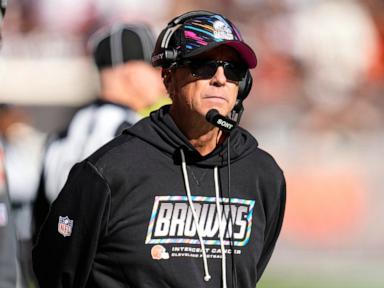
Todd Monken says the Cleveland Browns offense could be smoother, even with the team sitting at 4-2 and finding ways to win late. That tension sits at the heart of Cleveland's season right now. A winning record at the six-game mark usually quiets doubt, yet a sluggish or uneven attack that wakes up in the fourth quarter points to structural friction rather than simple bad luck.
When an offensive coordinator calls his own unit less than smooth, he is rarely speaking in riddles. In pro football, smoothness is the byproduct of timing, personnel alignment, protection clarity, and play-call rhythm working together without hesitation. When those pieces clash early in a game, a team can still escape with a 4-2 start by leaning on situational execution, late-game urgency, or opposing mistakes. Over a 17-game grind, though, relying on fourth-quarter heroics is a high-wire act without a net. Meanwhile, you can explore other developments here: Angel Reese is Not the Problem and the WNBA Finals Narrative is Completely Broken.
Why a 4-2 Record Hides Offensive Friction
Winning late feels great in the locker room. On film, it often looks like a bandage over an open cut.
A 4-2 record gives a coaching staff breathing room in press conferences and media cycles. Wins buy time. They also make it tempting to treat early-game stalls, pre-snap hiccups, or clunky drive starters as minor quirks rather than warning signs. Having watched enough seasons unfold across the league, I have seen plenty of teams ride late-game composure into October only to stall out when defenses tighten up in December. To understand the full picture, we recommend the excellent report by ESPN.
Late-game success and sustained offensive efficiency do not measure the same thing. A two-minute drill or a fourth-quarter push often strips away overthinking. Coaches simplify the menu, defenses sometimes soften coverage to protect against explosive plays, and urgency forces crisp decisions. That environment can make a disjointed offense look sharp for ten minutes while masking why the previous fifty minutes felt like pulling teeth.
Consider a hypothetical example to see how the math works over a full afternoon. Suppose an offense goes three-and-out on three of its first five possessions because motion, protection calls, and route spacing take a beat too long to click. Then, down late or tied in the fourth quarter, the play caller narrows the concept list, leans on trusted reads, and engineers two scoring drives. The scoreboard reads a win. The underlying rhythm still needs work.
What Smoothness Actually Means in Todd Monken's System
Smoothness is not a buzzword. It is operational speed.
In offenses built around shifting formations, motion, and layered passing concepts, every second before and after the snap carries weight. If the quarterback is sorting through a late coverage rotation while receivers adjust to a shifting box, the play loses its edge before the ball even leaves the center's hands. When Monken points to a lack of smoothness, he is highlighting gaps between what is drawn on the call sheet and how cleanly eleven players execute it under live pressure.
Rhythm Starts Before the Snap
Pre-snap clarity dictates post-snap confidence. When shifts and motions happen cleanly, defenders have to declare their intentions or risk getting caught out of leverage. When the cadence drags or alignments are slightly off, the offense hands the defense free information and extra milliseconds to react.
Even small delays compound. A half-second late getting out of the huddle eats into clock management and forces hurried communication at the line. Over four quarters, those micro-delays turn crisp timing routes into contested tight-window throws.
Play Sequencing Over Isolated Calls
Good play callers do not just pick plays. They build sequences that set up later looks.
If early downs get bogged down by penalties, negative runs, or off-schedule drops, a coordinator gets pulled off his sequence. Instead of running a third-and-manageable shot that builds off an earlier run fake, the unit faces third-and-long where pass rushers pin their ears back. A smoother offense stays ahead of the chains often enough to keep the playbook wide open.
Late-Game Clutch Factor Versus Early-Game Stalls
Coming through late is a real skill. Nobody in a 4-2 locker room apologizes for closing out a tight game.
Late-game execution requires poise under stress. Players have to block out crowd noise, manage situational clock, and execute high-leverage assignments when fatigue sets in. Being 4-2 with late wins proves the roster has backbone and composure when the margin for error shrinks to zero.
At the same time, a counter-argument deserves serious weight. Late-game comebacks and fourth-quarter finishes can reflect variance just as much as superior execution. A tipped pass, a missed kick by the opponent, a favorable bounce, or a late turnover can swing a one-score game in ways that do not repeat every week. Teams that live in close fourth quarters because they cannot sustain drives early often find their luck running thin once they face disciplined, top-tier opponents.
| Dimension | Early-Game Stalls | Late-Game Execution |
|---|---|---|
| Primary Driver | Timing, alignment, and sequence flow | Urgency, narrowed calls, and composure |
| Vulnerability | Penalties, negative plays, miscommunication | Narrow margin for error and variance |
| Impact on 4-2 Start | Creates uphill climbs and scoreboard pressure | Secures tight wins and builds confidence |
| Long-Term Signal | Exposes structural kinks to fix | Shows resilience, not a cure-all |
Overlooked Factors Behind Uneven Execution
Box scores rarely capture why an offense looks choppy. Usually, three quiet culprits sit underneath the surface.
First, situational mix can quietly choke momentum. If a unit leans too heavily on predictable early-down patterns or gets forced out of balanced personnel groupings, defenses can sit on tendencies. Even a talented attack struggles when opponents guess right more often than not.
Second, protection and pocket integrity shape everything a play caller wants to do. If pass protection breaks down quickly or forces frequent chip help, vertical and intermediate concepts take too long to develop. Coordinators end up leaning on quicker, shorter answers just to keep the quarterback upright, which can flatten the offense's ceiling until protection stabilizes.
Third, execution discipline separates contenders from pretenders. False starts, holding calls, missed blocks on the perimeter, and slightly off-target throws erase good design. A coordinator can dial up an open receiver and still watch a drive stall because one blocker missed his landmark by half a step.
How Cleveland Can Turn Clunky Starts Into Complete Games
A 4-2 start is a strong launchpad. It is not a finished product.
To make the offense smoother without losing the grit that has carried the team late, the coaching staff has to look closely at where friction creeps in during the first half. Cleaning up pre-snap detail, tightening early-down play selection, and matching call speed to what the line and skill players execute cleanly can turn stressful finishes into more controlled afternoons.
Monken's candor is actually a healthy sign. Coaches who pretend a clunky offense is humming usually get blindsided later in the season, while those who call out the lack of smoothness early have a chance to fix the kinks while the wins are already in the bank.
The real test for this 4-2 group is whether they can bottle their fourth-quarter urgency and bring it out of the tunnel on opening drive one.