Taiwanese prosecutors have detained a domestic Communist Party leader on charges of funneling illicit Chinese funds to sway local elections, exposing a sophisticated covert influence operation operating within the island's own democratic framework. Under the Anti-Infiltration Act, authorities are targeting micro-parties, local borough chiefs, and grassroots religious associations that Beijing allegedly uses as cheap, deniable proxies to buy political influence and fracture voter consensus from the bottom up.
This is not an isolated spy thriller. It is the latest flashpoint in a decades-long shadow war where Beijing weaponizes Taiwan’s own fiercely protected civil liberties against its sovereignty.
The Anatomy of a Micro-Party Operation
To understand how a fringe political leader ends up in handcuffs in Taipei, you have to look past the major presidential debates and examine the hyper-local mechanics of Taiwanese politics. Taiwan is a vibrant democracy with dozens of registered political parties. Most are tiny, underfunded, and entirely legitimate expressions of niche political thought.
Beijing’s intelligence apparatus, primarily the United Front Work Department (UFWD), spotted a structural vulnerability in this open system years ago.
Registering a political party in Taiwan requires minimal bureaucracy. Once registered, that party gains legal standing, access to campaign infrastructure, and a veneer of domestic legitimacy. When Taiwanese authorities detain the leader of a pro-unification micro-party—such as the Taiwan People's Communist Party, which has repeatedly faced scrutiny from the Ministry of Justice Investigation Bureau—they are confronting a specific operational model.
The money rarely arrives in a briefcase at Taoyuan International Airport. That is amateur hour. Instead, the financial pipeline relies on a complex web of cross-strait business fronts, underground remittance networks, and seemingly benign cultural exchanges.
A typical operation moves through three distinct stages:
- The Cultivated Intermediary: A Taiwanese national with business ties in mainland China is approached by local Taiwan Affairs Office (TAO) officials. They are offered preferential business treatment, state-backed loans, or direct cash subsidies in exchange for political organizing back home.
- The Grassroots Vehicle: The intermediary returns to Taiwan and either founds a minor political party or takes over a dormant civic association. They use the funds to stage loud, pro-Beijing protests, print flyers, and sponsor local community banquets.
- The Electoral Pivot: As an election approaches, the funding shifts from general agitation to targeted campaign support. This includes paying off local lizhang (neighborhood wardens), funding subsidized "luxury" group tours to China for voters, and bankrolling fringe candidates designed to split the vote in tight legislative races.
Prosecutors investigating these cases face an uphill battle. Under Taiwanese law, holding pro-unification views is entirely legal. Flying the flag of the People's Republic of China on the streets of Taipei is protected speech. To secure a detention order and a subsequent conviction, investigators must prove a direct financial link between a specific sum of money originating from a Chinese state entity and a specific act of electoral interference.
Why Beijing Targets the Grassroots
Foreign observers often obsess over high-tech cyber warfare, hypersonic missiles, and amphibious assault scenarios across the Taiwan Strait. Those threats are real. Yet, from an intelligence perspective, buying a local neighborhood warden is vastly more cost-effective than launching a cyberattack on the power grid.
Taiwan’s elections are won and lost in the alleys, temples, and community centers of its cities and rural counties. The lizhang system is the connective tissue of Taiwanese civic life. These elected neighborhood chiefs handle everything from trash collection disputes to elderly care. When a lizhang endorses a candidate, thousands of residents listen.
Beijing knows this.
Rather than trying to bribe high-level cabinet ministers—who are under constant counter-intelligence surveillance—Chinese operatives flood the zone at the bottom. A few thousand dollars spent on a subsidized five-day tour to Fujian province for forty Taiwanese neighborhood chiefs yields immense political dividends. The participants are wined, dined, and subtly coached on which candidates support "cross-strait peace" and which ones will bring war.
By the time those voters return to Taiwan, the propaganda has been laundered through trusted local figures. It no longer sounds like a talking point from Beijing. It sounds like common-sense advice from the neighbor who helped fix your streetlamp.
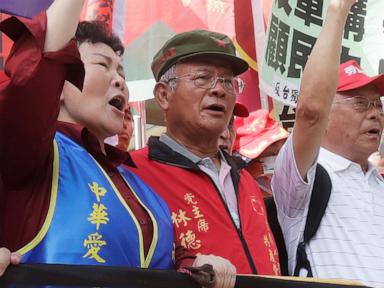
Fringe Communist parties inside Taiwan serve a parallel purpose. They are not meant to win seats in the Legislative Yuan. Their actual function is psychological and visual. By staging noisy rallies outside government buildings or at tourist landmarks like Taipei 101, these groups create the illusion of widespread, organic domestic support for unification. Mainland state media outlets like CCTV then film these small gatherings, broadcast them to millions of viewers in China, and distribute the clips across global social media platforms to project an image of a divided island yearning for Beijing's rule.
The Legal Tightrope of the Anti-Infiltration Act
The detention of a party leader highlights the teeth—and the limitations—of Taiwan’s Anti-Infiltration Act, passed in late 2019. Before this law existed, prosecutors had to rely on antiquated statutes like the National Security Act or the Political Donations Act, which were poorly equipped to handle modern gray-zone warfare.
The Anti-Infiltration Act specifically prohibits anyone from accepting instructions, commissions, or financial support from "hostile external forces" to lobby, donate to campaigns, disrupt assemblies, or interfere in elections.
It sounds straightforward on paper. In practice, it is a legal minefield.
Taiwanese society fought for decades to dismantle the authoritarian martial law era known as the White Terror. The judiciary and the public remain deeply skeptical of any law that gives the state broad powers to police political speech or association. Defense lawyers representing detained party leaders routinely argue that prosecutors are criminalizing political dissent and conducting a modern-day witch hunt against pro-unification activists.
To overcome these defenses, the Ministry of Justice Investigation Bureau (MJIB) must build airtight forensic accounting cases.
Investigators trace digital footprints across encrypted messaging apps like WeChat, which is ubiquitous among cross-strait businesspeople. They track underground banking networks that swap New Taiwan Dollars for Renminbi without ever crossing an official international wire. For example, in a hypothetical cross-strait transfer, a Taiwanese businessman might deposit cash into a local Taipei account controlled by an underground broker, while the broker’s partner in Xiamen simultaneously transfers an equivalent amount of Renminbi into the businessman’s Chinese account. No money physically crosses the border, making standard customs and central bank monitoring useless.
When prosecutors successfully crack these ledgers and link the funds to election campaigning, the penalties are severe: up to five years in prison and fines reaching 10 million New Taiwan Dollars. Yet, for every case that reaches the detention phase, intelligence officials privately admit that dozens of smaller transactions slip through the cracks.
The Counter-Argument Nobody Wants to Address
While national security hawks in Taipei and Washington applaud these crackdowns, a growing chorus of legal scholars and political analysts warns of a dangerous side effect. Aggressive enforcement against fringe pro-Beijing groups risks handing the Chinese Communist Party a potent propaganda victory.
The core tension lies in the definition of democracy itself.
Taiwan’s strongest geopolitical asset is its status as a thriving, liberal democracy standing in stark contrast to the authoritarian model across the strait. Every time Taiwanese authorities raid the offices of a registered political party—even one openly aligned with an adversary—Beijing seizes the narrative. State-run tabloids immediately paint the ruling administration in Taipei as a "green terror" regime suppressing political opposition.
Furthermore, over-reliance on criminal prosecutions can create a chilling effect on legitimate cross-strait academic, religious, and cultural exchanges. Mazu temples, which share deep historical roots between Taiwan and Fujian province, have become a major focal point of intelligence scrutiny because Beijing uses religious pilgrimages as cover for political networking. When legitimate religious leaders fear they might be detained for accepting hospitality during a pilgrimage, genuine civil society ties wither.
There is also the question of efficacy. Detaining the leader of a fringe Communist party removes one node from the network, but it does nothing to dismantle the underlying economic incentives driving the behavior. As long as mainland China offers lucrative market access to Taiwanese entrepreneurs, agricultural exporters, and local politicians, Beijing will never run out of willing intermediaries.
Following the Digital and Financial Paper Trail
Modern election interference rarely relies on a single mechanism. The detention of a party leader over cash sponsorship is usually just one thread in a much larger tapestry of coordinated influence.
Let's examine how financial sponsorship intersects with digital disinformation.
A minor party leader receives illicit funding from a mainland entity. Part of that money goes toward physical campaigning—buying banners, renting sound trucks, and paying attendees to show up at rallies. Another portion, however, is quietly routed to local digital marketing firms and content farms.
These firms create hyper-partisan Facebook pages, Line groups, and TikTok accounts. Because Line is the dominant communication app in Taiwan, used by virtually the entire population, closed Line groups function as impenetrable echo chambers. Funded operators seed these groups with fabricated polling data, doctored images of candidates, and narratives designed to depress voter turnout among specific demographics.
When law enforcement tracks the money, they often find that the financial trail stops at a shell company registered as a "cultural exchange consultancy" or an "agricultural trading firm."
Consider the mechanics of agricultural front companies. Beijing has repeatedly banned imports of Taiwanese pineapples, groupers, and wax apples during periods of political tension, only to selectively lift those bans for specific counties or associations that demonstrate "friendly" political alignment. The financial sponsorship of a political figure doesn't even require a direct wire transfer; it can be disguised as an inflated purchase order for agricultural goods, with the excess profit funneled directly into a local campaign war chest.
Proving that an overpriced shipment of fruit constitutes an illegal foreign campaign contribution requires a level of forensic economic analysis that stretches Taiwan’s judicial resources to their absolute limit.
What Comes Out of the Interrogation Room
When Taiwanese prosecutors secure the detention of a high-profile suspect in an election interference case, they are rarely looking just at that individual. Detention—held incommunicado to prevent collusion—is an investigative lever designed to flip the suspect and map the broader network.
A fringe party leader is expendable to Beijing. The moment the handcuffs click shut, their utility to the United Front Work Department evaporates.
Inside the detention center, prosecutors present the suspect with the intercepted WeChat logs, the underground banking receipts, and the testimonies of lower-level operatives who have already been questioned. Faced with years in prison and the total abandonment of their mainland handlers, suspects frequently cooperate.
This is where the real intelligence value lies. Through these interrogations, Taiwan’s counter-intelligence agencies identify the specific TAO officials managing the accounts, the banking channels used to move the currency, and the mainstream politicians who may have unknowingly—or knowingly—accepted support from these tainted proxies.
The ripple effects of a single detention can paralyze an entire regional network in the final weeks before an election. Other intermediaries suddenly go dark. Planned "cultural exchange" trips to mainland cities are abruptly canceled. Local wardens quietly return envelopes of cash or distance themselves from fringe campaign surrogates.
The Uncomfortable Reality for Open Societies
Taiwan is currently the frontline laboratory for how an open democracy defends itself against a sophisticated authoritarian neighbor that shares its language, culture, and familial ties. The challenges playing out in Taipei’s courtrooms are not unique to the island; they are a preview of the vulnerabilities facing democracies globally.
Laws like the Anti-Infiltration Act are necessary shields, and detaining operatives who funnel foreign state cash into domestic elections is a baseline requirement for national survival. Yet, the police and the courts cannot solve a structural geopolitical problem on their own.
As long as Beijing views Taiwan’s democratic system as an existential threat to its own legitimacy, the cash pipeline will remain open, adapting to every new law, shifting from bank wires to cryptocurrencies, and trading overt party leaders for quieter, more respectable civic proxies. The ultimate defense against bought influence is not merely a more aggressive prosecutor's office, but an electorate resilient enough to recognize when a local neighbor is reading from a foreign script.