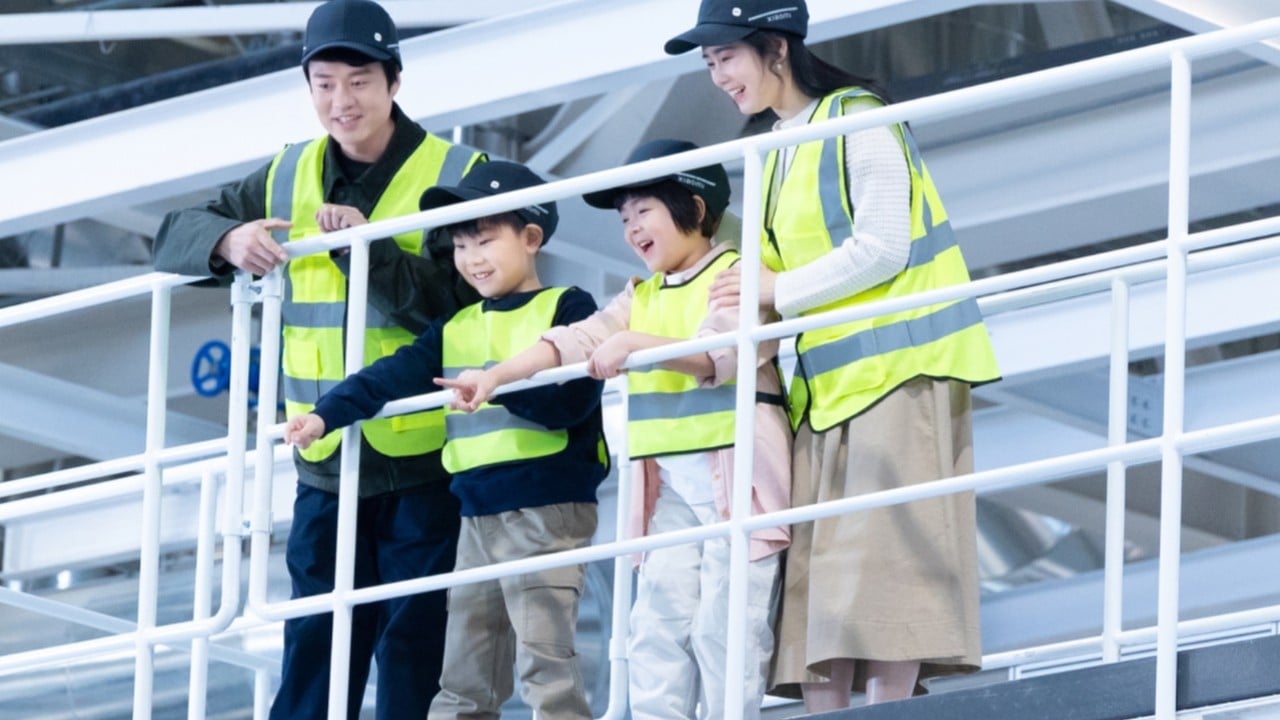
China is currently executing a large-scale conversion of industrial idle capacity into educational infrastructure. This shift is not a mere travel trend; it is a calculated effort to synchronize the cognitive development of the next generation with the nation's specific manufacturing and technological roadmap. By integrating the youth directly into the supply chain through industrial tourism, the state is attempting to solve a fundamental mismatch between classroom theory and the rapid iteration of modern production.
The Tri-Factor Model of Industrial Engagement
The efficacy of China’s industrial tourism boom rests on three distinct operational pillars. Each pillar targets a specific psychological or economic outcome that standard education fails to address. Meanwhile, you can explore related stories here: Why China’s Humanoid Robot Ambitions Are a Massive Supply Chain Trap.
- Direct Exposure to Scale Complexity: Children are introduced to the physical reality of high-volume manufacturing. Seeing 2,000 robotic arms synchronized in a Tesla or BYD gigafactory provides a spatial understanding of logistics that a digital interface cannot replicate.
- Normalization of High-Tech Environments: By making cleanrooms and automated assembly lines common weekend destinations, the "intimidation barrier" of advanced technology is removed. This normalizes the pursuit of STEM careers as a standard life path rather than an elite exception.
- Nationalistic Brand Alignment: There is a deliberate branding of "hard tech" as the core of national strength. When a child visits a satellite launch center or a high-speed rail manufacturing plant, the technological achievement is linked to civic identity, creating a long-term recruitment funnel for state-aligned industries.
The Mechanism of Cognitive Anchoring
Standard rote learning creates high test scores but often results in "fragile knowledge"—information that cannot be applied outside the specific context in which it was learned. Industrial tourism acts as a cognitive anchor. When a child sees the application of a PID controller (Proportional-Integral-Derivative) in a food processing plant, the mathematical abstraction becomes a concrete tool.
The "Industrial Literacy" score of a child exposed to these environments is dictated by the Complexity Exposure Function:
$$E = \sum (I \cdot D)$$
Where $E$ is total exposure value, $I$ is the intensity of the industrial interaction (hands-on vs. observation), and $D$ is the diversity of the industries visited. To see the complete picture, check out the recent analysis by MIT Technology Review.
China is currently prioritizing high-diversity exposure. A child’s itinerary might include a dairy farm using automated milking carousels on Saturday and a semiconductor packaging facility on Sunday. This breadth prevents the "silo effect" and encourages lateral thinking—the ability to see how a solution in fluid dynamics might apply to logistics or energy storage.
Strategic Repurposing of Industrial Assets
The growth of this sector is fueled by a pragmatic business reality: the marginal cost of hosting tourists in an existing factory is significantly lower than the cost of building dedicated science museums. Factories are being redesigned with "observation galleries" built into the original blueprints. This architecture serves a dual purpose. It provides a secondary revenue stream through ticket sales and branded merchandise while functioning as a permanent marketing activation for the brand’s engineering prowess.
In cities like Shenzhen and Hangzhou, the industrial site is no longer a closed system. It is a node in a broader "Knowledge Economy" grid. The economic logic follows a simple trajectory:
- Phase 1: Excess Capacity Utilization: Using non-production hours or designated observation zones to generate cash flow.
- Phase 2: Talent Pipeline Insurance: Building brand loyalty in the 8-14 age bracket to ensure a steady flow of high-quality engineering applicants a decade later.
- Phase 3: Ecosystem Lock-in: Creating a culture where the public understands and supports heavy industrial subsidies because they have seen the complexity of the operations firsthand.
Quantifying the Shift in Consumer Behavior
The "tech-savvy" nature of Chinese children is not an accidental byproduct of smartphone usage; it is the result of a shift in "Educational Spend Allocation." Chinese middle-class parents are pivoting away from traditional leisure (theme parks, resorts) toward "Productive Leisure."
Data suggests a significant uptick in domestic travel packages that include:
- Aerospace hubs: Visits to Wenchang or Jiuquan.
- Agricultural Tech: Hydroponic and automated farming complexes in Shandong.
- Renewable Energy: Solar farms and hydroelectric dam tours.
This shift creates a self-reinforcing cycle. As demand for "Educational Industrialism" grows, more companies invest in visitor centers. As visitor centers become more sophisticated—incorporating VR simulations of the production line or interactive coding challenges—the educational ROI increases, further driving parental spend.
The Critical Bottlenecks and Risks
Despite the momentum, the industrial tourism model faces three primary constraints that could limit its long-term impact on human capital.
The Superficiality Trap
If the "tourism" aspect outweighs the "industrial" aspect, the experience becomes a mere spectacle. Many sites struggle to balance the need for safety and entertainment with the requirement for deep technical insight. Without rigorous curriculum integration, these visits risk becoming "industrial playgrounds" that provide high dopamine but low information retention.
Geographic Disparity
The concentration of high-tech industrial sites in Tier 1 and Tier 2 cities creates a "Technological Divide." Children in rural provinces lack the same access to these physical anchors, potentially widening the wealth and opportunity gap. While virtual reality tours are being deployed to mitigate this, they lack the sensory impact of a physical factory floor—the smell of ozone, the vibration of heavy machinery, and the sheer scale of the operation.
The Proprietary Data Conflict
As industrial tourism scales, companies face a rising tension between public transparency and corporate espionage. Protecting intellectual property while allowing thousands of citizens to walk through a facility requires expensive security measures and often results in "sanitized" tours that hide the most innovative (and therefore most educational) processes.
Operational Benchmarking for Global Competitors
Western nations and other Asian economies can learn from the Chinese model, but direct replication is unlikely due to different labor laws and safety regulations. However, the core logic—using industrial sites as the primary classroom for the future workforce—is a transferable strategy.
To outcompete this model, an organization or state must focus on High-Fidelity Simulation and Apprenticeship Integration.
The next stage of this evolution is the "Closed-Loop Educational Factory." In this model, the factory is not just a place to watch; it is a place to participate. We are seeing the early stages of this in Chinese "Maker Spaces" co-located with manufacturing hubs. Here, the student doesn't just see the robot; they program a twin of the robot in a controlled environment.
The long-term competitive advantage will belong to the nation that can move its youth from Observation (Industrial Tourism) to Simulation (Digital Twins) to Contribution (Junior Apprenticeships) the fastest. China is currently leading in the observation phase, but the transition to contribution is where the true economic value will be unlocked.
Strategic planners should focus on the integration of Industry 4.0 standards with educational curricula. The goal is to move the student from a consumer of technology to a component of the technological ecosystem before they even enter the workforce. The current boom in Chinese industrial tourism is simply the data-gathering and onboarding phase of this larger national optimization.