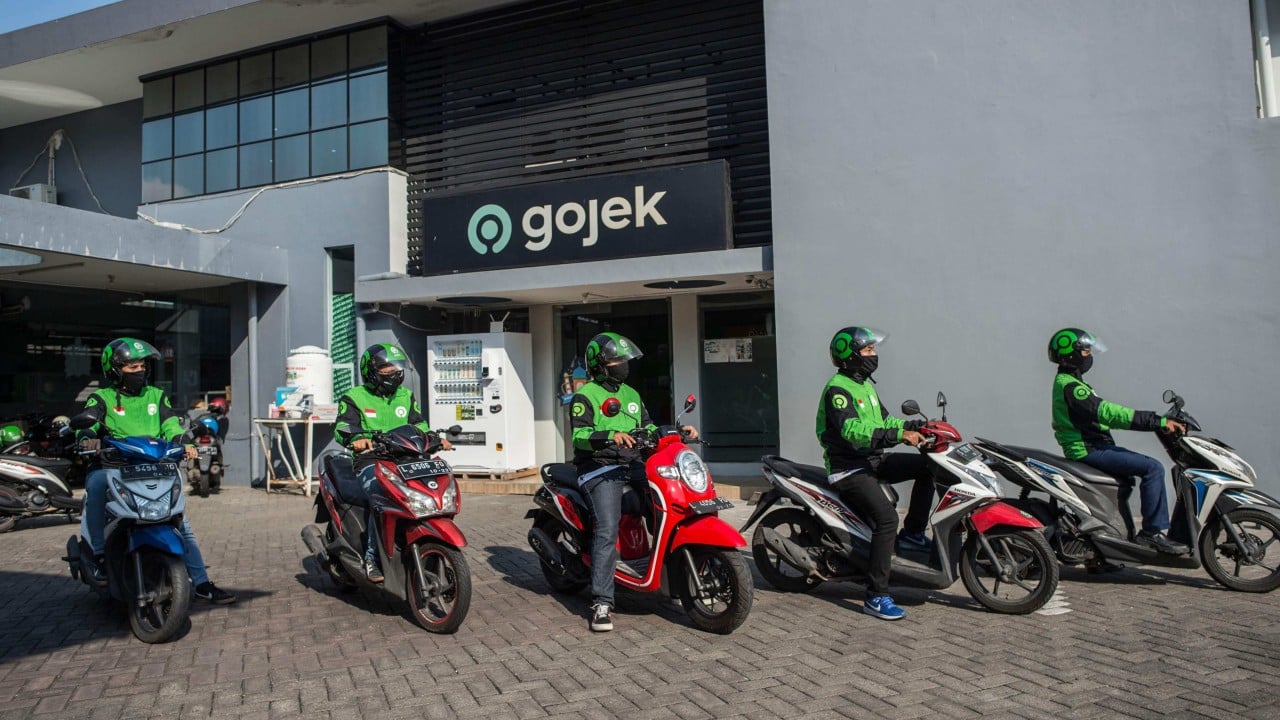
The era of the twenty percent platform fee in Indonesia has met a sudden, regulatory end. The Indonesian government has moved to slash the maximum commission ride-hailing giants can extract from drivers to a strict 8%. This isn't a mere adjustment of the dials; it is a fundamental restructuring of the unit economics that have sustained the region's tech darlings for over a decade. By forcing companies like Gojek and Grab to surrender more than half of their traditional take-rate, the Ministry of Transportation is attempting to solve a deepening crisis of driver poverty.
While the "super-app" model was built on the promise of efficiency and scale, the reality for millions of drivers has been one of diminishing returns and increasing debt. This new cap aims to put money directly back into the pockets of the workers who form the backbone of the digital economy. However, the move sends a shockwave through the financial valuations of platforms that were already struggling to prove they could be consistently profitable without squeezing their labor force.
The Death of the Twenty Percent Standard
For years, the industry standard sat comfortably at 20%. This figure was rarely questioned in boardroom meetings or investor decks. It was the price of admission for drivers to access a global marketplace. But in the crowded streets of Jakarta and Surabaya, that 20% felt less like a service fee and more like an insurmountable wall. When you factor in the rising costs of fuel, vehicle maintenance, and mobile data, a driver taking home only 80% of their gross fare was often earning below the minimum wage after expenses.
The government's intervention at 8% is an aggressive play. It signals that the state no longer views ride-hailing as a neutral tech service, but as a public utility that requires heavy-handed price controls to remain socially viable.
The Math of Survival
To understand why this change is so disruptive, one must look at the thin margins of a standard trip. Consider a hypothetical ride costing 50,000 IDR. Under the old regime, the platform took 10,000 IDR. Under the new rules, they are restricted to 4,000 IDR.
That 6,000 IDR difference might seem trivial to a venture capitalist, but for a driver completing fifteen trips a day, it represents a nearly 30% increase in daily take-home pay. For a family living on the edge of the poverty line, that is the difference between food security and debt. The platforms, however, now face a massive revenue hole that they cannot easily fill by raising prices for consumers, as the Indonesian market is notoriously price-sensitive.
Why the Subsidy War Failed the Workers
The ride-hailing industry in Southeast Asia was forged in a brutal fire of subsidies. Billions of dollars were burned to acquire users and keep drivers on the road. This created an artificial environment where everyone felt they were winning, but it was a house of cards. As the capital dried up and investors demanded a path to profitability, the platforms began to tighten the screws.
They reduced driver incentives. They increased "platform fees" disguised as insurance or technology costs. They tweaked algorithms to favor those who worked longer hours. The 8% cap is a direct response to this "squeezing" phase of the platform lifecycle. The government has essentially stepped in to say that the burden of corporate profitability cannot be carried solely by the most vulnerable participants in the chain.
The Hidden Costs of Being "Independent"
A major point of contention in this investigative look at the sector is the misclassification of costs. Platforms argue that they provide the marketplace, while drivers provide the labor. Yet, the driver also provides the capital. They own the bike; they pay for the insurance; they absorb the depreciation.
When a platform takes 20%, they are taking a cut of the driver's capital investment as well as their time. The 8% limit acknowledges that the "service" provided by the app—matching a rider to a driver—does not justify a fifth of the gross revenue when the app bears none of the operational risks of the actual transport.
Resistance from the Silicon Towers
Unsurprisingly, the giants of the industry are not taking this lying down. The narrative from the tech sector is one of "stifled innovation." They argue that such a low cap will lead to a decrease in service quality, less investment in safety features, and a potential withdrawal from less profitable rural areas.
There is a legitimate concern here. If the revenue from commissions cannot cover the cost of maintaining the server infrastructure, mapping APIs, and customer support, the platforms might be forced to introduce new, creative fees. We are already seeing the emergence of "app usage fees" charged directly to the passenger, which bypasses the commission cap on the driver's fare. This creates a cat-and-mouse game between regulators and corporate lawyers.
The Threat of the Algorithm
Beyond the raw numbers, there is the silent power of the algorithm. If a platform is forced to take a smaller cut, they may change how they dispatch rides to maximize efficiency at the expense of driver choice. We could see a shift toward "forced batching" or predatory "surge" pricing that doesn't actually trickle down to the person behind the wheel.
The 8% cap is a blunt instrument. It fixes the price, but it doesn't necessarily fix the power imbalance inherent in the code that decides who gets a job and who doesn't.
A Regional Precedent with Global Implications
What happens in Indonesia rarely stays in Indonesia. As the largest economy in Southeast Asia, it serves as a laboratory for digital regulation. If the 8% cap proves successful in stabilizing the driver workforce without collapsing the platforms, other nations in the region—and perhaps even in the West—will take note.
Regulators in Bangkok, Manila, and Hanoi are watching closely. They face similar issues with "gig" worker exploitation and the dominance of foreign-funded tech firms. The "Indonesian Model" could become a blueprint for a more assertive form of digital sovereignty, where the state dictates the terms of engagement for big tech.
The Investor Exodus
For the global investment community, this is a red flag. The appeal of emerging markets was always the "light-touch" regulation and the massive, untapped labor pool. If governments can arbitrarily slash revenue models overnight, the risk profile of these investments changes.
We are likely to see a cooling of venture capital interest in Indonesian transport tech. This might actually be a healthy development. It forces companies to build sustainable businesses based on real value rather than subsidized growth. The era of "growth at all costs" is being replaced by the era of "fairness by mandate."
The Counter-Argument: The Consumer Penalty
There is no such thing as a free lunch. If the platforms lose 12% of their revenue from the driver's side, they will almost certainly look to the passenger to make up the difference. While the 8% cap protects the driver, it may lead to higher fares for the average Indonesian commuter.
In a country where ride-hailing is a primary form of transit for the middle class, significant price hikes could have a cooling effect on the entire digital economy. If fewer people use the apps because they are too expensive, the drivers might end up with a larger slice of a much smaller pie. This is the delicate tightrope the Ministry of Transportation is walking. They are betting that the demand for these services is "inelastic" enough to withstand a price adjustment.
The Shift Toward Logistics
To survive the 8% cap, we are seeing Gojek and Grab pivot even more aggressively into logistics and food delivery, where commission structures are often more complex and less regulated than passenger transport. By diversifying, they can subsidize their ride-hailing losses with higher-margin deliveries.
However, this just moves the problem to a different sector. It is only a matter of time before the regulators turn their gaze toward the 30% commissions often seen in the food delivery space. The 8% cap on rides is likely just the first shot in a much longer war over the spoils of the gig economy.
The Infrastructure of Fairness
If the government wants this to work, they cannot stop at a commission cap. They need to address the underlying costs that make driving so expensive. This means tackling the predatory lending cycles for motorcycles, the lack of affordable health insurance for gig workers, and the volatility of fuel prices.
A commission cap is a headline-grabbing move, but it is a symptom of a deeper failure to integrate gig workers into the national social safety net. Until a driver is treated as a professional with rights, rather than a line item on a balance sheet, the tension between the app and the street will remain.
The New Bottom Line
The 8% cap is a "radical correction," as some have called it, but it is also a return to reality. The tech industry's attempt to take 20% or 25% of a manual laborer's gross income was always an anomaly of the low-interest-rate era. It was a tax on the working class that was recycled into corporate marketing budgets.
Indonesia is now testing whether a tech platform can exist as a lean, efficient intermediary rather than a dominant, rent-seeking landlord. The answer to that question will determine the future of work for tens of millions of people across the developing world.
The companies have two choices: adapt their bloated corporate structures to live within the 8% margin or watch as the government slowly peels away their license to operate. The days of the "super-app" as an untouchable digital sovereign are over. The street has won this round, and the code will have to be rewritten to reflect that new reality.
Drivers should immediately audit their weekly statements to ensure that hidden fees are not being used to circumvent the new 8% ceiling. If the net take-home pay doesn't rise, the regulation is being bypassed through algorithmic manipulation or "system fees," and the struggle for a living wage will simply move from the price list to the fine print.


