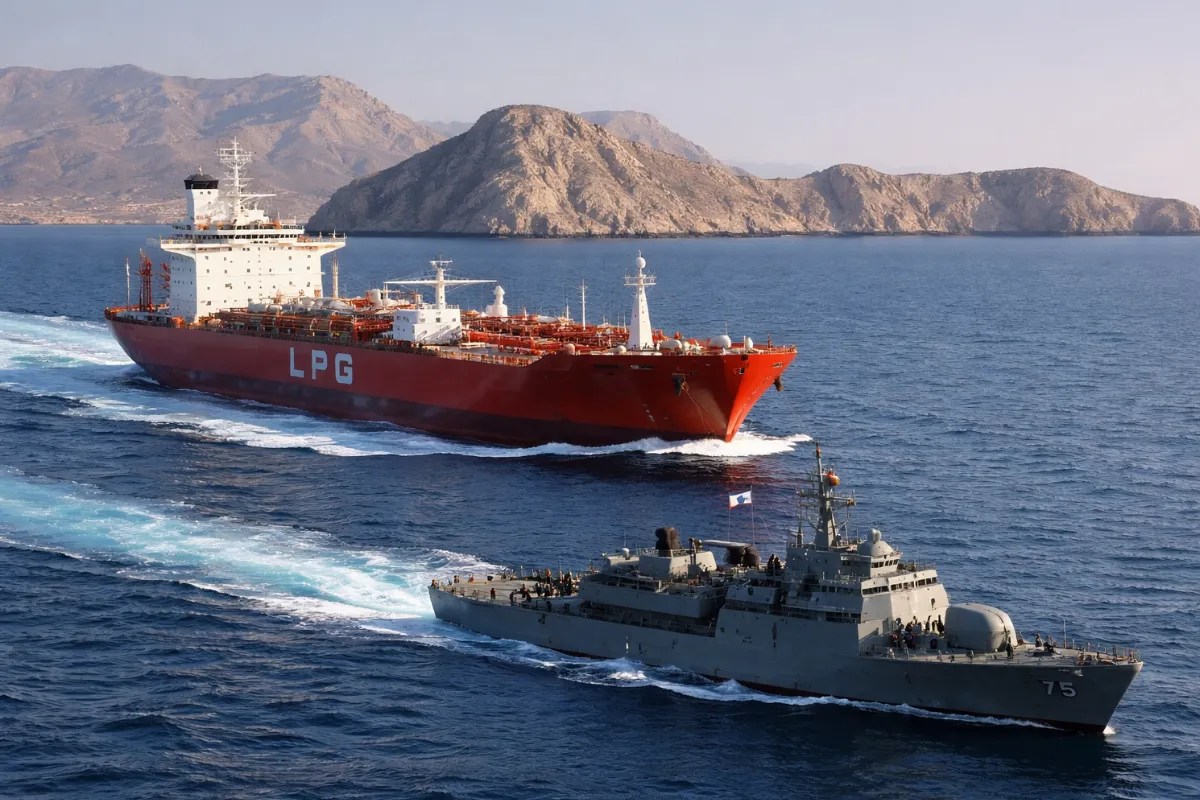
India's energy security isn't just about how much oil or gas we buy. It's about whether those ships actually make it to our shores. While global headlines scream about tensions in the Middle East and the volatility of maritime routes, the reality on the water tells a story of calculated persistence. Right now, another massive Indian vessel laden with LPG has successfully navigated the Strait of Hormuz. It's on a direct path to Mumbai and should dock by April 15. This isn't just a routine shipment. It's a signal that India’s supply chain is holding firm despite the geopolitical noise.
The Strait of Hormuz is arguably the most stressed piece of water on the planet. Around 20% of the world’s liquefied petroleum gas passes through this narrow choke point. For an Indian household relying on Ujjwala cylinders or a small business in Maharashtra, this ship's arrival is the difference between "business as usual" and a price spike. We’ve seen how quickly things can go sideways when a tanker is delayed or diverted. The fact that this LPG carrier cleared the strait without a hitch proves that the maritime protocols and diplomatic backchannels India has cultivated are paying off.
Why the Mumbai LPG Arrival Matters More Than You Think
Energy independence is a myth for most of the world. India imports a staggering amount of its LPG, primarily from nations like Qatar, the UAE, and Saudi Arabia. When a ship leaves the Persian Gulf, it enters a zone where one wrong move by a regional power can shut down global trade. The ship heading toward Mumbai right now is carrying thousands of metric tonnes of fuel. If it doesn't arrive on April 15, the ripple effect hits the local distribution centers within 48 hours.
You have to look at the sheer scale of this operation. We aren't talking about a small cargo boat. These are massive, pressurized vessels designed to keep gas liquid under immense cold or pressure. They are slow. They are vulnerable. Yet, they keep coming. This specific transit shows that despite the shadow of conflict or the threat of maritime blockades, the flow of energy to the Indian subcontinent remains a top priority for both the exporters and our domestic refineries.
People often ask if we should be worried about our gas prices every time there’s a headline about the Middle East. Honestly, the logistical feat of moving these ships is what keeps those prices stable. The Indian Navy often provides a "silent" layer of protection in these waters through Operation Sankalp. While this ship hasn't requested a formal escort, the presence of Indian frigates in the region ensures that merchant vessels flying the Indian flag feel a sense of security that other nations might lack right now.
The Logistics of Navigating a Choke Point
The Strait of Hormuz is only about 21 miles wide at its narrowest. Imagine trying to drive a semi-truck through a tiny alleyway while people are throwing rocks from the rooftops. That's the vibe. Navigating it requires precise timing and constant communication with maritime authorities in both Oman and Iran. Indian captains are some of the most experienced in these waters. They don't just sail; they negotiate the currents and the politics of the sea.
Most people think ships just go from point A to point B. It’s not that simple. A ship arriving in Mumbai on April 15 had to clear the strait days in advance. It had to manage its speed to avoid peak congestion and ensure its transponders were sending the right signals to avoid being misidentified. One mistake and you’re a headline for all the wrong reasons. The current success of our LPG fleet is a testament to the technical skill of the Merchant Navy and the strategic planning of the Ministry of Petroleum and Natural Gas.
Security Protocols on the High Seas
What happens if a ship feels threatened? It doesn't just turn around.
- Ships use "Best Management Practices" (BMP5) to harden themselves against boarding.
- Constant contact with the Information Fusion Centre – Indian Ocean Region (IFC-IOR).
- Real-time tracking that allows Delhi to see exactly where a vessel is at any given second.
The Mumbai port is already prepping for this arrival. The offloading process for LPG is a high-stakes dance. You can’t just pump it out like water. It requires specialized terminals and a fleet of tankers ready to whisk the gas away to bottling plants. If the ship arrives on the 15th as planned, it means the entire land-based supply chain can stay on schedule.
Keeping the Kitchen Fires Burning
We take it for granted. You turn on the stove, and the blue flame appears. But that flame started its journey in a gas field thousands of miles away, crossed the most dangerous strait in the world, and survived a week of trekking across the Arabian Sea. India’s demand for LPG is skyrocketing. As more rural households move away from traditional fuels, the pressure on these shipping lanes only increases.
We can't afford a single week of "nothing moving" through Hormuz. That’s why these successful transits are so vital. They aren't just "news stories"; they are the pulse of our national economy. While the world watches the big geopolitical players trade barbs, the real work is being done by the crews on these tankers. They are the ones ensuring that the 15th of April isn't just another day of waiting for fuel, but a day of delivery.
The ship is currently maintaining a steady knot, cutting through the Arabian Sea. Weather patterns look favorable, and there are no reported anomalies in its path. We’ve seen ships delayed by technical glitches or port congestion in the past, but this one seems to be on a "green light" run. For the residents of Mumbai and the surrounding districts, this means the supply buffer remains intact.
What This Means for Future Energy Costs
Whenever a ship clears a major choke point, insurance premiums for the next ship usually stabilize. If ships were being harassed or seized, the "War Risk" insurance would skyrocket. You’d see that reflected in your gas bill within a month. By maintaining a steady, uneventful flow of vessels, India is helping keep the global insurance market from panicking about our specific trade routes.
It’s a game of confidence. The more ships that pass through without incident, the more "normal" the route becomes. India’s strategy isn't to provoke; it’s to persist. We’ve stayed neutral in many regional disputes specifically to ensure our tankers aren't targets. It’s a pragmatic, some might say cold, approach to foreign policy, but it’s the only one that keeps the lights on.
Don't expect gas prices to drop overnight just because one ship arrived. That’s not how the market works. But do expect them not to jump. This shipment is about maintenance—maintaining the reserve, maintaining the price, and maintaining the trust of the consumer. As the ship nears the Mumbai coastline, the focus shifts from maritime security to inland logistics.
Check your local distributor's stock levels if you're in the Western region. With this fresh infusion of LPG hitting the port by the 15th, any "bottleneck" fears should be put to rest for the coming weeks. The system is working. The ships are moving. India is getting what it paid for, and that’s a win in any book.
Monitor the port arrival schedules through the Mumbai Port Trust website if you track energy commodities. You'll see the vessel dock, offload, and likely head right back out for another run. There is no rest in the energy game. One ship arrives, and three more are already entering the strait to take its place.