The ink is barely dry on the framework agreement scheduled to be signed in Switzerland this Friday, yet the celebratory rhetoric coming out of Washington is already colliding with a cold reality.
US intelligence agencies have dropped a devastating assessment on the White House. Tehran can now effectively shut down access to the Strait of Hormuz at will. The conflict that began in late February did more than just disrupt shipping. It proved that Iran has achieved de facto veto power over the global economy.
One intelligence official described this capability as a weapon more powerful than any nuclear warhead. This is the uncomfortable truth behind the upcoming diplomatic signing ceremony. The United States and its allies are not negotiating from a position of strength. They are managing a vulnerability they can no longer militarily solve.
The Geography of Absolute Leverage
The debate over Iran's nuclear program has consumed Western foreign policy for a generation. Satellites track centrifuges, analysts argue over enrichment percentages, and diplomats draw red lines in negotiation rooms. This focus on a future bomb has obscured the weapon Tehran already possesses and has now successfully tested.
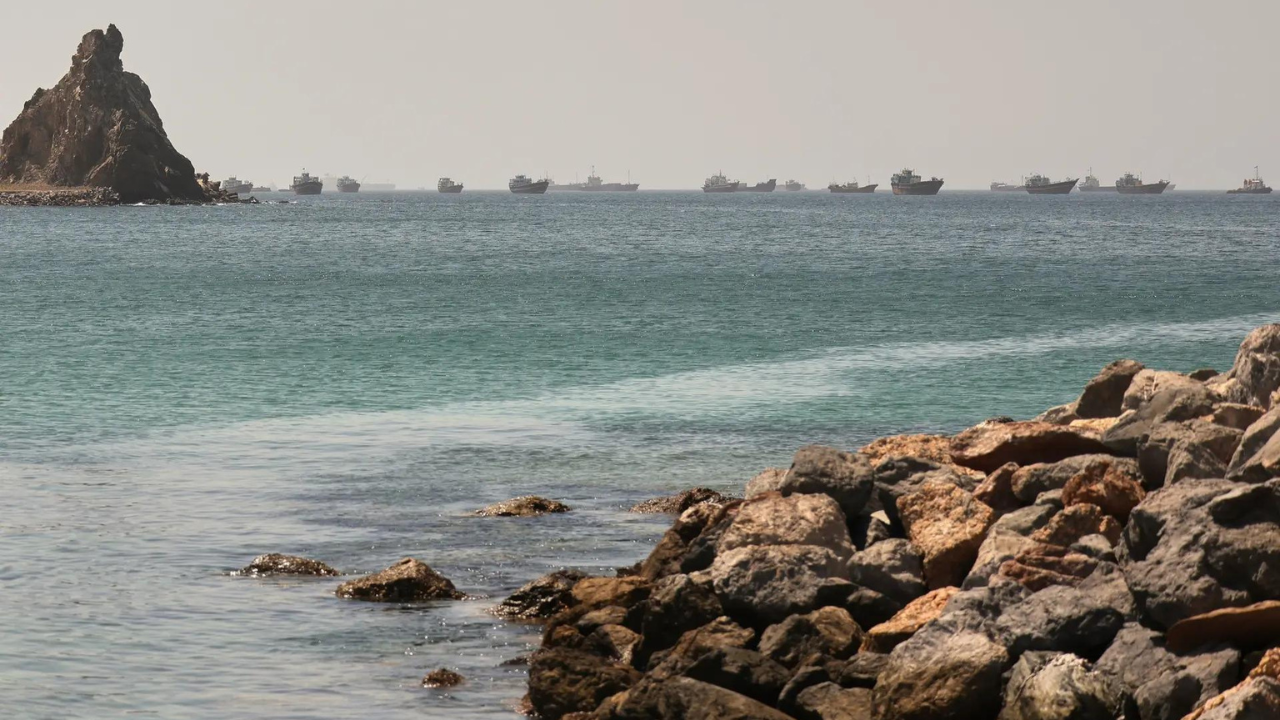
Geography is a permanent strategic advantage. At its narrowest point, the Strait of Hormuz is only 21 miles wide. Within that narrow stretch, the internationally recognized shipping channels shrink to just two miles of inbound and two miles of outbound lanes, separated by a two-mile buffer zone.
[ Iran Coastline ]
--------------------------------------------------
   Inbound Lane (2 Miles Wide)
--------------------------------------------------
   Buffer Zone  (2 Miles Wide)
--------------------------------------------------
   Outbound Lane (2 Miles Wide)
--------------------------------------------------
[ Oman Coastline / Musandam Peninsula ]
Every single supertanker carrying crude oil from Saudi Arabia, Iraq, Kuwait, and the United Arab Emirates must squeeze through this maritime needle.
Iran does not need a sophisticated navy to close this gap. It does not even need to sink a large number of vessels. The goal of asymmetric maritime warfare is not total destruction; it is the creation of intolerable risk.
By utilizing a combination of low-tech naval mines, shore-based anti-ship cruise missiles, and fleets of fast-attack swarm boats, Iran can alter the insurance calculus overnight. When maritime insurers refuse to cover hulls, or when premiums skyrocket to prohibitive levels, the strait closes itself. Commercial shipping lines simply anchor and wait.
The Failed Mechanics of Deterrence
The events of the past few months shattered the long-held Western assumption that a massive naval presence could guarantee freedom of navigation. Operation Prosperity Guardian and subsequent naval deployments were designed to project overwhelming force. They failed to keep the lanes running normally.
The math favors the disruptor. A single sea mine costing a few thousand dollars can cripple a multi-million-dollar commercial vessel. Clearing those mines is a slow, agonizing process.
Maritime intelligence estimates suggest that completely clearing the strait of ordnance will take up to six months. Even as President Trump announces a toll-free opening, commercial operators are pushing back. Shipowners look at the sheer volume of weaponry Iran has retained throughout the conflict and choose caution.
The military-industrial base inside Iran rebuilt its drone production lines faster than Western intelligence anticipated. Tehran did not deplete its strategic reserves during the recent fighting. It refined its tactics.
The strategy relies on anti-access and area-denial. By demonstrating that it could successfully target Gulf energy infrastructure and force commercial vessels to use an Iranian-run vetting lane in the north, Tehran established a precedent.
The Tollbooth Strategy and the Insurance Conundrum
The diplomatic breakthrough in Switzerland is intended to restore order, but Iran is already shifting the goalposts. First Vice President Mohammad Reza Aref recently suggested that vessels passing through the strait should begin paying for the privilege, framing past free passage as mere Iranian hospitality.
This introduces a legal and economic nightmare for global shipping companies. The waters of the strait are shared between Iran and Oman under the United Nations Convention on the Law of the Sea, which guarantees transit passage for international navigation.
Demanding a toll violates this framework, but international law means very little when a state possesses shore-based missile batteries.
For a commercial operator, paying an Iranian transit fee is not just a matter of operational cost. The Islamic Revolutionary Guard Corps controls the maritime infrastructure in the region.
Because Western governments designate the group as a terrorist organization, any financial transaction could trigger immediate violations of domestic sanctions. Shippers are caught in an impossible vice. They must choose between risking an international legal penalty or risking the loss of a vessel.
The corporate response has been an immediate freeze. The leadership of major shipping conglomerates, including Mitsui OSK Lines and Hapag-Lloyd, has indicated that operations will not resume normally for weeks or months after the treaty is signed.
There are currently hundreds of commercial vessels stranded inside the Persian Gulf. They cannot simply stream out in a single afternoon.
The Secondary Chokepoint
The threat is no longer contained to a single body of water. US intelligence is tracking a coordinated effort by Tehran to expand its economic leverage down the Arabian Peninsula.
By supplying advanced weaponry and targeting data to Houthi rebels in Yemen, Iran has created a secondary kill-zone in the Bab-el-Mandeb Strait. This connects the Red Sea to the Indian Ocean, forming the vital southern approach to the Suez Canal.
A simultaneous disruption of both Hormuz and Bab-el-Mandeb would create a maritime blockade that no Western coalition has the hull count to break. It represents a coordinated economic stranglehold.
[ Mediterranean Sea ]
         |
    (Suez Canal)
         |
    [ Red Sea ]
         |
    (Bab-el-Mandeb Chokepoint - Houthi / Iranian Pressure)
         |
    [ Gulf of Aden ] ----> [ Arabian Sea ] <---- [ Gulf of Oman ]
                                                       |
                                            (Strait of Hormuz - Direct Iranian Control)
                                                       |
                                                [ Persian Gulf ]
The United States granted temporary oil waivers to Iran as a condition for the 60-day ceasefire extension, allowing Tehran to monetize its leverage while the formal negotiations take place. This is a significant concession. It proves that the threat to global supply chains has forced Washington to abandon its maximum pressure campaign in favor of risk management.
Why the Energy Markets Cannot Diversify Away
The fundamental flaw in Western economic defense strategy is the belief that pipelines can replace the strait. Saudi Arabia and the United Arab Emirates have spent billions constructing cross-country pipelines to move crude to ports on the Red Sea and the Gulf of Oman, bypassing the chokepoint entirely.
The capacity of these pipelines is a fraction of what moves by water. The East-West Pipeline across Saudi Arabia can handle roughly five million barrels per day when operating at peak performance.
The total volume of oil and liquefied natural gas passing through the Strait of Hormuz regularly exceeds twenty million barrels per day. The infrastructure simply does not exist to absorb the difference.
The global supply chain operates on just-in-time logistics. Oil inventories held by consuming nations can cushion a brief disruption, but a prolonged closure alters manufacturing costs, agricultural production, and transport pricing worldwide.
The true power of Iran’s geographic advantage is that it does not require a nuclear test to terrify the market. The mere capability to disrupt is as effective as the act itself.
The framework agreement to be signed this Friday provides a temporary reprieve for a global economy desperate for stability ahead of major political elections in the West. But it does nothing to alter the structural reality of the Persian Gulf.
The United States has spent decades trying to counter a conventional and nuclear threat from Iran, only to find that the simplest, oldest weapon on the board—control of a narrow strip of water—remains completely unanswerable.