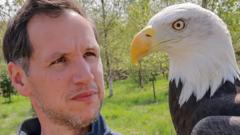
Modern conservation efforts are facing a severe crisis of efficacy, disguised as public education. Across the globe, zoos, sanctuaries, and theme parks are launching live avian exhibitions with the stated goal of saving endangered birds from extinction. These spectacles promise that up-close encounters will inspire crowds to fund global conservation projects. The underlying reality is far less optimistic. Decades of data show that watching a trained raptor fly over a stadium audience does almost nothing to reverse habitat destruction or stop poaching in the wild. Instead, these shows primarily serve as revenue generators that keep institutions financially afloat while offering the public an easy escape from the hard truths of ecological collapse.
The Marketing Behind the Spectacle
Amusement parks and zoological facilities frequently introduce new avian attractions with massive public relations campaigns. These campaigns lean heavily on emotional appeals, suggesting that the survival of species like the Philippine eagle or the Andean condor depends on public awareness generated by these events. The financial structure tells a different story. Recently making headlines in this space: Inside the Iran Evacuation Crisis Nobody is Talking About.
Ticket sales, premium seating upgrades, and souvenir photographs form the financial bedrock of these operations. While a small percentage of the proceeds may be directed toward field conservation, the vast majority of the income goes right back into facility maintenance, marketing, and operational overhead.
The core argument presented by organizers is that people must see an animal to care about it. This assumption has dominated the wildlife exhibition industry for half a century. Yet, during this exact period, global biodiversity has plummeted at an unprecedented rate. The connection between entertainment-driven awareness and tangible conservation outcomes is weak, if not entirely absent. Further information on this are explored by BBC News.
What Audiences Actually Take Home
Sociological studies on zoo visitors reveal a frustrating pattern regarding what people actually retain from live animal shows. Most attendees remember the spectacle rather than the message. They remember the thrill of a falcon brushing past their shoulders or a parrot performing a clever trick. They do not remember the specific name of the endangered habitat or the legislative policies threatening that habitat.
The psychological impact of these shows can even be counterproductive to actual preservation. When an audience sees a rare bird interacting predictably with a trainer in a controlled, pristine environment, it creates a false sense of security. The subconscious takeaway is that the species is doing fine because healthy examples are readily available to view. The urgency of the extinction crisis is stripped away, replaced by a comfortable afternoon of family entertainment.
True conservation requires sacrifice, policy shifts, and substantial funding for habitat protection. Entertainment models suggest that saving a species is as simple as buying a ticket and watching a performance.
The True Cost of Training and Captivity
Maintaining wild birds for public performance requires behavioral modification techniques that alter the animals' natural instincts. Raptors, by nature, are solitary predators that avoid human contact and conserve energy for hunting. In a show environment, these birds must be conditioned to tolerate loud noises, sudden movements, and proximity to thousands of screaming spectators.
Food deprivation or weight management is the primary mechanism used to ensure cooperation. Trainers keep the birds at a specific percentage of their natural wild weight so they remain motivated to return for food rewards during the performance. If a bird is too heavy, it may simply fly away or refuse to participate. While this practice is standard across the industry, it keeps the animals in a perpetual state of controlled hunger.
Furthermore, the physical demands of a stadium show are entirely unrepresentative of wild behavior. A bird of prey soaring in a confined arena is not exercising its natural hunting or migratory patterns. Over time, the stress of constant transport, restricted housing, and repetitive performances can lead to stereotypic behaviors, feather plucking, and shortened lifespans.
Where the Money Needs to Go
The resources spent on creating high-tech bird arenas, training staff, and marketing new shows could achieve vastly superior results if deployed directly into the field. Wildlife preservation is not an awareness problem; it is a resource problem.
Consider a hypothetical scenario where an institution spends five hundred thousand dollars to build a new avian amphitheater and purchase trained birds. If that same capital were directed toward purchasing threatened rainforest land or hiring anti-poaching rangers in Southeast Asia, the direct impact on wild populations would be measurable and permanent.
- Land Acquisition: Protecting the physical space where birds breed and hunt is the single most effective way to prevent extinction.
- Community Enforcement: Funding local communities to protect their native wildlife creates sustainable economic alternatives to poaching.
- Scientific Research: Tracking wild populations via satellite telemetry provides the data needed to draft protective legislation.
None of these actions are as profitable or as visible to the public as a stadium show, which is why institutions consistently choose the entertainment path.
The Myth of Captive Breeding for Reintroduction
Many facilities defend their entertainment programs by linking them to captive breeding initiatives. They claim that the birds on display are ambassadors for a breeding herd that will eventually replenish wild populations. While captive breeding has succeeded in a few high-profile cases, it is incredibly difficult to execute successfully for most avian species.
Birds hatched in captivity lack the vital survival skills taught by wild parents. They do not know how to avoid predators, find natural water sources, or navigate complex migratory routes. When released, these birds suffer incredibly high mortality rates. In many cases, captive-bred individuals simply cannot adapt to the harsh realities of the wild, making the entire cycle an expensive exercise in futility.
Relying on captive breeding also ignores the root cause of the population decline. Releasing birds into a forest that is actively being logged or sprayed with pesticides ensures that the new individuals will face the exact same fate as their predecessors. The focus must remain on fixing the environment, not manufacturing animals to fit into a broken ecosystem.
A New Model for Avian Conservation
If public exhibitions are failing to protect wild birds, the entire industry must pivot toward models that prioritize the environment over entertainment. This means moving away from choreographed performances and toward genuine, hands-on habitat restoration.
Facilities must stop treating animals as performers and begin treating them as permanent residents who deserve environments that mirror the wild as closely as possible. Education should focus on the systemic threats of consumer behavior, industrial agriculture, and carbon emissions, rather than individual animal trivia.
The era of using captive wildlife as a prop for corporate public relations must come to an end. The public does not need to see a bird do tricks to understand that a forest is worth saving. True conservation happens when the spotlights are turned off and the resources are sent directly to the front lines of the wilderness, where the real battle for survival is being fought every single day.