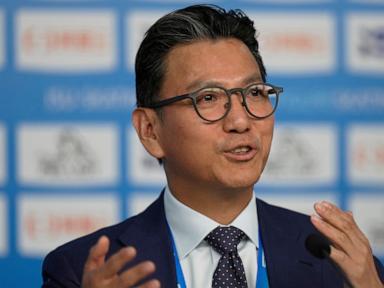
While other winter sports governing bodies tangle themselves up in institutional chaos, the International Skating Union just gave a masterclass in stability.
On Thursday at the 60th ISU Ordinary Congress in Tenerife, Spain, Kim Jae-youl secured his re-election as president without facing a single opponent. His new term stretches through 2030, offering a stark contrast to the intense public drama and factional infighting currently plaguing sibling sports like skiing.
This smooth ride wasn't an accident. It's the direct result of a massively successful Milano Cortina 2026 Winter Olympics cycle and an aggressive, corporate-style modernization effort that won over athletes and traditionalist federations alike.
The Corporate Blueprint Transforming Ice Sports
If you want to understand how Kim locked down a unanimous second term, you have to look at his resume. He doesn't come from the old-school blazer brigade of European sports politics. He spent over 30 years climbing the ranks of global business, including major executive stints at massive Samsung affiliates like Cheil Industries and Samsung Engineering.
When he became the first non-European president in ISU history back in 2022, traditionalists wondered if a corporate outsider would alienate the sport's historic base. Instead, he treated the federation like a global enterprise that badly needed a restructure.
Under his "ISU Vision 2030" framework, Kim went straight to work fixing the creaky, century-old institutional structures. In 2024, he successfully pushed through an amendment to modernize the ISU’s statutes and streamline decision-making. He didn't just talk about reform; he completely updated how the business operates.
Putting Real Money on the Ice
Sports administrators love talking about athlete welfare, but they rarely back it up with hard cash. Kim changed the conversation by attacking the financial realities of elite skating.
Starting in the 2026-2027 season, athlete prize money under the ISU will more than double, skyrocketing from $5.4 million to $11 million. That's a massive, tangible win that directly impacts the people keeping the sport alive.
It's easy to see why potential challengers evaporated. When a president is actively filling the bank accounts of member nations and their star athletes, mounting an opposition campaign is an uphill battle nobody wants to fight.
Cashing In on the Milano Cortina Success
The real catalyst for this undisputed re-election was the undeniable triumph of the Milano Cortina 2026 Winter Olympic Games.
Going into February, winter sports were facing a critical cultural test. The 2022 Games in Beijing suffered from low engagement and a sterile atmosphere dictated by strict pandemic restrictions. Milano Cortina needed to be a massive course correction, and ice skating carried the heaviest load of that expectation.
The strategy worked. Driven by the high-concept "Skate to Milano" campaign launched in late 2025, figure skating, short track, and speed skating became the absolute crown jewels of the broadcast schedule. According to viewing data shared after the Games, the Milan event became the most-watched Winter Olympics since 2014, pulling in an average audience that was 96% larger than the Beijing Games.
Audiences tuned in for historic narratives. American star Alysa Liu completed an unbelievable comeback after a two-year retirement to capture gold in the women's singles event, breaking a 24-year title drought for U.S. women dating back to 2002. Her captivating story, combined with a dramatic surge in broadcast innovation and digital fan engagement, made ice skating the undeniable anchor of the entire Olympic program.
Deepening the Power Base in the IOC
Kim's political victory extends well beyond the ISU headquarters. Just days before the opening ceremony in Milan, the 145th IOC Session elected Kim to the highly influential International Olympic Committee Executive Board.
This position isn't just an honorary title. The Executive Board is the inner sanctum where the real decisions regarding Olympic revenue distribution, sport inclusion, and event scheduling happen. Kim’s presence there gives the skating world an incredibly powerful advocate.
Furthermore, Kim retains a prominent seat within the IOC's "Fit for the Future" working group. This project is tasked with reshaping the composition of the Olympic Games for the next generation. By aligning the ISU so closely with the IOC’s core leadership, Kim has ensured that ice sports remain central to the broader Olympic movement as media consumption habits change.
Winning the Future Through Aggressive Innovation
Stability at the top doesn't mean the sport is standing still. In fact, Kim's leadership shows that the best way to avoid political mutiny is to keep moving forward so fast that critics can't keep up.
The federation has fundamentally changed how it presents its events. Rebranding efforts like the Short Track World Tour have turned historically niche events into highly packaged, media-friendly entertainment properties. Initiatives like World Ice Skating Day have expanded the global footprint, proving to grassroots clubs that the leadership cares about more than just the elite podiums.
By blending corporate governance with a massive injection of cash for athletes and maintaining a flawless political relationship with the IOC, Kim has turned the ISU into one of the most stable governing bodies in international sport.
For the next four years, the agenda is clear. The ISU will continue rolling out its Vision 2030 pillars of growth, opportunity, innovation, safeguarding, and unity. For athletes, fans, and member federations, that means more investment, bigger broadcasts, and a complete absence of the political drama that usually derails global sports.