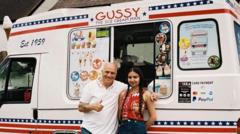
The common assumption is that extreme heatwaves are a goldmine for mobile ice cream vendors. When the asphalt softens and the air turns thick, logic suggests that a truck blasting a nostalgic chime and carrying frozen dairy would see unprecedented demand. The operational reality is entirely different. For the independent operator, a brutal heatwave is not a windfall. It is a high-stakes logistical and economic crisis. When ambient temperatures cross the threshold of 95 degrees Fahrenheit, the mechanical, physical, and consumer dynamics change, threatening both the product and the operator.
Beneath the fiberglass cones and colorful decals lies a fragile balancing act of thermal engineering and razor-thin profit margins. Extreme heat does not drive sales. It paralyzes them.
The Mirage of Peak Demand
Street vending relies on a simple premise. People must be outside to buy what you are selling. When temperatures spike into dangerous territory, municipal health agencies issue warnings advising citizens to stay indoors. The crowds that fill parks and beaches on an 82-degree afternoon vanish entirely when the thermometer hits triple digits.
Independent operators report a sharp drop in foot traffic during peak heat hours. Residential routes become ghost towns. Children are kept inside air-conditioned homes, and parents refuse to stand on baking concrete waiting for a soft-serve cone. The window for profitable trading shrinks from a full day to a brief, frantic period in the late afternoon and early evening when the sun begins to dip.
This shift completely upends the unit economics of a mobile route. Fuel costs remain fixed or rise due to extended idling, while the volume of transactions plummets. Vendors are forced to choose between burning diesel to hunt for scarce customers or parking the vehicle and losing a day of revenue entirely.
The Thermal Battery Problem
To understand how an ice cream van handles intense heat, one must look at the refrigeration systems keeping the product solid. The mobile ice cream sector largely relies on two distinct technologies, and both face structural vulnerabilities when the weather turns extreme.
Eutectic Plates and Passive Holding
Many traditional step vans utilize eutectic refrigeration systems, often referred to as cold plates. These are large, flat metal tanks filled with a specialized chemical solution that freezes at temperatures far below the freezing point of water, typically around -26 degrees Fahrenheit.
- The Charging Cycle: The operator plugs the vehicle into mains electricity overnight. A compressor runs for 10 to 12 hours, freezing the chemical solution solid.
- The Passive State: During the day, the compressor remains off. The frozen plates act as a thermal battery, absorbing the ambient heat that enters the truck body and keeping the storage compartment frozen.
- The Failure Point: Eutectic systems possess a finite capacity for heat absorption. Every time the operator opens the freezer lid to serve a customer, a rush of hot, humid air enters the compartment. In standard summer weather, the plates can easily maintain safe temperatures for a 10-hour shift. In extreme heat, the thermal battery drains at an accelerated pace. The solution melts completely by mid-afternoon, leaving the operator with hundreds of dollars of unsellable, soup-like inventory.
Over-the-Road Mechanical Refrigeration
Modern operations frequently favor direct mechanical refrigeration units powered by the vehicle's engine or a separate diesel generator. These systems use a compressor, condenser, and evaporator coils to actively pump heat out of the cargo space, much like a commercial grocery delivery truck.
While mechanical systems offer infinite cooling time in theory, they are highly vulnerable to the ambient operating conditions inside a vehicle chassis. Air-cooled condensers require a steady stream of relatively cool air to shed heat. When a truck is idling on blistering asphalt, the air drawn into the condenser assembly can easily exceed 120 degrees Fahrenheit.
The pressure inside the refrigeration lines spikes. The compressor must work significantly harder to move the refrigerant, drawing more power from the engine and burning through fuel at an unsustainable rate. If the pressure exceeds safe mechanical tolerances, high-pressure cut-out switches trip, shutting down the cooling system entirely to prevent an explosive rupture of the lines.
The Greenhouse on Wheels
The interior environment of an ice cream van is a workspace nightmare during a heatwave. It is a metal box containing a combustion engine, a transmission, and refrigeration equipment, all radiating immense heat into a cramped cabin.
+-------------------------------------------------------+
|  Typical Internal Temperatures During a Heatwave      |
+-------------------------------------------------------+
|  Ambient Outside Air:               98°F / 36.6°C     |
|  Radiant Asphalt Temperature:      135°F / 57.2°C     |
|  Ice Cream Van Cab Interior:       112°F / 44.4°C     |
|  Soft-Serve Machinery Workspace:   118°F / 47.8°C     |
+-------------------------------------------------------+
Soft-serve machines are notorious heat producers. These units use high-powered electric motors and compressors to freeze liquid mix on demand. The heat extracted from the dairy mix must go somewhere, and it is vented directly into the interior of the van.
Operators must work within inches of this machinery. Installing air conditioning in the driver's cab provides little relief because the serving window must remain wide open to interact with public health regulations and customers. The constant air exchange defeats any standard automotive climate control system. This creates an environment where operator exhaustion and heat stroke are constant hazards.
The Chemistry of Soft Serve
Maintaining product integrity is not just about keeping things cold. It is about understanding the delicate physical structure of ice cream. Soft-serve dairy mix is an emulsion of milk fat, water, sugar, and proteins, held together by air cells and tiny ice crystals.
       [ Air Cell ] <--- Air incorporation (Overrun)
          /    \
 [Fat Globules] [Ice Crystals] ---> Provides structural rigidity
          \    /
      [Serum Phase] ---> Dissolved sugars and water
The product relies on a precise balance of ice crystal formation and air incorporation, known in the industry as overrun. If the internal temperature of the soft-serve machine cylinder rises by even a few degrees, the ice crystals melt.
Once these crystals dissolve, the air escapes. The resulting product is dense, icy, and loses its smooth, creamy texture. If a vendor dispenses a cone that has suffered from thermal shock, the ice cream will liquefy within seconds of hitting the outside air, sliding off the cone before the customer can eat it. This leads to immediate customer dissatisfaction and product waste.
The Hidden Capital Expenditure
The hidden cost of operating an ice cream van in extreme weather extends far beyond fuel and ruined stock. The mechanical toll on vintage and custom vehicles is severe.
Many iconic ice cream vans are built on aging commercial chassis platforms that were never engineered to idle for hours in triple-digit heat while powering auxiliary electrical generators and high-amperage cooling pumps. Radiators clog with road debris. Coolant hoses degrade under prolonged thermal stress. Alternators burn out as they struggle to supply power to internal lighting, water pumps, and freezers.
A single mechanical breakdown during a heatwave can devastate an independent business. Repair shops are routinely backed up during peak summer months, meaning a blown head gasket or a seized compressor can sideline a truck for weeks. In an industry where operators must make the bulk of their annual income over a four-month window, losing two weeks of prime summer trading is often financially fatal.
Navigating the Grey Areas
Survival in the modern mobile vending sector requires tactical adaptation. Veteran operators are changing how they run their routes to combat shifting weather patterns.
Instead of chasing residential street traffic, smart operators are pivoting toward pre-booked corporate events, private parties, and festival grounds where crowds are guaranteed and shade structures are available. Parking over grass or dirt surfaces rather than asphalt significantly reduces the radiant heat absorbed by the vehicle underside, dropping cabin temperatures by several degrees.
Vendors are also diversifying inventory away from traditional dairy products. Water-based items like shaved ice, frozen lemonades, and fruit popsicles have a lower freezing point threshold and are far cheaper to produce than heavy dairy mixes. If a batch of fruit ice melts due to refrigeration strain, the financial loss is a fraction of the cost of premium soft-serve mix.
The romanticized image of the neighborhood ice cream truck is colliding directly with the realities of an overheating environment. The operators who survive are those who treat the vehicle not as a simple delivery mechanism, but as a complex industrial plant that requires rigorous mechanical maintenance, precise thermal management, and a willingness to abandon the traditional route when the pavement begins to burn.