The Fetishization of the Dying Freeze
We love a good martyrdom story.
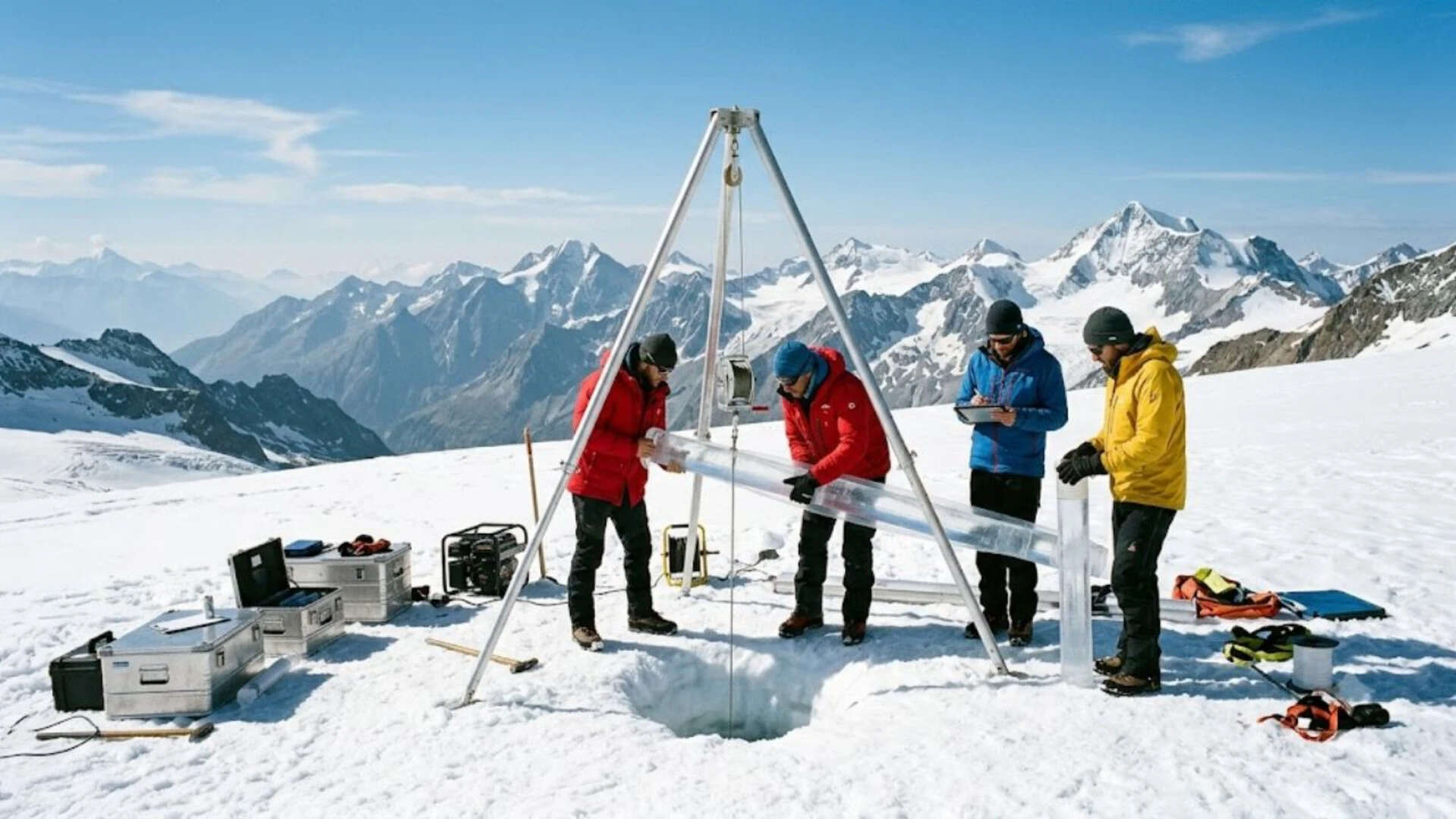
When media outlets gush over scientists racing to drill 33 feet into a melting alpine glacier to retrieve a 2,000-year-old climate record, they want you to feel a specific mixture of awe and panic. They paint a heroic picture: dedicated researchers battling the clock, extracting frozen history before it turns to mud.
It is romantic. It is dramatic. It is fundamentally misdirected science.
The heroic narrative surrounding "emergency ice core extraction" hides an awkward truth that paleoclimatologists rarely admit to journalists: retrieving ice cores from rapidly degrading, low-altitude glaciers is an exercise in diminishing returns. We are spending vast amounts of capital, human energy, and field research budget on data that is already corrupted by the very heat we are trying to measure.
We need to stop treating every melting glacier like an irreplaceable library. Some of them are already junk data.
The Physics of Meltwater Contamination
To understand why this desperate race for shallow alpine ice is flawed, you have to understand how ice cores actually work.
An ice core is not a video recording; it is a delicate mechanical archive. Atmospheric dust, volcanic ash, trapped gas bubbles, and chemical isotopes settle on snow layers year after year. Over centuries, weight compresses that snow into ice, sealing those proxies in place.
For an ice core to provide an accurate timeline, those layers must remain stratigraphically intact.
Here is what happens when a glacier starts to melt from the top down:
- Percolation: Surface meltwater does not just run off the sides; it trickles down through the porous upper layers (the firn).
- Chemical Smearing: As that water travels downward, it dissolves soluble ions like nitrate, sulfate, and sodium, dragging them into deeper, older ice layers.
- Signal Blurring: Isotopic ratios of oxygen and hydrogen—the core indicators used to reconstruct past temperatures—get homogenized.
By the time a team drills 33 feet into a compromised temperate glacier, the meltwater has often already rewritten the record. You aren't reading a 2,000-year-old archive; you are reading a waterlogged document where the ink from year 1800 has bled into the ink from year 200.
Researchers know this. Yet the pressure to perform "rescue science" keeps funding directed toward dying sites rather than superior alternatives.
High-Altitude Desperation vs. Polar Precision
Compare a 30-foot drill attempt on a degrading mountain pass to the deep drilling projects in Antarctica or Greenland, such as the EPICA project or the Beyond EPICA initiative aimed at recovering 1.5-million-year-old ice.
| Metric | Low-Altitude Alpine Ice | Polar Ice Sheets (East Antarctica) |
|---|---|---|
| Meltwater Interference | High to Severe | Near Zero |
| Time Horizon | Hundreds to a few thousand years | Hundreds of thousands to millions of years |
| Temporal Resolution | Highly distorted by seasonal thaws | Extremely sharp annually resolved layers |
| Data Integrity Risk | Imminent destruction / heavy alteration | Stable long-term preservation |
I have spent years analyzing how research capital gets allocated in earth sciences. The harsh reality is that funding follows narrative. "Saving the last ice of the Alps" makes a fantastic headline. "Refining gas-chromatography protocols on stable polar samples" does not.
When money flows to theatrical rescue missions on temperate ice, it starves the less photogenic, higher-yield initiatives.
Visualizing Signal Corruption in Melting Ice:

[ Intact Snow Layers ]  --->  ( Surface Thaw )  --->  [ Percolating Water ]
        |                                                    |
        v                                                    v
[ Clean Chronology ]                                 [ Blurring & Bleeding ]
(Distinction between years clear)                  (Chemical signatures mixed)
Stop Asking "How Do We Save the Ice?"
The common consensus asks: How can we retrieve these records before they disappear forever?
That is the wrong question. It assumes every mountain glacier holds a unique piece of the global climate puzzle that cannot be solved any other way.
The right question is: Where is our marginal dollar best spent to improve climate modeling precision?
The answer is rarely a 30-foot hole in a slushy mountain pass.
If a glacier is already undergoing active summer thermal degradation throughout its firn layer, the historical signal is compromised. Continuing to drill there to satisfy a preservationist reflex is bad risk management.
Instead of chasing ruined ice, climate science needs to shift aggressively toward non-glaciated proxies and ultra-stable deep cold storage sites.
1. Borehole Climatology
Instead of analyzing the chemical composition of the ice itself, measure the precise temperature profiles down deep boreholes in stable rock or cold ice. The physics of heat diffusion allows scientists to reconstruct surface temperature history without worrying about meltwater washing away chemical markers.
2. High-Resolution Speleothems
Cave formations (stalagmites and stalactites) provide exceptionally detailed isotopic records of past rainfall, vegetation changes, and temperature fluctuations. They do not melt when the outside temperature rises above freezing.
3. Marine and Lake Sediments
For long-term trends, ocean floor cores remain the undisputed titan of consistency. They lack the high annual resolution of pristine polar ice, but they are completely immune to atmospheric melt events.
The Uncomfortable Trade-Off of Rescue Archives
There is an argument to be made for "Ice Memory" initiatives—collecting cores from around the world and storing them in Antarctica for future generations of scientists who might have better analytical tools.
It sounds noble. But let us be candid about the trade-offs.
Every expedition to a remote, high-altitude site requires massive logistical infrastructure: helicopters, specialized high-altitude drilling gear, diesel generators, cold-chain transport logistics, and high-risk field maneuvers.
When you run those operations on ice domes that are already structural slush, you risk taking huge financial and physical risks for data that may ultimately be thrown out of future meta-analyses due to signal contamination.
Admitting that a data source is lost is not defeatism. It is basic triage.
What We Must Do Instead
If we want clear, uncorrupted answers about Earth's atmospheric history to refine predictive models, we need to strip the emotional romanticism out of paleoclimatology.
- Establish strict integrity thresholds for field sites. If the firn layer exhibits summer percolation past a critical depth, cancel the drilling operation. Do not spend millions to collect slush.
- Redirect alpine budgets to stable polar repositories. Double down on deep-field operations in inland East Antarctica, where the ice is cold, dry, and stable.
- Invest in advanced proxy integration. Stop relying on ice cores as a single source of truth for localized microclimates. Blend speleothem data, tree-ring density, and sediment analysis into machine-learning frameworks designed to infer missing historical variables.
It is painful to watch a piece of natural history melt away into a stream. But wasting top-tier scientific talent and limited capital trying to collect waterlogged artifacts is worse.
We need cold, hard data. Not sentimental cold ice.