The platform at the Gorakhpur railway station smells of stale diesel, roasted corn, and the distinct, rising panic of men who have nothing left to pledge. It is three in the morning. The air is thick enough to chew. A loudspeaker crackles with an unintelligible announcement, swallowed instantly by the screech of iron wheels biting against iron tracks.
Ram Kumar does not listen to the loudspeaker. He listens to the quiet, rhythmic tearing of a plastic bag inside his cloth bundle. Inside are three flatbreads smeared with mango pickle and a change of clothes that smells faintly of river mud and sweat. He is twenty-four years old. He has two children who know him mostly as a tired voice on a cheap mobile phone and a woman at home whose calloused hands tell the story of an unyielding acre of dry earth in eastern Uttar Pradesh.
Ram is boarding a train north. His destination is a valley surrounded by snow-draped mountains, a place framed on television screens by smoke, razor wire, and the cold glint of automatic rifles. He is going to Kashmir.
To anyone watching from the comfort of a metropolitan office tower, the choice looks incomprehensible. Why walk willingly into a zone of chronic insurgency, where notices pasted on brick walls warn outsiders to leave, and where the ghost of targeted violence hangs heavy in the alpine air? Why trade the security of home for a theatre of perpetual unrest?
The answer is deceptively simple, and devastatingly heavy. Hunger has no political ideology.
The Arithmetic of Desperation
To understand why thousands of workers like Ram pack into crowded compartments every spring, you have to look past the breaking news banners and look directly at a ledger of numbers that do not balance.
In the villages of Bihar, Jharkhand, and Uttar Pradesh, casual daily wage labor yields roughly three hundred rupees a day—if work can be found at all. During the lean months between harvests, that number drops to zero. A family cannot survive on zero. Debt accumulates like mold in a damp corner, quietly choking out options until the only remaining door leads away from home.
In Kashmir, the economic equation shifts violently. Because a large portion of the local workforce migrates for higher education or government jobs, or finds employment elsewhere, a vast vacuum exists in manual labor. Construction booms during the short summer and autumn thaw. Apple orchards require thousands of hands to pick, sort, and crate millions of boxes of fruit before the first killer frost locks the passes.
For this labor, the wages are nearly double, sometimes triple, what a worker can command in the Gangetic plains. A mason or a picker can earn enough in six months of grueling, dawn-to-dusk toil to pay off a predatory moneylender, buy a small patch of land, or fund a sister’s wedding.
It is high pay. And it comes with high peril.
Consider what happens when the two forces collide: the irresistible pull of financial survival against the immovable wall of political instability. The migrant worker stands precisely at the intersection of these forces, bracing for impact.
Living in the Shadow of the Ridge
The bus winds upward along the Jammu-Srinagar highway, a ribbon of asphalt carved precariously into cliffs of slate and shale. Below, the Chenab River rushes like melted glass, churning with white water.
For Ram, the journey is marked not by the breathtaking majesty of the Pir Panjal range, but by the checkpoints. Soldiers in full combat gear wave the vehicle through with curt gestures of authority. Every few miles, bunkers draped in camouflage netting loom over the road.
When the bus finally deposits him on the outskirts of Srinagar, the air changes. It is sharp, biting, smelling of burning pine wood and damp earth. He finds his way to a cramped rented room shared by six other men from his district. They sleep on thin mattresses laid directly on a concrete floor, their meager belongings tucked into plastic sacks beneath their heads.
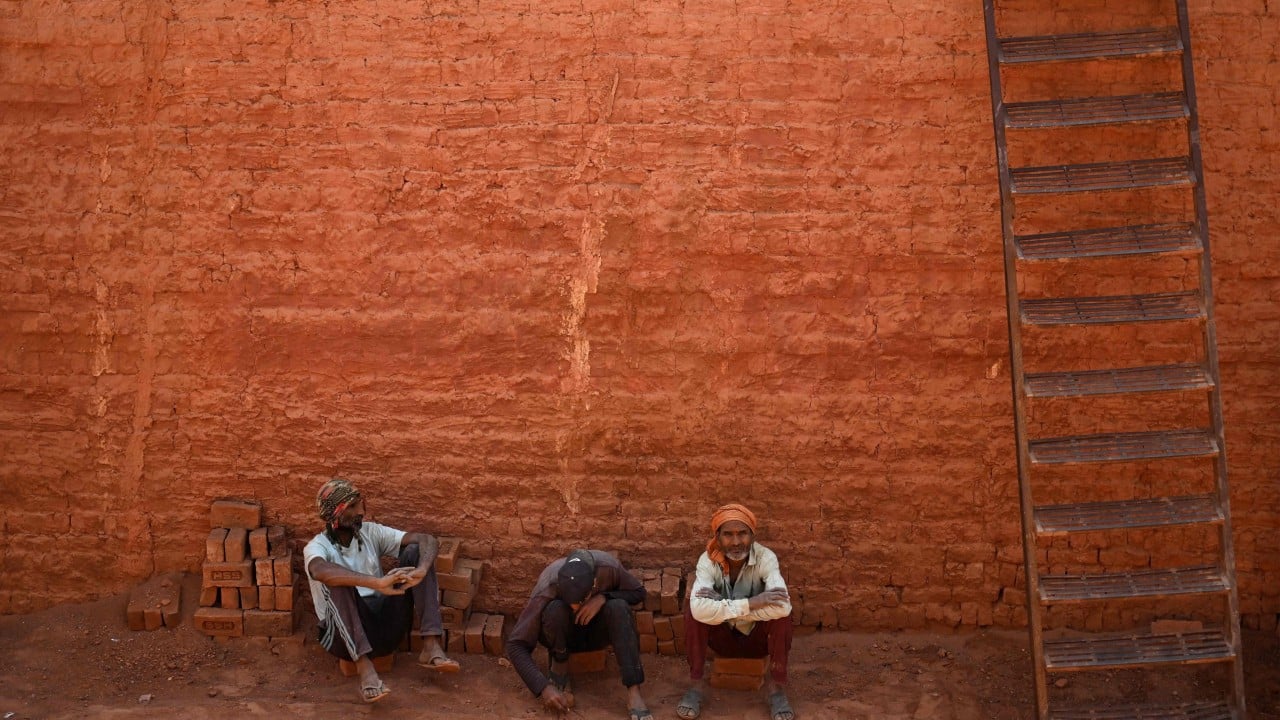
The work begins before dawn. Ram works as a mason’s helper on a half-finished commercial building in a bustling market square. The mortar is cold enough to crack the skin on his knuckles. He hauls bags of cement that weigh as much as he does, climbing skeletal scaffolding while the wind howls down from the heights.
At midday, they sit on upturned buckets to eat cold rice and lentils. They do not talk much about politics. Politics is a luxury for people who do not have to count every rupee to ensure their children eat tomorrow. Instead, they talk about bus fares, the price of mustard oil back home, and whether the contractor will pay on time this Saturday.
Yet, the peril is never absent. It is a quiet, ambient hum.
A few summers ago, a wave of targeted attacks rattled the migrant community. Militants gunned down non-local laborers in cold blood—brick-kiln workers, apple pickers, carpenters. The message was explicit, brutal, and designed to terrorize. Panic swept through the camps. Thousands fled to the railway stations, sleeping on concrete floors while waiting for emergency trains out.
Ram remembers that week. He was home then, watching the news on a tiny screen in a tea stall. He remembers the fear in his mother's eyes as she looked at him and said, "Never go there."
And yet, here he is.
Why? Because the fear of a bullet is sudden and abstract, while the fear of watching your children go to sleep with empty stomachs is slow, certain, and constant. Hunger wins every time.
The Psychology of the Long Distance Provider
There is a specific kind of psychological weight carried by the migrant worker. It is the weight of split identity.
In Kashmir, Ram is an outsider—a bihari, a term that has colloquially flattened millions of distinct lives into a single, generic category of cheap labor. He is viewed with a complex mix of economic necessity and local wariness. He keeps his head down. He does not linger on street corners after dark. He speaks softly, moves quickly, and makes himself as invisible as the mortar between the stones he lays.
Back home, however, he is something else entirely. He is the provider. He is the architect of the family's fragile stability.
Every Sunday evening, Ram finds a patch of open ground where the mobile network is stable. He dials his wife’s number. The phone rings with a tinny, cheerful electronic tune that feels entirely out of place in his reality.
"Everything is fine," he says into the plastic receiver, his voice pitching up into an unnatural cheerfulness. "The work is good. The people here are kind. Don't worry about the provisions."
He does not tell her about the checkpoint he passed that morning where soldiers checked his identity card three times. He does not mention the whispering in the market about a security alert. He edits out the reality of his days, leaving only the sanitized fiction of a man earning an honest living in a distant paradise.
His wife listens on the other end, her own voice carrying the quiet exhaustion of a woman managing a household alone. She tells him about the youngest child's cough, the price of fertilizer, the neighbor's cow that fell sick. They speak across a distance measured not just in kilometers, but in entirely different universes of experience.
When the call ends, Ram lowers the phone. The screen goes dark. He stands alone in the gathering mountain dusk, watching the lights flicker on along the ridge line like distant, watchful eyes.
The Fragile Architecture of Resilience
To view these workers merely as victims of circumstance is to misunderstand their agency. They are not passive pawns swept along by geopolitical currents; they are calculated risk-takers executing a desperate strategy with precision and courage.
They know the stakes. They read the same headlines, hear the same rumors, and witness the same security clampdowns. They calculate the probability of danger against the certainty of poverty, and they choose the road that offers a chance at dignity.
Governments and security forces attempt to secure the valley, installing camps, increasing patrols, and issuing advisory notices. But safety cannot be legislated into existence in a region torn by decades of unresolved conflict. Safety is an ecosystem of peace that remains frustratingly out of reach.
And so, the cycle continues. Trains pull out of Gorakhpur in the dark. Buses climb the mountain pass. Masons lift their trowels, and pickers reach for red fruit hanging heavy on the boughs.
The economic engine of the valley runs on their sweat. Their remittances keep rural households alive across the northern plains. It is a symbiotic relationship forged in the crucible of economic failure and regional unrest—a quiet, enduring testament to human endurance.
A single candle burns on a wooden crate in the corner of Ram’s rented room. Outside, the wind sweeps down from the snowfields, rattling the tin roof with a restless, hollow metallic sound. Ram sits on his mattress, unrolling a greasy rag to clean the calluses on his palms. Tomorrow is another day of heavy lifting, another day of quiet survival, another step forward on a path where the ground is always shifting, but the destination remains clear.