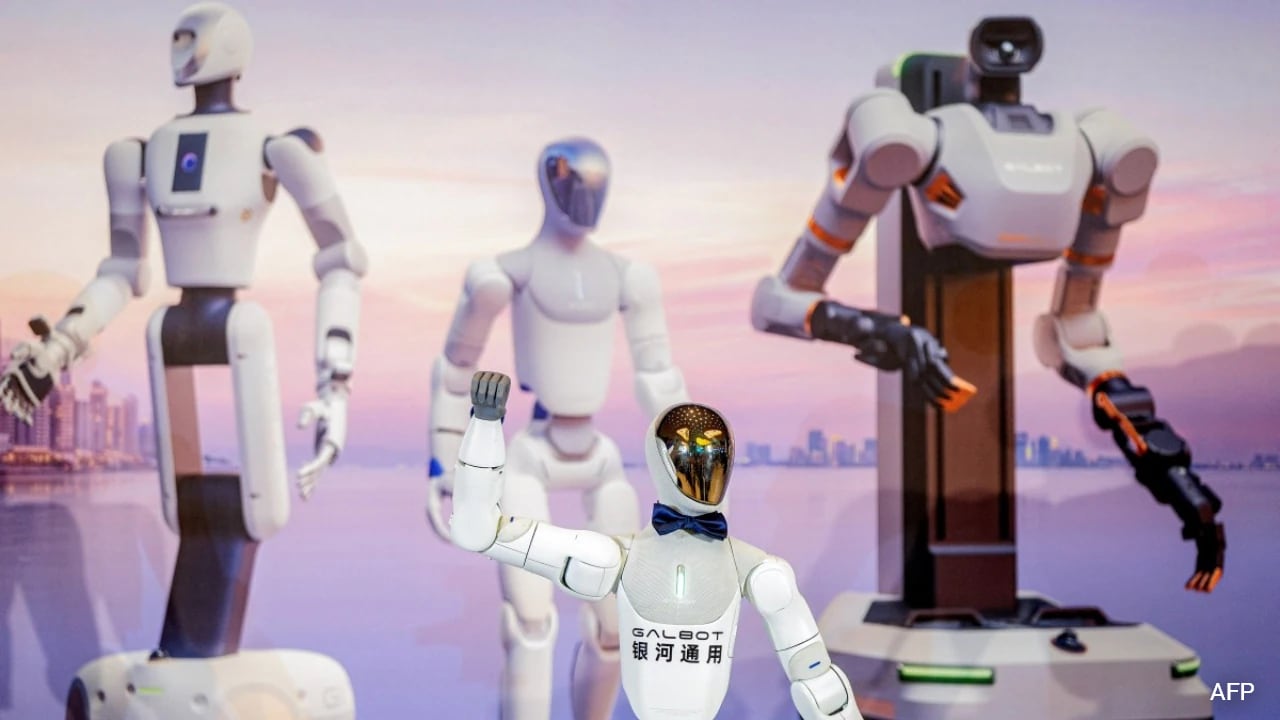
Capital markets are finally waking up to a basic physical truth: building a bipedal machine that can fold laundry without tearing the fabric is vastly harder than raising ten million dollars on a slide deck. Chinese regulators and stock exchanges have begun pumping the brakes on a frantic wave of initial public offerings from humanoid robotics startups. This sudden cooling off period stems from a growing realization that market valuations have detached entirely from commercial reality. Millions of venture dollars poured into companies promising general-purpose labor units within twenty-four months, yet most factory floors remain strictly populated by wheeled automated guided vehicles and stationary robotic arms.
When Beijing authorities started scrutinizing the balance sheets and technology readiness levels of these high-flying hardware aspirants, the underlying vulnerability of the entire sector became exposed. Venture capital firms had spent the previous three years funding a speculative feedback loop. Startups showed off heavily edited demonstration videos of robots walking across carpeted offices or picking up plastic water bottles in controlled laboratory environments. Public markets caught the fever, pricing early-stage enterprises at billion-dollar multiples before a single unit was deployed in a commercial setting.
The mechanics of industrial automation tell a very different story from the glossy press releases issued by venture-backed hardware firms. Factories are unforgiving environments. Dust, electromagnetic interference, variable lighting, and irregular payloads routinely blind optical sensors and throw off delicate gyroscope calculations. A humanoid form factor introduces immense mechanical complexity. Every joint requires a high-torque actuator, precision gearing, and advanced thermal management. Balancing a two-legged machine while it applies thirty pounds of force against a workpiece consumes staggering amounts of electrical power. Batteries that last eight hours in a simulation typically drain in forty-five minutes under genuine manufacturing load.
Market forces have a brutal way of punishing wishful thinking. Financial backers are discovering that software agility cannot instantly conquer hardware physics. Large language models can generate conversational dialogue or write code, but they cannot magically reduce the weight of rare-earth electric motors or eliminate the thermal limits of micro-actuators. The valuation correction currently rippling through Asian capital markets is a necessary correction. Investors are shifting their scrutiny away from charismatic founders pitching futuristic science fiction and toward unit economics, battery chemistry durability, and mean time between failures.
Regulatory caution from securities watchdogs serves a protective function, preventing retail investors from absorbing the shock of speculative bubbles built on empty promises. When exchanges demand hard evidence of revenue generation and scalable manufacturing lines, many nascent robotics firms suddenly find their pipelines looking remarkably empty. Pilot programs with automotive giants or logistics warehouse operators are often subsidized or performed at a loss simply to secure a press release photograph. They are not profitable, repeatable enterprise contracts.
The broader ecosystem must confront the reality of commercial deployment timelines. True general-purpose robotics requires breakthroughs in edge computing, power density, and tactile sensing that will take years of painstaking engineering to resolve. Treating hardware as if it scales with the velocity of mobile applications was always a dangerous delusion. By cooling the initial public offering rush, regulators are forcing a transition from marketing theater back to fundamental engineering. The companies that survive this reckoning will be those that prioritize heavy-duty reliability over viral video metrics, anchoring their business models in genuine industrial utility rather than speculative hype.


