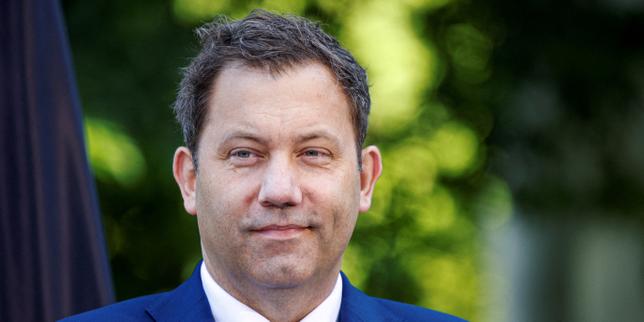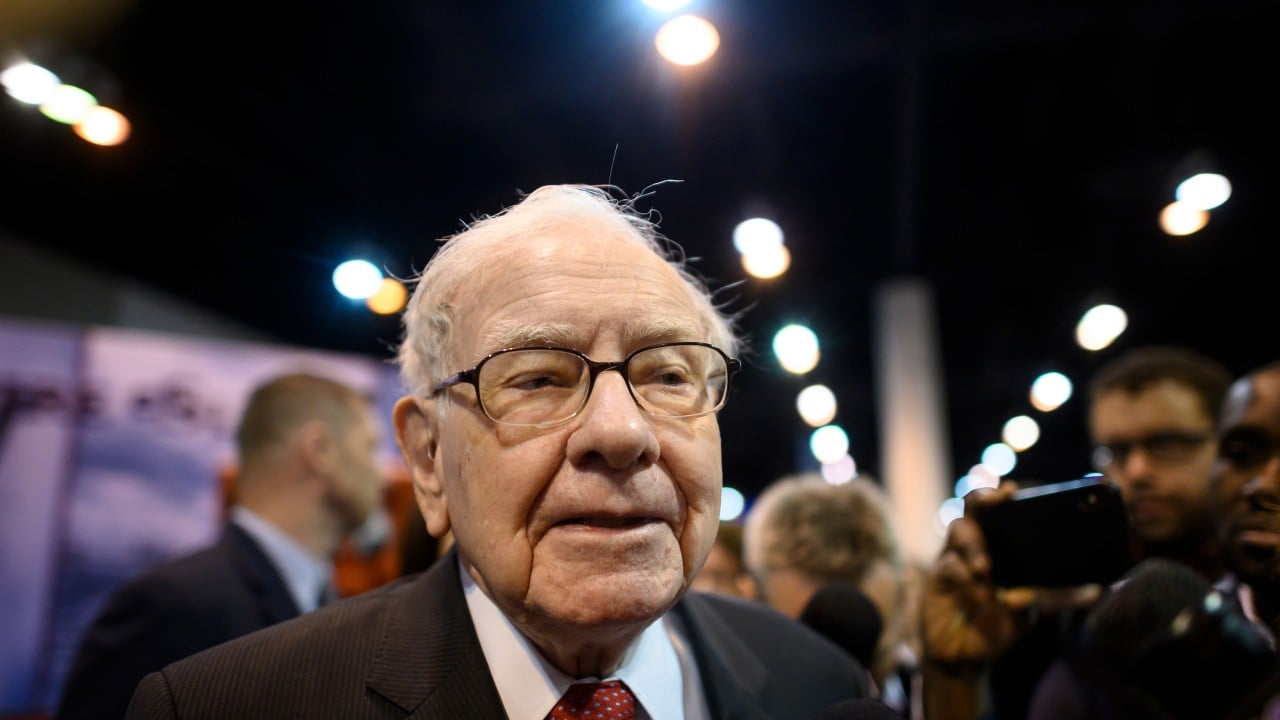
Everybody on Wall Street is mourning the passing of an era while secretly celebrating that the ghost train finally stopped. When the headlines announce that Howard Buffett has replaced his father at the helm of Berkshire Hathaway, the financial press chokes on its own nostalgia. They write eulogies for Omaha, paint romantic pictures of cherry Cokes, and drone on about the irreplaceable oracle.
They are missing the entire plot.
Howard is not stepping into Warren’s shoes because he is a visionary allocator of capital. He is taking the chair because Berkshire has become too bloated, too cash-heavy, and too structurally ossified for anyone outside the bloodline to manage without triggering a revolt. I have watched legacy conglomerates drown in their own bureaucracy while analysts cheered the steady hand at the wheel. The market calls this stability. I call it managed stagnation.
The lazy consensus in every major financial rag is that Howard represents a seamless continuity of the sacred Buffett doctrine. That is the exact lie you tell yourself when you refuse to look at the balance sheet.
Let us dispense with the folklore. Warren Buffett was a generational genius, but his greatest trick was convincing the world that his holding company was an eternal compounding machine rather than a massive mutual fund encumbered by an inefficient tax structure and an army of insurance floats. Berkshire sits on a mountain of cash because finding a needle in a haystack becomes mathematically impossible when the haystack is three hundred billion dollars wide.
When Howard takes over, he does not inherit an engine of hyper-growth. He inherits a multi-trillion-dollar sovereign wealth fund masquerading as a Nebraska textile survivor.
The financial media loves to ask whether Howard can pick stocks like his father. That is the wrong question. It betrays a total misunderstanding of what Berkshire has been for the past fifteen years. Warren stopped beating the S&P 500 consistently years ago on a total return basis. Size is an anchor, and no amount folksy wisdom at an annual meeting in May changes the math of compounding at scale.
Howard is an agronomist, a philanthropist, and a corporate steward. He cares about soil health, corporate governance, and keeping the family peace. He is fundamentally a caretaker, not an aggressive predator hunting for undervalued cigar butts in the wreckage of a panic.
And that is precisely what the company needs, even if institutional investors are terrified to admit it.
Imagine a scenario where an activist hedge fund tries to shake up Omaha. They would get laughed out of the CenturyLink Center by ten thousand retirees wearing commemorative t-shirts. Berkshire is immune to traditional corporate governance because the voting structure is an absolute monarchy disguised as a public corporation. Warren built a fortress, and Howard is the castellan guarding the gates.
The real danger to Berkshire is not that Howard will make bad capital allocation decisions. The danger is that he will make no decisions at all, hiding behind the decentralized operating model while cash erodes to inflation and the conglomerate discount widens into a chasm.
Let us look at the operating units. BNSF railroad is a tollbooth on the American economy, but its volume growth tracks GDP with agonizing predictability. Geico is locked in a brutal margin war with Progressive, having lost its technological edge years ago when management scoffed at modern telematics. Energy generation faces massive capital expenditure cycles that will eat cash flow faster than a fleet of private jets.
None of these businesses are compounders anymore. They are cash cows, and cash cows need to be milked or butchered. Howard will do neither. He will feed them, pet them, and talk about his dad.
Wall Street analysts will tell you that the decentralized structure protects the enterprise. I have seen companies blow millions on decentralized management models that devolved into unaccountable fiefdoms. When subsidiary CEOs answer to a holding company that never interferes, bad habits fester. Capital gets reinvested locally at subpar returns because nobody in Omaha wants to have an uncomfortable conversation with a legendary local manager.
Howard will preserve the peace. He will not crack the whip.
Does this mean Berkshire is a short? Absolutely not. Shorting Berkshire is a fool's errand because the sheer mass of tangible assets and equity securities creates a floor that gravity cannot pierce. Apple stock alone acts as a massive ballast, courtesy of the moves Ted Weschler and Todd Combs influenced, or perhaps Warren executed in his twilight.
Yet, treating the transition as a non-event is intellectual laziness. The transition marks the official transformation of Berkshire Hathaway from an active investment machine into an open-end mutual fund for tax-averse millionaires.
The market has already priced in the grief. It has not priced in the irrelevance.
When you look at the succession, stop looking at the aura of Warren. Look at the return on equity. Look at the opportunity cost of holding short-duration T-bills yielding five percent while the rest of the market sprints toward artificial intelligence infrastructure and energy transformation.
Howard inherits the kingdom, but the kingdom is a museum. And museums do not compound at twenty percent a year.