There is a specific kind of silence that settles over a room when you realize you have just purchased a ghost. Not a sheet-flapping, floor-creaking apparition from a Victorian novel, but something far more expensive: a building that has been quietly rotting away since the administration of Andrew Jackson.
When you see it online, or on a sun-bleached real estate flyer, an 1830s historic home looks like a promise. It looks like high ceilings, hand-hewn oak timber frames, deep-set windows that caught the amber glow of tallow candles, and a tangible connection to an America that still moved at the speed of a horse. It looks like romance.
It never looks like rot.
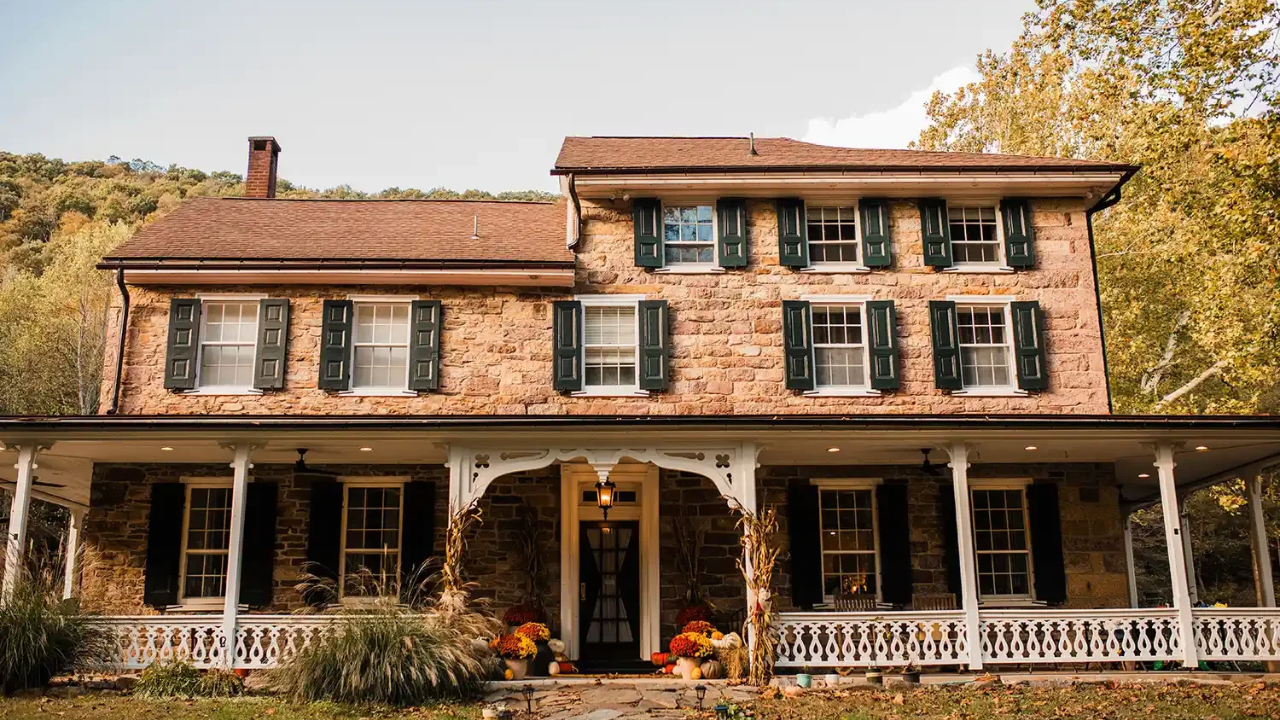
Ask the Pennsylvania couple who scrolled past a listing one evening, half-joking, half-exhausted by the sterile drywall boxes of modern suburban developments. The price tag was $460,000. In the calculus of modern real estate, that feels like either a bargain or a typographical error. To a pair of dreamers looking for a project, it felt like an invitation.
They did not know, because no Zillow listing can ever truly convey it, that an old house is not a possession. It is an organism. And like any living thing, when it is neglected for decades, it demands a blood sacrifice—usually paid in currency, patience, and a staggering amount of structural lumber.
Five years later, the tally sits at $300,000 in renovations. The house is eighty-five percent complete.
That remaining fifteen percent is a chasm.
To understand why a historic renovation becomes an all-consuming saga, you have to abandon the clean logic of modern construction. Today, we build houses like stacked cardboard boxes—fast, uniform, and forgiving. Plumb lines are laser-measured. Studs are spaced precisely sixteen inches apart. Materials arrive pre-cut, pre-primed, and ready to be stapled together by crews moving at breakneck speed.
Step inside an 1830s home, and you are stepping into an era before standardization.
The floor joists are not dimensional lumber from a local big-box store; they are massive, hand-adzed tree trunks stripped of their bark with broadaxes, retaining the gentle curve of the living tree. They are asymmetrical, stubborn, and hard as iron. To drive a modern screw into wood that has spent two centuries curing in the dark is to break drill bits and test your sanity.
On day one, the illusion of a simple weekend cosmetic overhaul shatters. You pull off a piece of peeling floral wallpaper from the 1970s, expecting plaster. Instead, you find horsehair lath crumbling into gray dust like ancient ash. You peel back a sagging section of ceiling, and a cascade of dried beetle husks, ancient insulation, and unidentifiable debris pours onto your shoes.
Then comes the discovery that defines every historic home restoration: the sagging structural reality.
Gravity does not negotiate. Over one hundred and ninety years, foundation stones laid by men using fieldstone and lime mortar begin to shift. The earth underneath breathes, freezing and thawing through two hundred Pennsylvania winters. A corner drops three inches. Suddenly, door frames are trapezoids. Floors roll like the deck of a schooner in a heavy swell.
You cannot simply put up drywall over a wall that leans at a twelve-degree angle. You have to jack up the structure—centimeter by agonizing centimeter—using massive steel beams and hydraulic jacks, holding your breath as the old timber groans and pops, praying the whole thing doesn't pancake into the cellar.
This is where the financial hemorrhaging begins.
A budget is a fragile fiction in historic restoration. You estimate $20,000 for a new roof, only to discover that the rafters are rotted through at the eaves where a century-old leak went unchecked behind a copper gutter. You allocate $15,000 for plumbing, only to open a wall and find lead pipes wrapped in burlap, or worse, gravity-fed cast iron that cracks like eggshells the moment a wrench touches it.
Every fix is a puzzle box. You cannot buy a standard pre-hung door at a hardware store; the openings are custom, irregular, and narrow. Every window must be meticulously restored by hand, steaming old glazing putty, re-securing wavy historic float glass that bends the afternoon light into pools of molten gold, because throwing away original glass is an aesthetic crime.
By year three, the project stops being a hobby and becomes a roommate. It eats at the breakfast table. It sits in the passenger seat during the morning commute. It dictates vacations, holidays, and bank accounts.
Friends stop asking when the housewarming party is going to be. They stop asking because the question carries a heavy, unspoken pity. They look at your hands—calloused, permanently stained with dark walnut wood stain and skim coat plaster—and they see the toll.
Yet, despite the financial vertigo, despite the endless dust that coats every surface of your life like volcanic ash, despite the nights spent staring at spreadsheets wondering if you have lost your mind, something shifts.
It happens on a Tuesday evening in late autumn.
The scaffolding is finally down in the parlor. The lime-plaster walls, tinted with natural pigments, have dried to a soft, chalky finish that seems to absorb the sunset rather than reflect it. You are standing on wide-plank pumpkin pine floors that you spent three weeks sanding by hand, kneeling until your knees bruised, sealing them with raw linseed oil and beeswax.
The light hits the room just right.
You look at the exposed corner post—a massive vertical timber bearing the chop marks of a craftsman who has been in his grave for a hundred and fifty years. You trace your thumb over the maker's mark stamped into the iron strap of a restored hinge.
In that quiet, suspended moment, the arithmetic changes.
You realize you didn't just buy a house for $460,000 and sink $300,000 into its bones. You bought a stewardship. You became the current caretaker in a long, unbroken chain of human lives that stretches back to the dawn of the rail era.
The people who built those walls in the 1830s felled those trees with crosscut saws, hauled them with oxen, and raised them with whiskey and prayer, never knowing who would walk the floors two centuries later. They left behind a shelter.
And you, at great personal and financial cost, reached across the chasm of time and gave it another hundred years.
The house is eighty-five percent complete. The trim still needs painting in the back hallway. The storm windows on the second floor are sitting in the barn, waiting for a weekend that never seems to have enough hours.
The remaining fifteen percent will take another year, and probably another twenty thousand dollars.
You turn off the work light. The shadows lengthen across the wide pine boards. The old timber sighs as the night air cools, settling into its quiet, enduring place in the world.