You’re sipping coffee on a quiet Saturday morning in Menifee or Temecula when a shadow stretches over your patio. Then comes the sound. It’s a rhythmic, metallic whoosh—the blast of a propane burner. You look up, and there’s a multi-colored nylon behemoth descending toward your rose bushes. For most Southern California homeowners, this feels like a once-in-a-lifetime emergency. For the pilots steering these giant heaters, it’s often just a Tuesday.
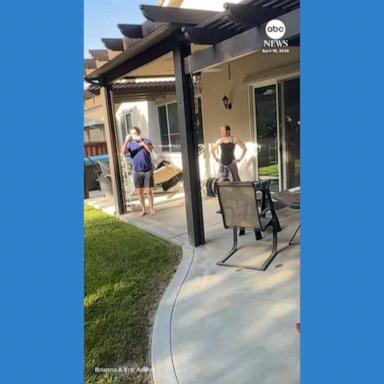
A hot air balloon recently made a surprise landing in a SoCal backyard, sending neighbors scrambling for their phones to record the spectacle. While the footage looks dramatic, it highlights a reality of aviation that most people don’t grasp. These aircraft don't have steering wheels. They don't have engines. They go where the wind dictates, and sometimes, the wind decides your cul-de-sac is the perfect spot to touch down.
The Illusion of Control in the Sky
People assume every landing that isn't at an airport is a "crash." It’s not. In the world of lighter-than-air flight, a landing in a field, a vacant lot, or even a wide driveway is usually a controlled, intentional maneuver. Pilots call these "landings of opportunity."
Southern California is a global hub for ballooning, specifically the Temecula Valley. The geography creates a unique microclimate where cool coastal air gets sucked inland, creating predictable morning breezes. But "predictable" is a relative term in meteorology. If the wind shifts five degrees or dies down entirely, the pilot’s planned landing zone is suddenly out of reach.
When you see a balloon dipping into a residential area, the pilot is usually looking for a spot where they won't hit power lines. That’s the real enemy. They’ll take a manicured lawn over a high-voltage wire every single time. It’s a calculated choice to prioritize safety over convenience.
What Really Happens During a Backyard Landing
The viral videos usually show the same thing: a massive balloon draped over a fence and a bunch of confused neighbors. What the cameras miss is the logistical dance happening on the ground. Every commercial balloon has a chase crew. These folks are in a van or truck, staring at GPS trackers and squinting at the horizon, trying to guess where the pilot is headed.
Once the basket touches down, the pilot has to "vent" the envelope. They pull a cord that opens a hole at the very top of the balloon, letting the hot air escape. This is why the balloon collapses so quickly. It looks like a disaster, but it’s just the pilot making sure the wind doesn’t catch the fabric and drag the basket across your pool deck.
The legal side of this is surprisingly chill. In California, aviation laws generally protect pilots who need to land in an emergency or due to weather conditions. Most pilots carry "landowner cards" or small gifts like bottles of champagne. It’s a tradition that dates back to 1783 in France. Early aeronauts gave champagne to farmers to prove they weren't fire-breathing demons and to apologize for squashing some wheat. Today, it’s just good manners after you've terrified someone's Golden Retriever.
Why Southern California is a Hotbed for These Incidents
Temecula and the surrounding Inland Empire areas see hundreds of flights a year. The density of housing in SoCal has exploded over the last two decades. Areas that used to be wide-open dirt lots are now gated communities with HOA rules and zero-lot-line homes.
The pilots haven't changed their habits, but the "runway" has shrunk. This leads to more interaction between the sky and the suburbs. If you live in these areas, you’re essentially living on the edge of an informal airport.
- Wind Sheer: Low-level winds can move in opposite directions than the winds just 500 feet higher.
- Thermal Activity: As the SoCal sun heats the asphalt, rising air can "lift" a balloon, making it impossible to land where intended.
- Fuel Management: Balloons carry a limited amount of propane. If the wind doesn't take them to a park, they have to land before the tanks run dry.
The Safety Record Nobody Talks About
We love a good "near-miss" headline. However, hot air ballooning remains one of the safest forms of flight regulated by the Federal Aviation Administration (FAA). Pilots must undergo rigorous training, earn a commercial certificate, and pass flight reviews.
The basket itself is a marvel of low-tech engineering. Woven willow and rattan act as a natural shock absorber. When a balloon lands in a backyard, the basket usually just plops down. The real "damage" is almost always just the sheer size of the balloon fabric covering a yard. It’s an inconvenience, not a catastrophe.
What to Do if a Balloon Lands on Your Property
If you find a basket in your yard, don't panic. The pilot is likely more stressed than you are. They're managing passengers, fuel, and communication with their crew.
Stay away from the lines and the burner. The burner is extremely hot and the lines are under tension. Let the crew handle the deflation. If there’s damage to your fence or landscaping, get the pilot’s insurance information just like you would in a car fender-bender. Most commercial operators are heavily insured specifically for these "off-airport" landings.
Check your local zoning and aviation maps if you're curious about how often this happens near you. If you're in a flight path, keep your gates unlocked on weekend mornings. You might just get a free bottle of bubbly out of the deal.
Don't scream at the pilot. They aren't lost, and they aren't trespassing for fun. They're just navigating the invisible rivers of the sky, and your backyard happened to be the safest harbor available. If you see a balloon coming low, keep your pets inside and grab your camera. It’s a great story for the next block party.