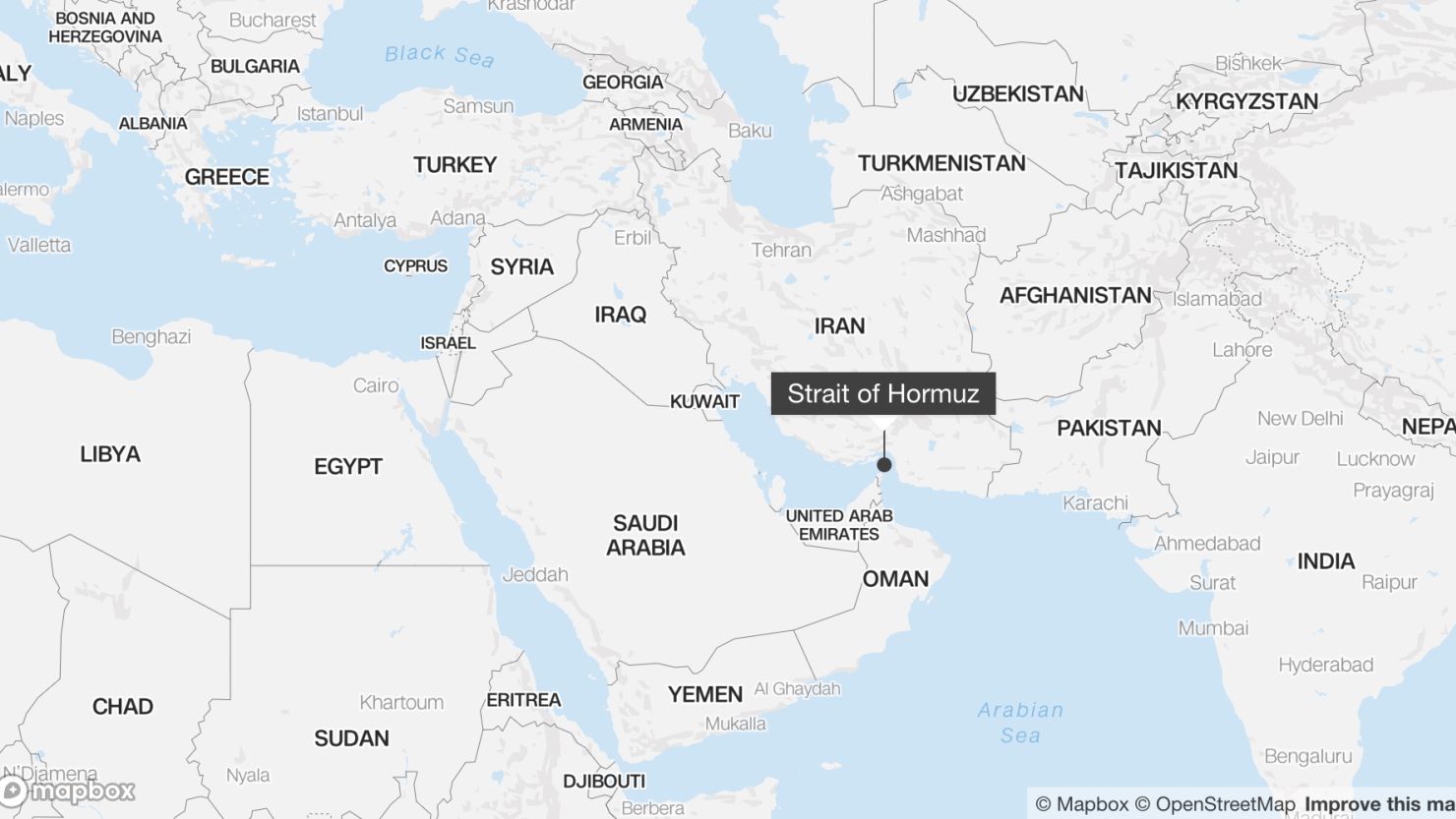
The market is currently hallucinating. CNBC and the rest of the financial press are peddling a narrative that suggests a blockade of the Strait of Hormuz is a binary event leading inevitably to a diplomatic "grand bargain." They want you to believe that the current volatility is a prelude to a stabilizing deal between Washington and Tehran.
They are wrong. Learn more on a similar topic: this related article.
The "lazy consensus" assumes that because a blockade is economically catastrophic, rational actors will default to a compromise. This ignores the brutal reality of regional leverage. I have watched traders lose fortunes betting on "rational diplomacy" in the Middle East while ignoring the structural incentives for chaos. A deal isn't a solution; it’s a temporary lid on a pressure cooker that has already melted its own handles.
The Myth of the Hormuz Kill Switch
Wall Street analysts love to talk about the Strait of Hormuz like it’s a light switch. Flip it, and the world goes dark. In reality, the logistics of a total blockade are a nightmare for the party attempting it. Additional reporting by The Motley Fool explores related views on this issue.
The Strait is 21 miles wide at its narrowest point, but the shipping lanes—the actual deep-water paths—are only two miles wide in each direction. Closing it isn't just about parking a few ships; it's about maintaining a kinetic presence against the U.S. Fifth Fleet.
When the "experts" scream about $200 oil, they forget that a blockade is an act of economic suicide for the blockader as well. Iran needs the water open to export its own crude to China. The idea that we are on the verge of a permanent shutdown is a ghost story told to pump options premiums. The real threat isn't a "blockade"—it's a "friction strategy." Tiny, incremental disruptions that keep risk premiums high without ever triggering the full-scale military response a total closure would demand.
Why a Deal is the Greatest Risk to Your Portfolio
The "Markets bet on a deal" headline is the most dangerous phrase in finance right now. A deal implies a return to the status quo. But the status quo died years ago.
If a deal is struck tomorrow, it will likely involve the relaxation of sanctions in exchange for vague nuclear or maritime concessions. History shows us exactly what happens next:
- Capital Inflow: Billions in frozen assets are released.
- Proxy Funding: Those assets do not build Iranian hospitals; they fund regional instability.
- The Bounce-Back: Oil prices dip for 48 hours on the news, then skyrocket as the increased regional tension—funded by the deal itself—triggers new supply shocks.
Betting on a deal is betting on a mirage. I’ve seen institutional desks blow through billions trying to "front-run" peace. Peace in this region isn't an absence of conflict; it's a recalibration of how the conflict is financed.
The Math of Energy Displacement
The consensus says a Hormuz closure stops 20% of the world's oil. That is a flat, uninspired statistic. To understand the real impact, you have to look at the Global Spare Capacity and the Grade Mismatch.
$$Global\ Supply\ Gap = (Hormuz\ Throughput) - (Strategic\ Reserves + Non-OPEC\ Surge)$$
Even if the U.S. releases every drop from the Strategic Petroleum Reserve (SPR), it cannot fix the "grade" problem. The refineries in Asia and the Gulf Coast are calibrated for specific sulfur contents and API gravities. You cannot just swap light sweet crude for the heavy sour stuff coming out of the Gulf without massive operational friction.
The market isn't pricing in a supply shortage; it’s failing to price in a refining crisis. If the Strait closes, it doesn't matter if there's oil in Texas or Guyana. The global machine grinds to a halt because the chemistry is wrong.
Stop Asking if There Will Be a Deal
People always ask: "Will Biden or the next administration sign a deal?"
That is the wrong question. The right question is: "Can any deal survive the internal politics of either nation?"
The answer is a resounding no.
In Washington, any concession is viewed as a surrender. In Tehran, any concession is viewed as a betrayal of the revolution. We are witnessing a "Deadlock Equilibrium." Both sides benefit more from the threat of conflict than from the reality of a compromised peace.
- The U.S. Benefit: High-stakes tension justifies military spending and strengthens ties with regional allies like Saudi Arabia and the UAE.
- The Iranian Benefit: External threats are the perfect tool for domestic suppression and maintaining high oil prices for their "shadow fleet" exports.
How to Actually Trade This Chaos
Forget the "Buy the Rumor, Sell the Fact" mantra. That’s for retail traders who read the news after the move has already happened.
If you want to survive this, you need to look at Tanker Rates (BDTI/BCTI) and War Risk Insurance Premiums.
When the news cycle talks about a "deal," insurance premiums rarely drop in tandem. Why? Because the underwriters—the people with actual skin in the game—know that a signature on a piece of paper in Geneva doesn't remove a single sea mine from the water.
The Strategy:
- Short the "Deal" Euphoria: When the market rallies on "diplomatic breakthroughs," it’s almost always a liquidity trap. Fade the move.
- Long Logistics, Not Just Oil: Don't just buy $USO. Buy the companies that own the pipelines that bypass the Strait. Look at the East-West Pipeline in Saudi Arabia or the Habshan–Fujairah pipeline in the UAE.
- Ignore the Dollar-Oil Correlation: Usually, a strong dollar means weak oil. In a Hormuz crisis, that correlation breaks. Everything goes up because of a flight to safety and a literal lack of molecules.
The Geopolitical Sunk Cost Fallacy
The "status quo" analysts believe we are one meeting away from 2015. They are suffering from a sunk cost fallacy. They believe that because we’ve invested forty years in "containing" or "engaging" Iran, the next effort must be the one that works.
It won’t.
The regional architecture has shifted. The rise of the BRICS+ block means Iran has options beyond the Western financial system. China is the primary customer. As long as Beijing is willing to facilitate trade through "dark fleets" and non-USD denominations, a U.S.-Iran deal is largely irrelevant to the physical flow of energy.
The U.S. is negotiating for a steering wheel that isn't connected to the tires anymore.
Stop Looking for "Stability"
The most profitable thing you can do is accept that the Strait of Hormuz will remain a permanent geopolitical choke point for the rest of your natural life. There is no "fix." There is only the management of volatility.
The CNBC-style "Daily Open" is designed to make you feel like the world is a series of solvable problems. It’s not. It’s a series of managed disasters.
If you are waiting for a deal to "de-risk" your energy positions, you’ve already lost. The risk is the point. The friction is the fundamental reality. The market isn't betting on a deal; it's desperately hoping for a miracle to avoid the reality that the age of cheap, secure transit is over.
Position yourself for the friction, not the fantasy.