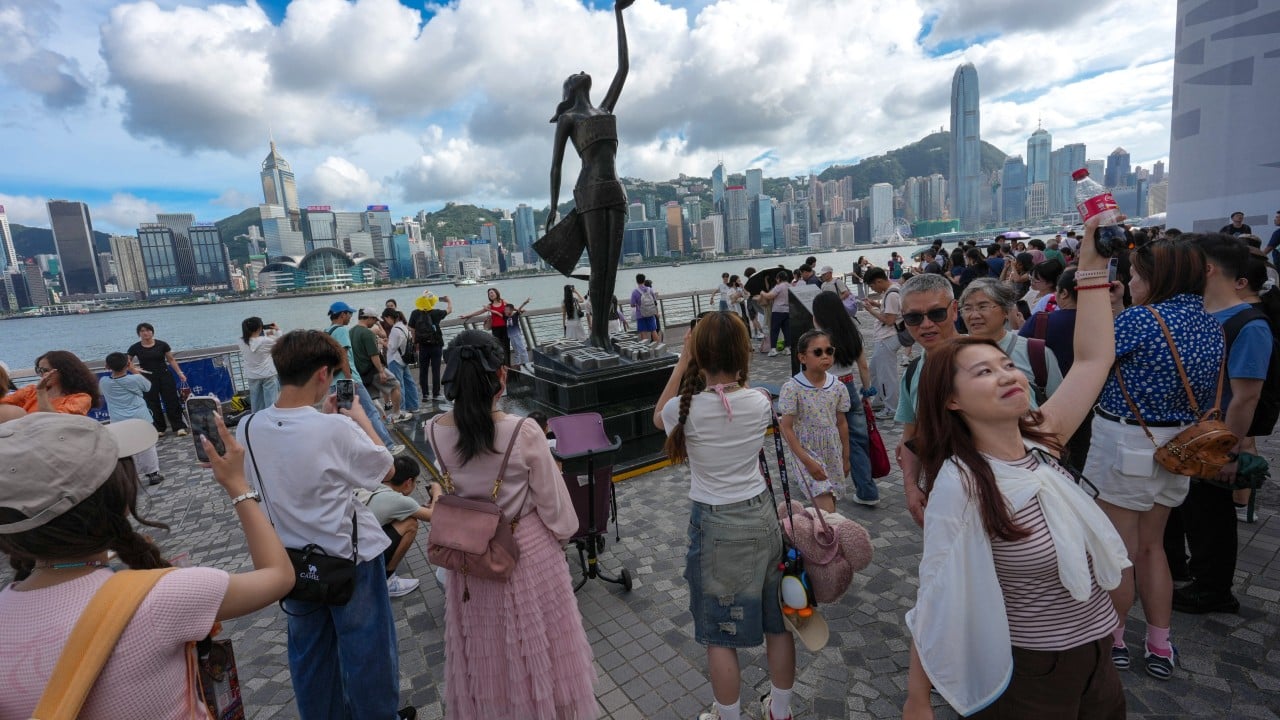
The headlines are panicking over a 15% drop in short-haul tourist arrivals to Hong Kong. Mainstream financial commentators point their fingers at the predictable scapegoats: a crushing Hong Kong dollar pegged to a surging US greenback, and the sluggish recovery of regional flight capacities. The consensus view is clear: until regional currencies strengthen or airlines flood the tarmac with cheap seats, Hong Kong’s tourism sector is doomed to stagnate.
This analysis is not just lazy. It completely misreads the structural evolution of global travel.
Blaming macroeconomics for a drop in low-margin, high-volume tourism is a convenient excuse for an industry refusing to adapt. The 15% drop in short-haul arrivals isn't a crisis requiring government intervention or airline subsidies. It is a structural market correction that Hong Kong desperately needed. For over a decade, the city chased the fool's gold of mass tourism—metrics that look great on a government spreadsheet but clog up public infrastructure and yield abysmal margins per capita.
The strong currency and reduced flight capacity are doing the hard work that local policymakers lacked the stomach to execute. They are filtering out the low-value foot traffic and forcing Hong Kong to pivot toward what it actually excels at: high-net-worth business travel, premium luxury retail, and high-margin experiential tourism.
The Low Margin Trap of Mass Tourism
Chasing raw arrival numbers is a vanity metric.
When regional travel writers moan about regional budget travelers bypassing Hong Kong for cheaper hubs like Bangkok or Kuala Lumpur, they fail to look at the underlying balance sheet. A short-haul weekend traveler arriving via a budget airline, staying in a budget guesthouse, and eating exclusively at subsidized local diners adds massive strain to municipal resources while contributing next to nothing to the broader economic engine.
Let us look at the actual mechanics of tourism spend. Economists split travel expenditure into primary velocity (direct spending on hotels, flights, and retail) and secondary velocity (how that money circulates through the local supply chain). Short-haul, price-sensitive tourists have a primary velocity that barely covers the cost of cleaning up after them. When the Hong Kong dollar strengthens, these travelers disappear instantly because their loyalty was never to Hong Kong itself—it was to a cheap exchange rate.
I have advised hospitality groups across Asia for two decades. I watched boards dump tens of millions of dollars into marketing campaigns targeting high-volume regional tour groups, only to see room yields flatten and staff burnout skyrocket.
The data confirms this truth. Look at the historical data from the Hong Kong Tourism Board regarding per capita spending. High-volume, short-haul tour arrivals historically spend a fraction of what overnight business travelers or long-haul visitors drop in a single afternoon in Central.
By losing the bottom 15% of price-sensitive arrivals, the city’s premium operators are seeing an increase in operational efficiency. Less congestion means better service quality for the big spenders who remain unaffected by currency fluctuations.
Dismantling the Strong Dollar Excuse
The media loves the currency argument because it requires zero critical thinking. The narrative states that because the Hong Kong Dollar is pegged to the US Dollar via the Linked Exchange Rate System, the city becomes automatically uncompetitive when the Federal Reserve hikes rates.
[Strong US Dollar] -> [Strong HK Dollar] -> [Short-haul Travel Drops] -> [Media Panic]
This premise is deeply flawed. A premium destination does not compete on price. It competes on value, exclusivity, and infrastructure.
Nobody avoids traveling to New York, Zurich, or London purely because the local currency is strong. They avoid those cities if the experience fails to justify the premium. If a 15% currency variance causes a tourist to cancel their trip, they were never a viable long-term customer for a high-cost tier-one financial hub.
- The Reality Check: The strong currency actually lowers the cost of imported luxury goods, fine dining ingredients, and premium talent for Hong Kong's hospitality sector.
- The True Bottleneck: The issue isn’t that Hong Kong is too expensive; it’s that the mid-tier tourism product has grown stale. Replicating shopping malls and night markets that consumers can find in Shenzhen or Taipei for half the price is a losing strategy.
The strong dollar acts as a natural quality control mechanism. It weeds out the commoditized offerings and forces businesses to innovate or close. The operators currently crying foul are the ones who relied on cheap currency arbitrage rather than building a defensible, premium brand.
The Flight Capacity Fallacy
The second pillar of the media's lamentation is airline capacity. The narrative argues that regional carriers haven't restored routes quickly enough, leaving seats scarce and ticket prices artificially inflated.
This argument confuses cause and effect. Airlines do not hold back capacity out of spite. They allocate their highly capital-intensive assets—aircraft and flight crews—to the routes that generate the highest yield per available seat kilometer. If carriers are slow to bring back short-haul capacity to Hong Kong, it is because the demand profile from those regions consists of low-yield leisure travelers who refuse to pay premium fares.
Low-Yield Demand -> Low Airline Priority -> Lower Flight Capacity -> Reduced Mass Arrivals
Airlines are smart. They are focusing their limited capacity on high-margin long-haul sectors and premium corporate routes connecting global financial nodes. This is exactly how a major aviation hub should operate. Hong Kong International Airport shouldn't aim to be a transit lounge for discount holidaymakers; it must remain the primary gateway for global capital entering Asia.
Actionable Strategy: Stop Discounting, Start Filtering
If you are running a business in Hong Kong’s hospitality, retail, or entertainment sectors, trying to win back the missing 15% through discounts, promotions, or rate cuts is operational suicide. You cannot out-cheap Southeast Asia, and you cannot out-scale Mainland China's domestic tourism apparatus.
Instead, execute a premium filtering strategy:
- Raise Prices to Build Exclusivity: Instead of cutting room rates or menu prices to attract regional budget travelers, increase them while bundling hyper-exclusive access. High-net-worth individuals are looking for friction-free experiences—private transport, exclusive bookings, and access that cannot be bought via a discount travel app.
- Pivot Content to Niche Assets: Stop marketing generic sightseeing. Focus marketing capital entirely on Hong Kong’s true competitive advantages: its world-class art ecosystem, high-end culinary concentration, and unmatched wealth-management infrastructure.
- Audit Operational Overhead: Use the lower volume of foot traffic to optimize staffing models. Focus human resource capital on high-touch service delivery rather than mass crowd management.
Admitting the downside to this strategy is necessary: it will hurt mid-tier retail landlords and generic souvenir vendors who built businesses entirely dependent on high-volume foot traffic. Some businesses will fail. But that is the cost of economic evolution. A city that builds its economic foundation on selling cheap consumer goods to regional tourists is a city with a shelf life.
Stop looking at the 15% decline as a loss. It is a clearance of economic deadweight, offering the city a rare window to reclaim its identity as Asia’s premier luxury and business capital. The high-volume, low-margin era is dead. Let it stay buried.