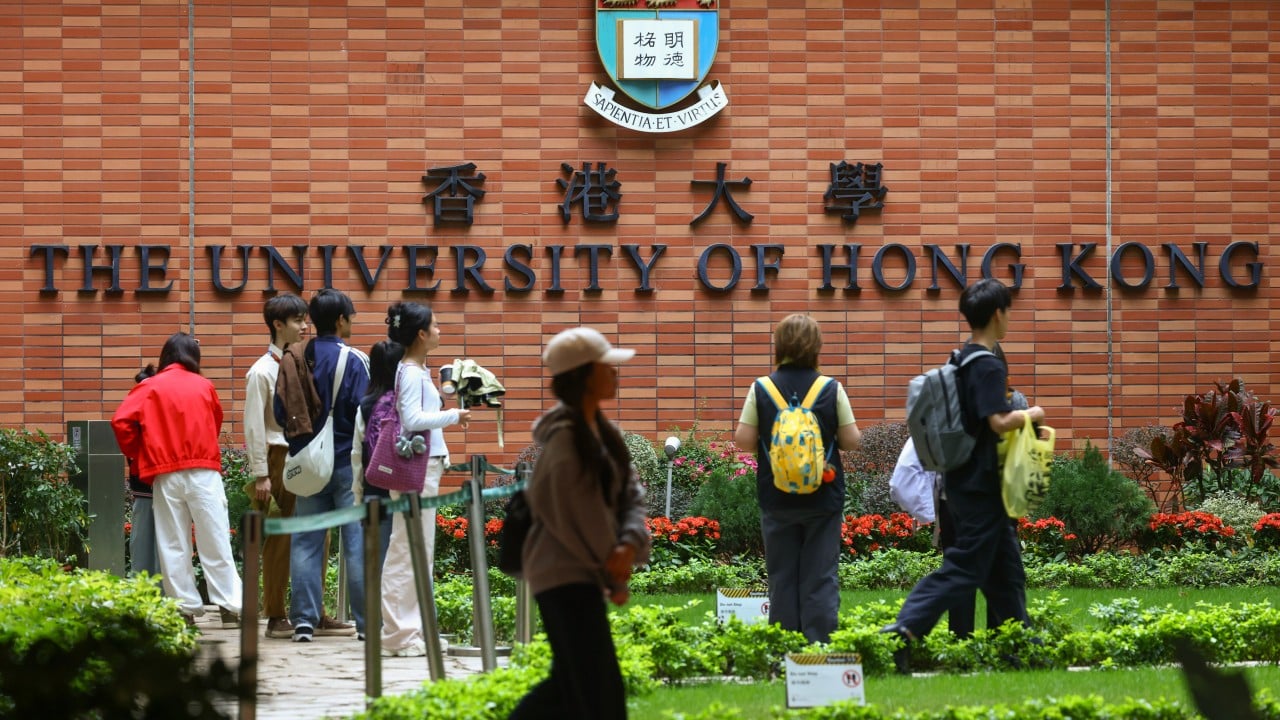
The Hong Kong government is doubling down on its aggressive talent import schemes despite a cooling labor market and rising underemployment among recent arrivals. While Labor Secretary Chris Sun has publicly dismissed the need to review visa quotas for non-local graduates, the disconnect between policy goals and economic reality is widening. The administration’s refusal to pivot suggests that "talent" is being measured by headcount rather than high-value economic contribution.
The core of the issue lies in the Top Talent Pass Scheme (TTPS) and the Immigration Arrangements for Non-local Graduates (IANG). These programs were designed to refill a city drained by an exodus of professionals and a shrinking local workforce. However, the data suggests a mismatch. Thousands of graduates are entering a market where the high-paying roles they were promised are disappearing, replaced by a brutal competition for entry-level positions that barely cover the city's exorbitant cost of living.
The Quantitative Trap
For the past two years, the government’s metric for success has been the volume of approvals. Officials point to the nearly 300,000 applications received across various talent schemes as proof of the city’s enduring "vibrancy." But volume is a poor proxy for value. By saturating the market with young graduates during a period of high interest rates and a sluggish IPO market, the city is effectively suppressing wages for the very demographic it claims to want to protect.
Labor chief Chris Sun recently argued that the current visa durations—typically two years for the initial stay—provide enough time for graduates to find their footing. This ignores the cyclical nature of the industries Hong Kong relies on. Banking, legal services, and real estate are not just "slowing down." They are undergoing structural shifts. A graduate arriving in 2024 is not facing a temporary dip; they are entering a landscape where headcount is being permanently reduced in favor of automation and regional outsourcing.
The Empty Promise of the Two Year Window
The IANG visa allows non-local graduates to stay for 24 months without a standing job offer. On paper, this is a competitive advantage. In practice, it creates a class of "floating" professionals. Without the immediate pressure to secure a high-paying role to justify a work permit, many graduates take "stop-gap" jobs in retail or administrative support.
This is where the policy backfires.
Once a high-potential graduate spends 18 months working outside their field of study just to pay rent in a subdivided flat in Sham Shui Po, their professional trajectory is stunted. They are no longer "fresh" talent; they are overqualified for entry-level roles and under-experienced for mid-level management. The government’s refusal to tighten the criteria or introduce sector-specific quotas means the city is importing workers for roles that don't exist, while the sectors that actually need help—like specialized healthcare and niche green-tech engineering—remain understaffed.
Wage Suppression and the Local Backlash
There is a growing, quiet resentment among locally born graduates who now find themselves competing with a massive influx of mainland and international peers. This isn't just about cultural friction. It is about basic math. When you have a surplus of applicants for every junior analyst role, employers have no incentive to raise starting salaries.
We are seeing a trend where entry-level pay has remained largely stagnant while inflation and housing costs have surged. By maintaining an open-door policy during a slump, the government is effectively subsidizing corporations with cheap, desperate labor. This devalues the very concept of "talent" that the TTPS and IANG were meant to elevate.
The Missing Middle in Tech and Finance
If you look at the breakdown of successful visa applicants, the concentration in general business and management is staggering. Hong Kong does not need more generalists. The city needs specialized experts who can navigate the complexities of cross-border data regulation, carbon credit trading, and advanced biotech.
The current visa framework treats a fresh graduate with a general arts degree from a top-100 university the same as a specialized PhD in robotics. By refusing to prioritize according to industry needs, the labor department is allowing the market to become lopsided. We are building a pyramid with a massive, unstable base of junior professionals and a hollowed-out middle of experienced specialists who have left for Singapore, London, or Dubai.
The Reality of the Brain Drain Reversal
The government argues that these visas are reversing the brain drain of 2020-2022. This is a half-truth. While the population numbers have bounced back, the "quality" of the replacement is different. The professionals who left were often mid-to-senior level expatriates and locals with decades of institutional knowledge. Replacing a 45-year-old hedge fund manager with three 22-year-old graduates does not result in a net gain for the economy. It results in a loss of mentorship, a loss of tax revenue, and a decrease in international connectivity.
The refusal to review these visas is a defensive move. Admitting that the numbers need to be adjusted would be an admission that the post-pandemic recovery is not going as planned. But good governance requires the courage to adjust when the data changes.
Why the Current Stance is Unsustainable
The "wait and see" approach touted by the Labor and Welfare Bureau ignores the human cost. Every month that a visa holder remains underemployed or misemployed, the "brand" of Hong Kong as a career destination diminishes. Word spreads quickly on social media platforms like Xiaohongshu and LinkedIn. If the narrative becomes that Hong Kong is a place where graduates go to struggle, the high-quality applicants the city actually needs will simply stop coming.
We are already seeing the early signs of this. Conversion rates from initial visas to permanent residency will likely be the ultimate judge of this policy. If only a small fraction of these "talents" stay long enough to secure their seven-year residency, then the entire multi-billion dollar effort was nothing more than a temporary patch on a sinking ship.
A Targeted Approach to Quotas
The solution isn't to close the doors, but to install a more intelligent filter. A points-based system that rewards specific technical skills over prestige-brand universities would be a start. Furthermore, the government should consider a "live-work" requirement that mandates employment within a relevant field after the first six months.
Allowing people to sit on a visa for two years while working as delivery drivers or in "ghost" roles at family offices helps no one. It inflates employment statistics while masking the underlying rot in the professional labor market.
The Cost of Inaction
If the Labor Secretary continues to reject a review, the city risks creating a permanent underclass of educated, frustrated migrants. History shows that when a large group of highly educated individuals finds themselves economically sidelined, social stability suffers.
The government’s obsession with "reclaiming the narrative" of Hong Kong’s success has blinded it to the practicalities of the job market. Policy must serve the economy, not the other way around. The current refusal to pivot isn't a sign of strength; it is a sign of an administration that is more afraid of a bad headline than a bad economy.
The city must decide if it wants to be a global hub for excellence or a temporary holding pen for the overeducated. Without a rigorous, sector-by-sector review of how these visas are being utilized, Hong Kong is simply trading its long-term economic health for a short-term statistical win. The labor market is screaming for a correction; the government is the only one not listening.