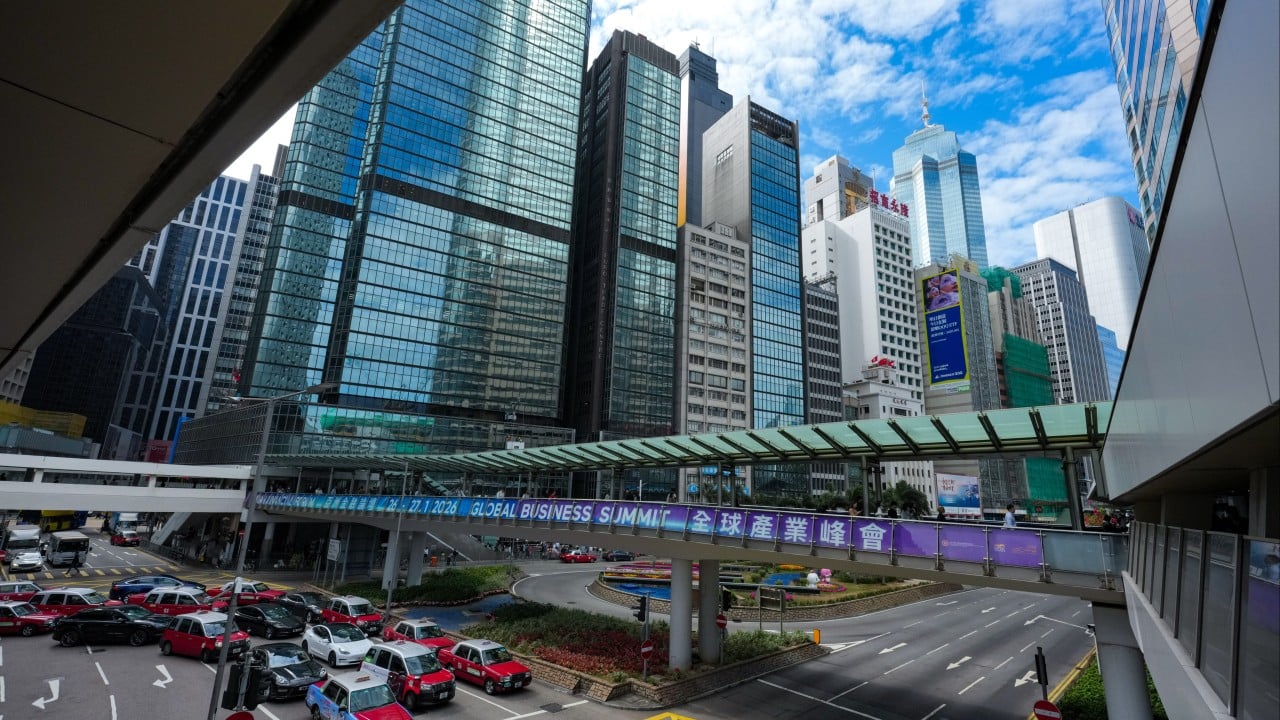
The skyscraper graveyards of Central are finally showing signs of life. After a relentless seven-year slide that saw the world’s most expensive office market humbled by empty hallways and aggressive rent cuts, the narrative is shifting. By the second half of 2026, the freefall in Hong Kong’s financial core is not just slowing—it is reversing.
While the broader city still grapples with a double-digit vacancy rate of 13.4%, Central has managed to claw its way back to a tighter 9.9% vacancy. This isn't a fluke of the business cycle. It is the result of a brutal "flight to quality" where the winners take everything and the aging Grade B stock is left to rot. For the first time in a decade, the leverage is moving back across the table toward the landlords. Don't forget to check out our recent coverage on this related article.
The End of the Seven Year Slump
The numbers tell a story of a market that has finally hit its floor. In the first two months of 2026 alone, Grade A rents in Central climbed by 3.5%. To an outsider, that might look like a rounding error. To a veteran of the Hong Kong property wars, it’s a flare in the dark.
The recovery is driven by a massive influx of family offices and a rejuvenated IPO market. There are now over 3,300 single-family offices operating in the city. These aren't just shell companies; they are high-conviction occupiers that demand prestige addresses to signal stability to their global partners. When a billionaire’s investment vehicle looks for a home, they don’t go to a suburban tech park. They go to the icons: The Henderson, Two IFC, or the newly minted landmarks that define the skyline. If you want more about the background of this, Business Insider provides an excellent breakdown.
This demand has created a sharp bifurcation. Premium "Trophy" buildings are seeing rental growth projections of up to 8% for the full year. Meanwhile, traditional Grade A buildings—the workhorses of the 1990s—are still struggling to hold their ground, often facing further declines of up to 5%. If your building doesn't have a LEED Platinum certification or a celebrity chef in the lobby, you are effectively invisible in 2026.
The China Factor and the IPO Rebound
The engine behind this sudden tightening of supply is the return of the Mainland corporate. For years, the "Mainland bid" was the ghost in the machine—talked about but rarely seen in the size needed to move the needle. That changed as the capital markets thawed.
Renewed listing activity has forced investment banks and law firms to stop their "right-sizing" exercises and start looking for expansion space. You cannot run a top-tier IPO desk from a laptop in a co-working space. You need the physical proximity to the HKEX and the major clearing banks. This "ecosystem demand" is what keeps Central relevant while other districts like Quarry Bay try to compete on price alone.
The Supply Gap Trap
Landlords are also benefiting from a rare historical anomaly: the supply gap. Following the glut of completions in 2024 and 2025, the pipeline for new office space has essentially dried up. High construction costs and several years of stagnant interest rates (only recently beginning to retreat) killed off the next generation of projects.
We are entering a period where no major new stock will hit the market until at least 2028. This creates a pressure cooker environment for tenants whose leases are coming up for renewal in the second half of 2026. They have two choices: pay the premium to stay in the core or move to the periphery and risk losing the "prestige dividend" that Hong Kong business culture demands.
Most are choosing to pay.
The Reality for Tenants
If you are a tenant looking to secure space in Central right now, the honeymoon is over. The days of 12-month rent-free periods and massive fit-out subsidies are fading.
The smart money is locking in five-year deals now before the second-half gains become the new benchmark. We are seeing a shift where "flexibility" is no longer the primary demand. Occupiers want stability. They want to know their overheads are capped before the next cycle of inflation or market volatility hits.
Why the Recovery is Fragile
It would be a mistake to call this a total victory. The recovery is uneven and remains tethered to the health of the mainland economy and the pace of interest rate cuts.
If the anticipated rate cuts from the HKMA—tracking the Fed—don't materialize, the cost of carry for these massive commercial portfolios will remain a heavy burden for developers. The "soft landing" we are seeing in 2026 is built on a foundation of stabilized prices and a sudden scarcity of high-end floor plates. It is a landlord’s market by default, not necessarily by choice.
The brutal truth is that Central is becoming a gated community for the elite. The mid-tier firms that once called the CBD home are being pushed out to Causeway Bay or Kowloon East, where vacancy rates are still hovering near 20%. This geographical class system is the new reality of the Hong Kong office market.
Central is back, but it’s more exclusive, more expensive, and less forgiving than ever before. Secure your floor plate now or prepare to look at the skyline from across the harbor.