The air in a courtroom doesn’t move like the air outside. It is heavy, recycled, and thick with the scent of floor wax and old paper. For the families who sit in those wooden pews, the silence is the worst part. It is a waiting silence. A silence that stretches across years, growing colder with every adjourned hearing and every bureaucratic delay.
Renee Good’s family knows this silence better than most. For another look, see: this related article.
On a humid night in 2017, the world stopped for Renee. She was a mother, a daughter, and a person who deserved to grow old. Instead, she became a name on a police report, her life extinguished in a hit-and-run that felt less like an accident and more like a vanishing act. The driver fled. The investigation stalled. The justice system, that vast and complex machine we are told protects the innocent, began to grind its gears in a way that produced plenty of noise but very little movement.
Now, years later, the noise has returned, but it isn’t the sound of a gavel bringing peace. It is the sound of a system folding in on itself. Related insight on this trend has been published by TIME.
The Ghost in the Bureaucracy
The man at the center of the recent firestorm is an ICE agent whose name has become shorthand for a breakdown in accountability. To the federal government, he is an employee with rights, unions, and a path toward reinstatement. To the family of Renee Good, he represents a wound that refuses to scar over.
When an officer of the law is linked to a tragedy, the public expects a higher standard. We are taught that those with the badge carry the weight of the moral high ground. But what happens when the badge is used as a shield against the very consequences a private citizen would face?
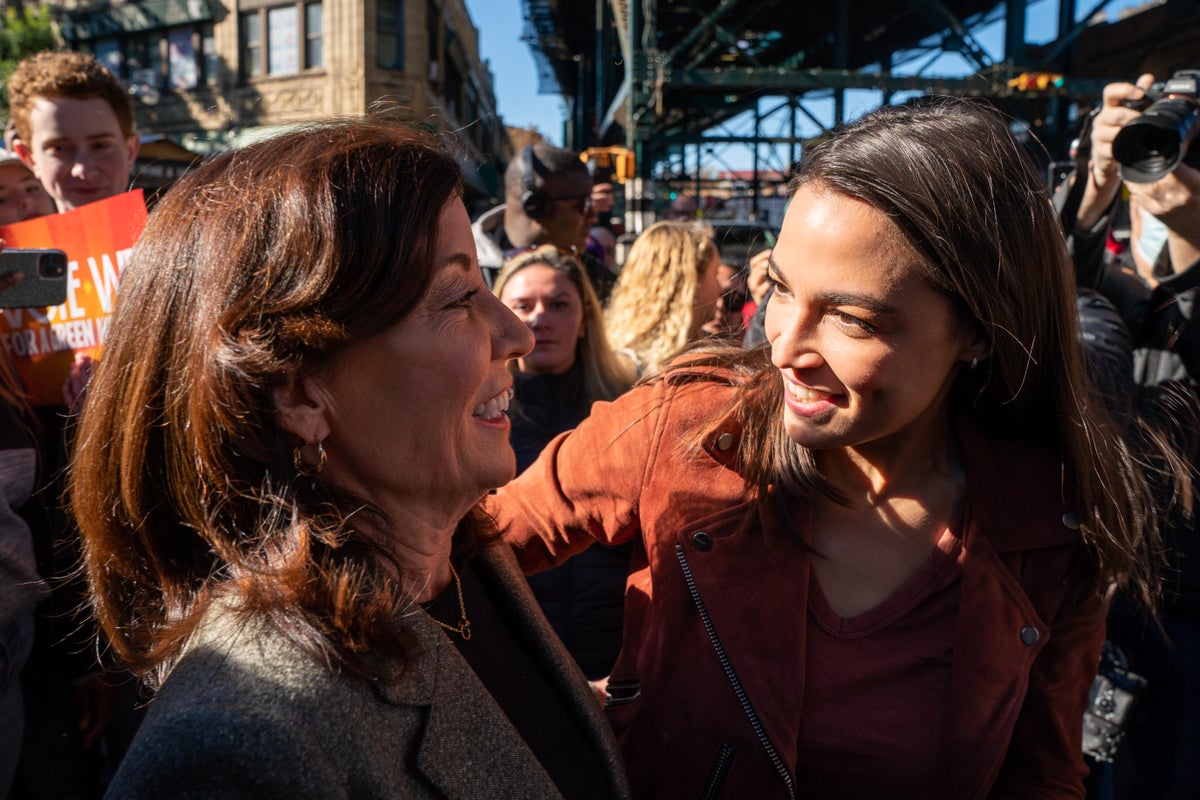
The agent in question was reinstated to his position, a move that sent shockwaves through the community and ignited a visceral reaction from lawmakers. Representative Alexandria Ocasio-Cortez didn't just voice a polite disagreement; she expressed a fury that mirrored the frustration of thousands. Her outrage wasn't merely about one man’s job. It was about the message sent to every grieving family in America: some people are simply too intertwined with the machinery of the state to ever truly fall.
Consider the optics of a reinstatement while questions of a life taken remain unanswered. It feels like a glitch in the moral matrix. It suggests that the paperwork of a federal agency carries more weight than the pulse of a human being.
The Geography of Grief
Grief isn't a straight line. It’s a labyrinth. You think you’ve found the exit, and then a news notification or a court update pulls you back into the center. For Renee's loved ones, the news of the agent's return to duty was a wall of cold bricks appearing where they hoped for a door.
Every day, millions of people interact with law enforcement and federal agents. Most of those interactions are mundane. We trust the process because we have to. It is the social contract that keeps the lights on. But that contract is signed in the blood of the vulnerable. When the system appears to protect its own at the expense of a victim, the ink on that contract begins to fade.
The statistics on hit-and-run fatalities in the United States are staggering, yet they remain abstract until you see a photo of Renee. You see the light in her eyes, a light that was snuffed out on a dark road while the world kept turning. When the person allegedly behind the wheel of that destruction is allowed to return to a position of authority, the abstraction disappears. It becomes a sharp, jagged reality.
The Power of the Badge
There is an invisible stake in this story that goes beyond Renee Good and a single ICE agent. It is the stake of public trust.
Trust is a fragile thing. It’s a porcelain vase held by a toddler. Once it hits the floor, you can glue the pieces back together, but the cracks will always show. You’ll never be able to pour water into it again without a slow, steady leak.
The reinstatement of an agent under such a cloud of suspicion is a hammer blow to that vase. It tells the public that accountability is a selective concept. It suggests that if you are part of the right department, if you have the right representation, the rules of the road—both literal and figurative—apply differently to you.
AOC’s intervention in this case highlighted a systemic rot that many prefer to ignore. It isn't just about partisan politics. It’s about the fundamental question of what a life is worth. If the state can look at the wreckage of a family and decide that the most important thing is a human resources technicality, then the state has lost its way.
A Mother’s Absence
Imagine a kitchen table where one chair is always empty.
There is no "holistic" way to describe that void. It’s just a hole. It’s the birthday cards that don’t get written. It’s the phone calls that go to voicemail until the service is eventually disconnected. It’s the way the house feels slightly too large because the person who filled the corners with laughter is gone.
This is the human element that gets lost in the headlines about "administrative reinstatements" and "union grievances." Behind the legalese is a woman who isn't coming home. Behind the political sparring is a family that has to watch the person they believe is responsible for their misery get his paycheck and his power back.
The agent’s return to work isn't just a win for a legal team. It is a recurring nightmare for those left behind. It’s a reminder that while Renee’s time ended in 2017, the system’s memory is conveniently short.
The Weight of Outrage
Why does the outrage of a politician matter?
In a world where we are bombarded by scandals every hour, it’s easy to become numb. We see a headline, we feel a flicker of anger, and then we scroll. But the reason this particular case has stuck in the throat of the public is that it represents a perfect storm of injustice. It combines the trauma of a violent death with the frustration of federal overreach and the perceived immunity of law enforcement.
When Ocasio-Cortez spoke out, she wasn't just grandstanding. she was acting as a lightning rod for a community that feels invisible. She was pointing at the emperor and remarking on the lack of clothes.
The "invisible stakes" here are the precedents being set. If this reinstatement stands without challenge, what does it say for the next victim? What does it say for the next officer who decides to flee the scene of a tragedy? It says that the department will wait for the storm to pass, and then they will open the door and welcome you back.
The Road Ahead
There is no easy ending to this story. There is no neat bow to tie around the grief of the Good family.
Justice, in its purest form, would mean Renee walking through her front door tonight. Since that is impossible, the only substitute is accountability. True accountability isn't a slap on the wrist or a temporary suspension. It is the recognition that the life taken is worth more than the career of the person who took it.
The legal battles will continue. The press releases will be drafted. The politicians will continue to argue in the halls of power. But none of that changes the fact that on a dark road years ago, a choice was made. A car didn't stop. A life was ended. And a system that was supposed to provide answers chose instead to provide a promotion.
The silence in the courtroom remains. It is heavy, it is cold, and it is waiting for a truth that may never be fully admitted.
The memory of Renee Good deserves more than a file folder in a cabinet. It deserves a world where the badge doesn't grant a license to disappear into the shadows. Until that world exists, the outrage isn't just justified. It is necessary.
The empty chair at the table is still there. The floor wax in the courtroom still smells the same. And the killer, in the eyes of a family and a community, is still walking free, now with the official seal of the United States back on his shoulder.
That is the sound of a system failing. It’s a quiet sound, like a car driving away into the night, leaving nothing but dust and a silence that screams.