The morning rush in Bangkok smells like roasted chili oil and diesel exhaust. Down on Silom Road, a woman named Mali wipes down her stainless-steel noodle cart at five in the morning. She is fifty-two. Her calluses are thick as old leather, carved into her palms by decades of holding a heavy brass ladle. She has no health insurance, no pension, and no savings account that would survive a month-long hospital stay. Yet, officially, Mali does not exist as a problem to be solved.
She is not destitute enough to qualify for state welfare. She is not wealthy enough to own a storefront, trade stocks, or sit safely behind a corporate desk. For a different perspective, check out: this related article.
Mali belongs to the quiet majority. Economists call them the vulnerable middle. They are the people who escaped the absolute trap of rural poverty, but who remain suspended one bad medical diagnosis or one broken transmission away from falling right back down the cliff.
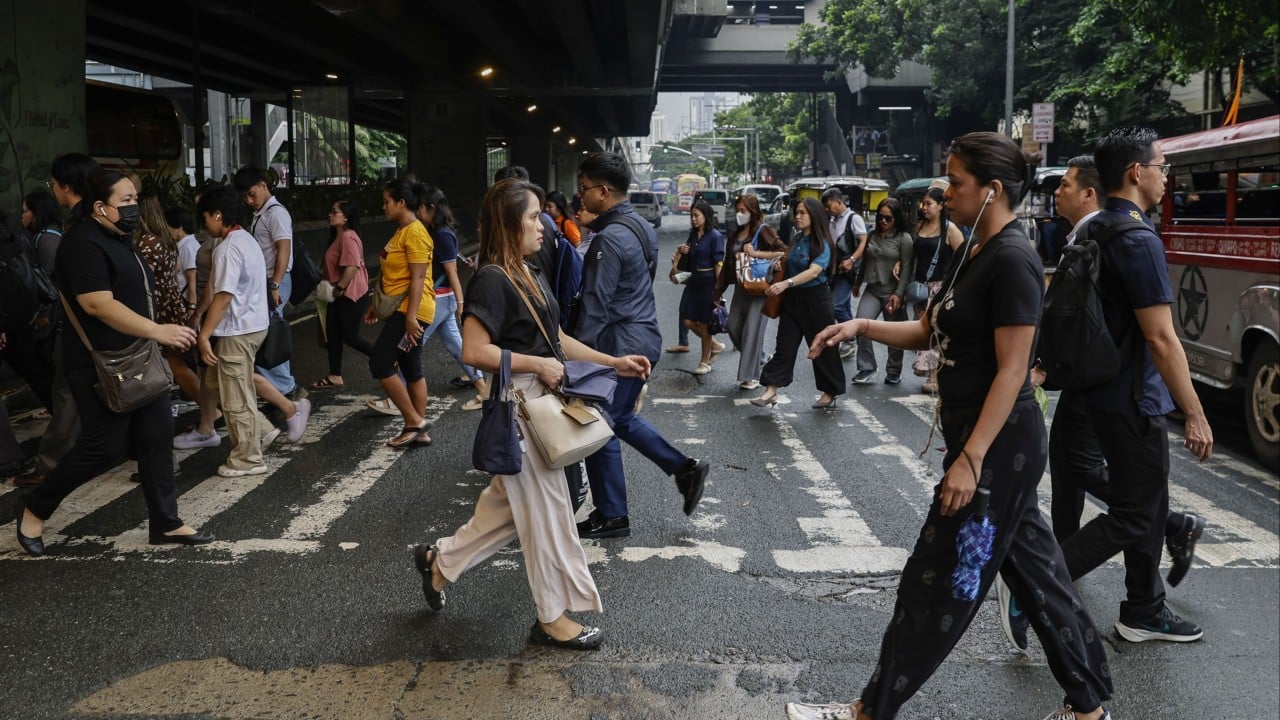
Across Southeast Asia, this class is swelling. They wear clean collared shirts to office jobs in Jakarta, drive rented sedans for ride-sharing apps in Manila, and assemble electronics in export hubs outside Ho Chi Minh City. They have smartphones in their pockets and air conditioning units humming in their cramped concrete apartments. They look like stability. Related analysis on the subject has been provided by Business Insider.
They are actually living on a tightrope.
To understand why this matters, you have to look past the glowing quarterly GDP reports trumpeted by regional finance ministries. Aggregate growth numbers lie because they average the billionaire tech founder in Singapore with the factory worker in Central Java. When you smooth out the extremes, a comforting fiction emerges: the rise of a thriving consumer class.
The reality on the ground tells a very different story.
Consider the mechanics of how this class was built. Over the past three decades, globalization swept through the Association of Southeast Asian Nations bloc like a warm tide. Foreign direct investment poured into manufacturing, supply chains diversified away from single hubs, and millions of agrarian workers migrated to urban centers. They traded rice paddies for assembly lines. Their incomes ticked upward. They bought motorcycles. They opened bank accounts.
That was the easy part. That was the first wave of economic mobility, fueled by cheap labor and rapid industrialization.
Now, the tide is pulling back, and the structural flaws in the architecture are exposed.
The modern Southeast Asian worker is caught between a disappearing past and an inaccessible future. Automation is coming for the assembly lines. Artificial intelligence is threatening the back-office business process outsourcing jobs in the Philippines. At the same time, the cost of living in urban centers is skyrocketing. Real estate prices in Kuala Lumpur and Jakarta have detached completely from local wage growth.
Imagine trying to buy a modest apartment when housing prices inflate at eight percent a year while your salary crawls upward by two.
You run. You run as fast as you can just to stay in the same place.
This is the treadmill of the vulnerable middle. Because these workers earn just enough to disqualify them from public housing subsidies or targeted cash transfers, they must absorb every economic shock entirely on their own. When inflation spikes the price of cooking oil, rice, and electricity—as it has repeatedly over recent years—they cannot absorb the hit by cutting back on luxuries. They have no luxuries. They cut back on meals. They pull their children from private tutors. They delay seeing a doctor until a persistent cough becomes something malignant.
Economists worry about this for entirely pragmatic reasons. Consumer spending is the engine of modern domestic economies. When the middle class stops spending because every spare dong, rupiah, or peso is earmarked for debt service or emergency reserves, the entire market stutters. Small businesses fail. Domestic demand shrivels.
But the danger goes much deeper than sluggish retail sales.
Stability is a psychological state before it is an economic one. When a massive segment of the population works sixty hours a week yet remains perpetually terrified of a single unexpected bill, trust in social institutions begins to fray. The social contract of the region was simple: work hard, move to the city, and your children will live better than you did.
Today, that promise is stalling.
Young adults in Jakarta and Bangkok look at the price of downtown real estate and realize that homeownership is a mathematical impossibility on a standard salary. They are delaying marriage. They are having fewer children. Fertility rates across Southeast Asia are plummeting faster than almost anywhere else in the world, dropping below replacement levels in urban hubs.
This is not just a demographic shift. It is a quiet, collective vote of no confidence in the future.
When people feel economically precarious, their political behavior shifts, too. Fear is a volatile solvent. It dissolves nuance. It makes populations vulnerable to populist rhetoric that promises immediate protection against invisible forces. A squeezed middle class is fertile ground for political instability, because people who feel they have nothing left to lose are willing to gamble on disruption.
Governments are beginning to sweat, though public recognition of the crisis has been painfully slow.
For years, regional policymakers relied on a simple formula: education plus job growth equals prosperity. But the education systems in many Southeast Asian nations are still churning out graduates trained for an industrial economy that is rapidly vanishing. Vocational training programs are underfunded. Social safety nets—unemployment insurance, universal healthcare, portable pensions—are patchwork at best, leaving informal workers like Mali completely uncovered.
Fixing this requires an uncomfortable admission. The old model of low-wage, export-driven growth has run its course.
Countries cannot build a lasting, resilient society on the backs of workers who are paid just enough to keep the factories humming, but not enough to build generational security. The transition requires a massive pivot toward upskilling the workforce for higher-value digital and green economies, enforcing labor protections for the massive informal sector, and constructing affordable housing models that prioritize human habitation over speculative asset bubbles.
It requires treating security not as a reward for the elite, but as the foundational infrastructure of a functioning nation.
Back in Bangkok, the sun is clearing the top of the concrete overpass. The morning traffic is thickening, a dense river of scooters and buses threading through the grey concrete canyons.
Mali is ladling broth into a plastic bowl for a customer in a crisp white shirt who looks like he has a secure corporate job. They stand inches apart, sharing the same humid air, navigating the same chaotic streets. But one of them is standing on solid ground, and the other is balancing on a wire strung high above a gorge.
Until Southeast Asia builds a safety net that catches the people in the middle before they hit bottom, the entire region is walking that same tightrope.