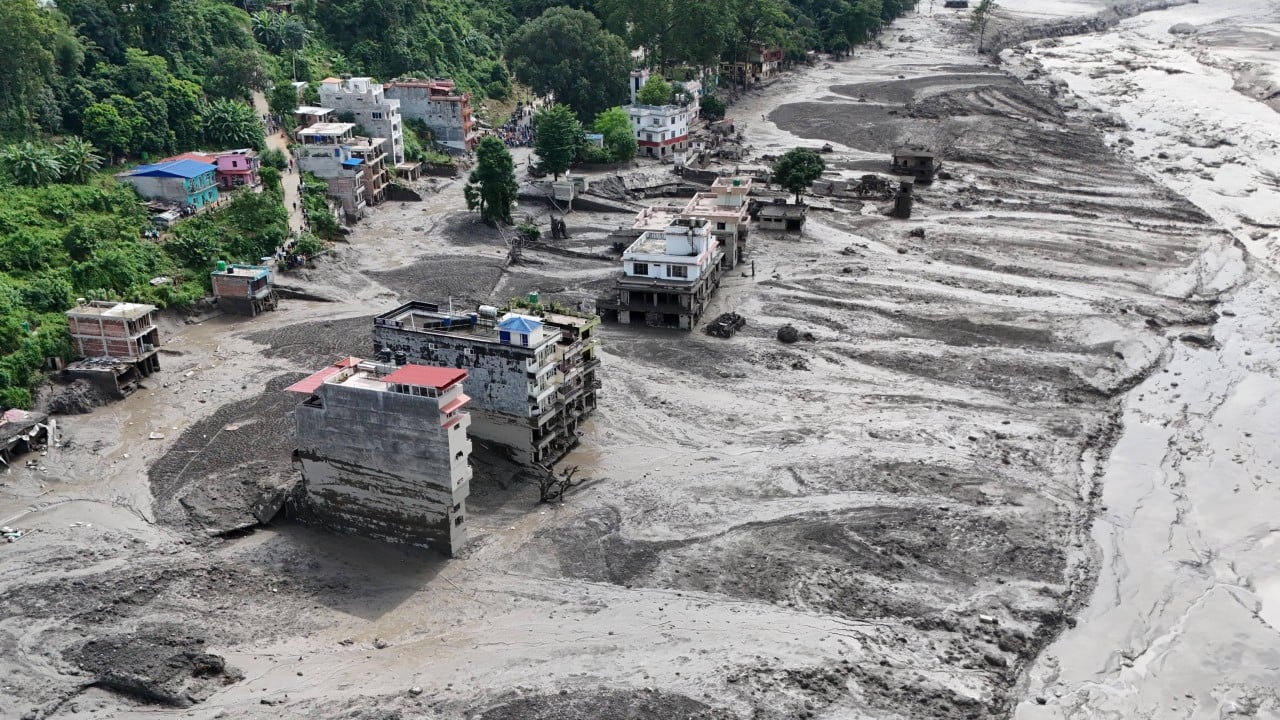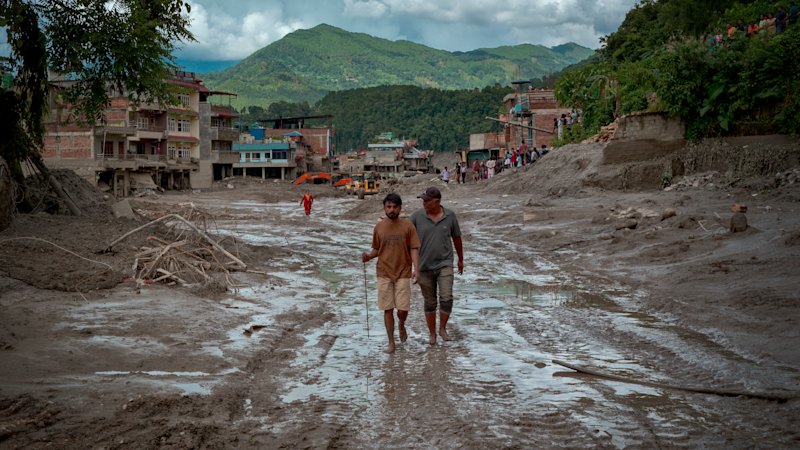
A wall of liquid concrete tore down the Himalayas at 8:37 in the morning, leaving hundreds dead and thousands missing.
When a massive section of a glacier sheared free in Nepal's Langtang National Park, it didn't just slide. It crashed 1,200 vertical meters straight onto the valley floor, triggering a magnitude 5.2 seismic shock. Most people think flash floods are just heavy rain gone wrong. This was entirely different. A catastrophic mix of ice, rock, and mud instantly liquefied and surged down the Lhende Khola, Bhotekoshi, and Trishuli rivers, wiping out entire villages before anyone could check their phones.
If you are tracking the disaster across Nepal and Tibet, the official numbers keep climbing. Over 500 people are confirmed dead, while rescue workers hunt for more than 1,400 missing individuals, a huge portion of whom are foreign trekkers and pilgrims heading toward sacred sites like Mount Kailash.
The Anatomy of a Himalayan Catastrophe
Water levels on the Trishuli River spiked by a terrifying nine meters in a mere thirty minutes. That is not a rising tide. That is an moving wall.
Hatim Sharif, a hydrologist at the University of Texas at San Antonio, notes that debris-laden flash floods moving at this velocity act like liquid concrete. You cannot outrun them. You cannot fight them. Survivors like 68-year-old Keshav Prasad Baral watched multi-storey homes get swallowed whole in seconds. Many who lived owe their lives entirely to random luck—clinging to mango trees while everything else they knew vanished into the sludge.
Infrastructure stood zero chance. Nearly 25 miles of mountain roads were obliterated, and dozens of bridges snapped like toothpicks. This isolation turned rescue operations into an absolute nightmare. Helicopters could not land in heavily hit zones like Syapru Besi and Timure in the Rasuwa district because the terrain had transformed into an unrecognizable sea of mud.
Why the Roof of the World is Unraveling
Climactic shifts in High Mountain Asia are happening at a blistering pace. Scientists point out that the Himalayas are warming at roughly twice the global average.
Nepal has shed nearly a third of its glacial ice in just over thirty years. When permafrost degrades and temperatures spike, glaciers do not just slowly melt away—they destabilize. Daniel Shugar, a geomorphologist at the University of Calgary, analyzed satellite imagery showing that a massive 0.2-square-kilometer chunk of ice broke off from an altitude of about 5,200 meters. Unusually warm weather in the days prior likely supercharged the meltwater, turning a solid mountain feature into an avalanche of destruction.
This is not an isolated freak accident. It mirrors deadly events in Uttarakhand and highlights a terrifying structural vulnerability across the entire Hindu Kush Himalayan arc. As millions of tourists, pilgrims, and local residents populate these river valleys, the risk multiplier increases every single year.
The Global Toll and the Struggle for Answers
The human cost extends far beyond local villagers. The missing list reads like a global census. Citizens from India, the United States, Britain, Canada, Australia, Malaysia, and Ukraine were caught in the path of destruction. Embassy hotlines are jammed. Families are crowding outside military barracks in Kathmandu and Nuwakot just to check handwritten lists of survivors.
China deployed hundreds of emergency workers, sniffer dogs, and speedboats on the Tibet side near Gyirong County, where hundreds remained unaccounted for. Meanwhile, international bodies are scrambling to pump emergency funds into the region, though getting heavy equipment to the hardest-hit pockets remains nearly impossible.
If you are planning travel or spiritual treks through the Himalayas, the old safety calculations no longer apply. Traditional flood warning systems are useless against sudden high-altitude glacial collapses. Monitoring high-mountain permafrost degradation and restricting permanent development along vulnerable river gorges is the only way to prevent future mass casualties. The mountains are speaking loudly, and ignoring the warning signs is no longer an option.