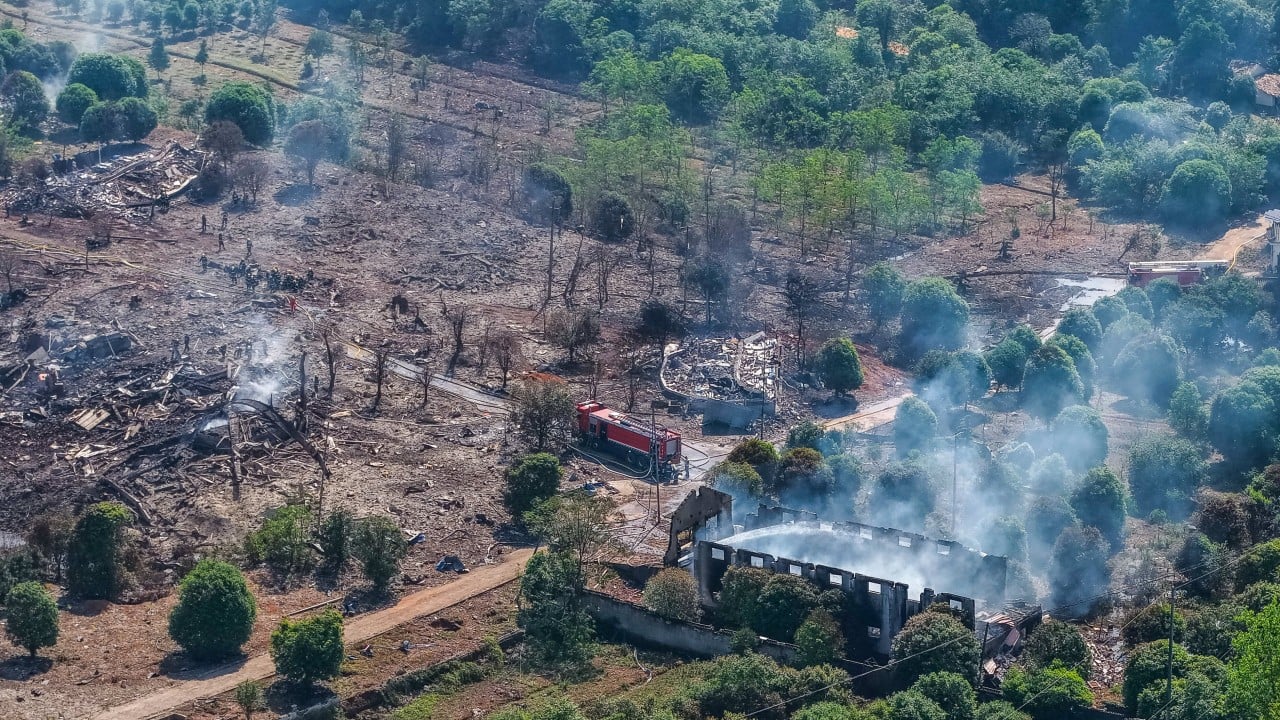
Twenty-one people died because someone took a shortcut. That’s the brutal reality of the fireworks factory explosion in China that left over 60 people injured and a village in ruins. We see these headlines every few years. They follow a predictable pattern: a massive blast, charred remains, a brief window of government outrage, and then silence until the next one. This isn't just about bad luck. It's about a systematic failure to prioritize human life over holiday profit margins.
When a fireworks facility goes up, it’s not a small fire. It’s an atmospheric event. The sheer volume of black powder and chemicals involved turns a workplace into a bomb. In this specific disaster, the force was enough to shatter windows kilometers away. Why does this keep happening in a country that has supposedly modernized its industrial safety standards? The answer lies in the messy intersection of rural poverty, seasonal demand, and the "underground" workshops that bypass every safety rule in the book. For an alternative look, read: this related article.
The anatomy of a fireworks catastrophe
Most people think of fireworks as festive tubes of light. Experts know them as volatile chemical compounds that hate friction, heat, and static. When 21 people lose their lives in a single incident, it usually means the facility was overcrowded or storing finished products right next to raw explosive materials. That's a fundamental violation of pyrotechnic safety 101.
In China’s Hunan and Jiangxi provinces—the heart of global fireworks production—the pressure to produce is immense. As the Lunar New Year approaches, factories ramp up. They hire temporary labor. They stack crates higher than they should. They work longer hours. All it takes is one dropped tool or one spark from a faulty electrical wire. Similar reporting regarding this has been shared by The Washington Post.
The physics of these explosions is terrifying. You have a primary blast, which is the initial ignition. That creates a pressure wave. But in poorly managed factories, you get a "sympathetic detonation." This is when the first blast triggers the next pile of powder, and then the next. It’s a chain reaction that levels buildings in seconds. If you’re inside, there’s no "exit strategy." You’re just gone.
Why regulations fail in the rural heartland
China actually has some of the strictest fireworks laws on paper. The Ministry of Emergency Management sets clear rules on how much powder can be in a room and how far apart buildings must be. But paper doesn't stop explosions.
Local officials are often caught between a rock and a hard place. These factories are the lifeblood of rural economies. They provide jobs where there are none. Closing a factory for a safety violation means putting hundreds of people out of work. So, inspectors look the other way. Or, worse, the production is moved to "black workshops"—unlicensed homes and sheds that have zero fire suppression systems.
The "underground" nature of the trade is the real killer. When a licensed factory gets too much heat from the government, they subcontract the dangerous work to villagers who assemble firecrackers in their living rooms. You can't regulate what you can't see. This creates a ghost supply chain where safety is a luxury no one can afford.
The chemical cocktail that makes it so deadly
It’s not just the fire. It’s the chemistry. Fireworks use potassium nitrate, sulfur, and charcoal, but the bright colors come from heavy metals like strontium, barium, and copper. When a factory explodes, it releases a toxic cloud of particulates that the 60+ injured survivors are now breathing into their lungs.
Many of the injuries in these blasts aren't from burns. They’re from "blast overpressure." This happens when the shockwave collapses lungs and ruptures eardrums. It’s a warzone injury. Doctors in these regions are specialized in treating these specific traumas because they see them so often. It’s a grim specialty to have.
The environmental impact is another layer of the mess. The soil surrounding the blast site becomes laced with perchlorates. These chemicals leach into the groundwater. Long after the funerals are over and the debris is cleared, the people living nearby are still paying the price through contaminated water and stunted crops.
Stopping the cycle of seasonal deaths
We have to stop treating these as "accidents." They are predictable outcomes of a high-risk industry that lacks transparency. If we want to stop seeing headlines about 21 dead workers, the approach has to change from reactive to proactive.
- Centralized Production Zones: Moving production out of residential villages and into dedicated, blast-walled industrial zones is the only way to contain the damage.
- Supply Chain Accountability: Big distributors need to be held legally responsible for where their products are made. If they buy from "black workshops," they should face the same penalties as the workshop owners.
- Technological Shifts: Automated mixing of explosive powders exists. It removes the human element from the most dangerous part of the process. The problem? Machines are expensive. Human labor is cheap.
If you're a consumer, understand that the cheap firecrackers you buy might have been rolled in a shed with no ventilation by someone making pennies. The true cost of that firework isn't the price on the tag. It's the risk that someone's father or daughter took to put it there.
Demand transparency. Support brands that certify their supply chains through third-party safety audits. The next time you see a display, remember the 21 who didn't go home. Safety shouldn't be a suggestion; it's the bare minimum we owe the people who make our celebrations possible. Check the labels on your pyrotechnics. Look for manufacturers that adhere to ISO 9001 standards or specific fireworks safety certifications like the AFSL (American Fireworks Standards Laboratory). It’s the smallest thing you can do to put pressure on a lethal industry.