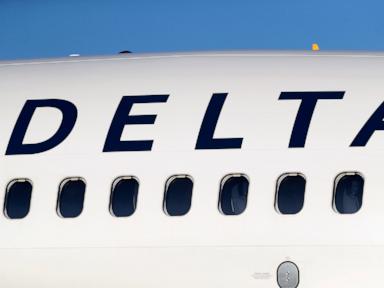
Imagine sitting in a passenger jet, looking out the window at the twinkling lights of Chicago on the Fourth of July. You expect a smooth ride. Instead, you hear a massive thud. That is exactly what happened on Delta flight 1076 as it descended into Chicago Midway International Airport on Saturday night. A high-flying firework slammed right into the commercial airliner.
The pilot told air traffic controllers they felt a big bang. They were flying low, just 200 to 250 feet above the ground. That is a critical phase of flight where seconds matter. Thankfully, the Airbus A319 landed safely with its 52 passengers and six crew members. Mechanics checked it over later and found only minor paint scraping. But this incident highlights a terrifying reality that aviation experts have warned about for years. Backyard pyrotechnics are getting more powerful, flying higher, and creeping way too close to active runways. Expanding on this theme, you can find more in: What Most People Get Wrong About the New ATF Gun Rules.
The Night Delta Flight 1076 Met a Mortar
Let us look at the facts of what went down in the skies over Illinois. The flight left Hartsfield-Jackson Atlanta International Airport at 7:36 p.m. and tracking data shows it arrived at Midway around 8:38 p.m. local time. The timing put it right in the crosshairs of neighborhood celebrations.
Air traffic control audio reveals that the danger was already known. Before the strike, the tower controller explicitly warned the crew about the local neighborhood. The controller said multiple homes near the approach end of the runway were shooting off fireworks. Right after the impact, the pilot radioed in to report the strike, saying they hoped it was just a mortar that went off underneath. Analysts at The Guardian have also weighed in on this situation.
The controller replied that there had already been multiple reports of fireworks interfering with flights that evening. City officials knew about it. The police were notified. Yet, the explosions kept lighting up the approach paths.
What Happens When Pyrotechnics Hit an Airliner
People often think commercial airplanes are fragile tubes. They are not. They are built to withstand bird strikes, hail, and lightning. But a firework mortar introduces completely different variables.
An aerial firework shell is basically a small bomb packed inside a heavy cardboard or plastic casing. When a neighborhood enthusiast launches a commercial-grade mortar, they send a projectile upward at high speed. If that projectile hits an aircraft traveling at 150 miles per hour, the kinetic energy is substantial.
A strike can damage several vulnerable areas on an airplane.
- The Radome: The nose cone of the plane houses sensitive weather radar equipment. It is made of fiberglass or composite materials to allow radar signals to pass through, making it softer than the aluminum hull.
- The Windshield: Jet windshields are multi-layered and reinforced, but a direct impact from an exploding shell can crack or scorch the outer glass layers, severely limiting pilot visibility during a critical landing.
- Engine Ingestion: This is the nightmare scenario. If a firework shell enters a jet engine intake, it can cause catastrophic failure of the compressor blades. An explosion inside an engine spinning at thousands of revolutions per minute can destroy the engine completely.
- Sensor Disturbance: Small tubes called pitot tubes measure airspeed. If a firework clogs or breaks these tubes, the pilots lose accurate speed readings.
In the case of Delta flight 1076, the plane got lucky. The strike happened at a very low altitude, and the shell likely detonated just below the fuselage or glanced off the belly. That explains why mechanics only found minor paint damage. Next time, the angle might be different.
The Growing Altitude Problem of Consumer Fireworks
Consumer fireworks used to be simple things. Sparklers, fountains, and small firecrackers that stayed close to the ground. Not anymore.
Over the last decade, state laws across the United States have loosened significantly. Many states that used to ban aerial fireworks now allow civilians to purchase large mortar kits, reloadable shells, and massive cakes. These consumer-grade pyrotechnics regularly shoot 150 to 300 feet into the air.
Some illegal or professional-grade shells smuggled into suburban neighborhoods go even higher, reaching up to 500 feet or more. When you consider that commercial airliners fly at 200 to 300 feet when they are less than a mile from the runway threshold, the math gets scary. The safety buffer between neighborhood parties and passenger jets has completely evaporated.
Midway Airport sits right in the middle of a dense residential area in South Chicago. Homes, parks, and streets surround the runways. On holidays like the Fourth of July or New Year's Eve, the entire perimeter becomes a launchpad for thousands of amateur light shows. Pilots flying into Midway have complained for years about navigating a wall of fire on holiday nights.
The Massive Blind Spot in Aviation Security
The Federal Aviation Administration takes drone interference seriously. If you fly a drone near an airport, you face massive fines and jail time. The government uses advanced radar and geofencing to stop drones. But fireworks are a massive blind spot.
An individual lighting a mortar in a backyard near an airport runway is committing a dangerous act, but catching them is nearly impossible. A firework launch lasts a few seconds. By the time a pilot reports a flash and a bang, the shell is gone and the person who lit it has walked away.
Local police departments are overwhelmed on the Fourth of July. They receive thousands of noise complaints and fire calls. Dispatching officers to track down a specific backyard launcher near an flight path is like finding a needle in a haystack.
The FAA confirmed it is investigating the Delta incident. But investigations can only do so much when the perpetrators are anonymous homeowners spread across miles of urban neighborhoods.
How Aviation Authorities Must Respond
We cannot keep relying on luck. Aviation authorities need to take concrete steps to protect flights during major holidays. Expecting neighbors to voluntarily stop launching rockets into flight paths is wishful thinking.
Airports located in dense urban environments need specific holiday protocols. Air traffic control should cooperate with local law enforcement to create strict no-firework exclusion zones extending at least three miles from the ends of active runways. These zones must be heavily patrolled on July Fourth and New Year's Eve.
Airlines and airports also need to rethink flight routing on these specific nights. If a city cannot secure its approach corridors from low-level explosions, flights should be diverted to larger, more isolated airports where the runways are far removed from residential backyards. It is inconvenient, but it beats the alternative.
If you live anywhere near an airport, keep your celebrations on the ground. Do not buy aerial mortars. Do not launch rockets. Your backyard entertainment is not worth risking the lives of dozens of people sitting in a descending aircraft. Check local airport maps before planning your next holiday gathering, and make sure your fireworks stay far below the flight paths.