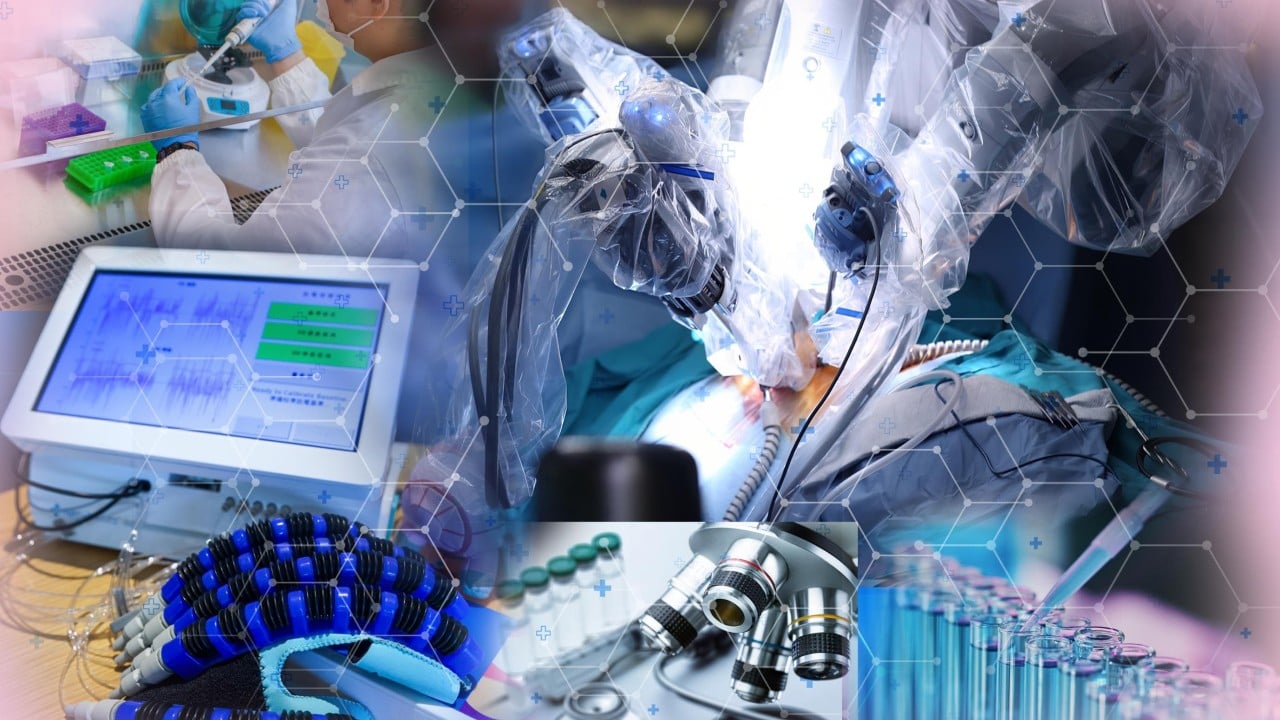
Fluorescent lights hum over a bench in Sha Tin at two in the morning. Cold coffee sits beside a rack of microcentrifuge tubes, its surface gone still and dark. Outside the glass, humid air wraps around steep green hills and dense towers where ferries still cross Victoria Harbour at intervals that feel almost rhythmic enough to count a pulse.
Inside, a researcher watches a screen glow with sequence data that could change how a stubborn infection or a rare genetic disorder is caught before it turns life-threatening. Brilliance lives here. You can feel it in the precision of the pipetting, the speed of the diagnostics, the quiet urgency of clinicians who split their hours between crowded hospital wards and sterile laboratories. Don't forget to check out our previous post on this related article.
Yet a strange tension hangs over work like this. Discoveries happen. Papers get published. Breakthroughs earn applause across borders. Then months or years pass, and the distance between a clever finding on a screen and a pill, a test, or a treatment inside a local clinic feels impossibly wide.
Brilliant. Isolated. Stuck. To read more about the background of this, Mayo Clinic provides an in-depth breakdown.
When people ask why Hong Kong excels at medical research and still struggles to turn every triumph into a thriving commercial and clinical pipeline, they often reach for tidy labels—funding gaps, real estate costs, regulatory friction, market size. Every single one of those points touches something real. None of them tells the whole story on its own.
To understand what holds a place with extraordinary scientific talent back from reaching its full potential, it helps to step away from policy summaries and look at the human choices made under pressure—the quiet sacrifices of scientists, the caution of hospital systems, the math of small markets, and the long, unforgiving road from an idea to a cure.
Where Brilliance Meets Gravity
Hong Kong has long punched above its weight in medicine and biomedical science. Think of the city's deep clinical roots, its dense population that allows rapid patient enrollment in specialized studies, its world-ranked universities, and its position right where East meets West. During major infectious disease outbreaks over the past few decades, researchers here didn't just react; they helped set global benchmarks in virology, epidemiology, and clinical care.
That track record creates a genuine paradox. If the brains are there, and the hospitals are right next door, why doesn't every promising discovery sprint straight into global clinical trials and commercial scale?
Consider a hypothetical researcher—let's call her Dr. Grace Leung, a composite character created to illustrate real structural pressures rather than a single person. Grace spends seven years mapping a biomarker linked to liver disease progression, a condition that carries heavy weight across East Asia. Her data is sharp. Her peer-reviewed papers draw citations from Boston to Basel.
Then comes the moment every applied scientist dreads: taking a promising biological signal and building a reproducible, scalable product that regulators will scrutinize and investors will back for a decade.
In a large domestic market like the United States or mainland China, a startup born from a university lab can sometimes test, iterate, and sell within a massive single regulatory and commercial orbit before crossing borders. Hong Kong is compact. Its population hovers around seven and a half million people. That compactness is a gift for public health coordination and clinical access, yet it means a local company aiming for big commercial returns almost always has to think outward from day one, navigating multiple regulatory regimes, supply chains, and capital pools simultaneously.
Add to that the sheer cost of space and operations in one of the world's most expensive cities. A square meter of wet-lab space or specialized manufacturing floor in Hong Kong carries a price tag that makes early-stage hardware, biologics, or therapeutics founders wince. Even when government grants and innovation parks step in to cushion the blow, translating early benchwork into Good Manufacturing Practice—the strict standards required before human trials and commercial production—demands capital at a scale that scares off fainthearted backers.
It is not a lack of intelligence. It is gravity. Economic gravity, geographic scale, and the brutal timeline of biomedical development pull relentlessly on even the sharpest minds.
The Invisible Stakes Behind Every Delay
When a lab project stalls or moves offshore to find cheaper manufacturing or deeper late-stage venture capital, outsiders often treat it as a business story. A spreadsheet adjustment. A licensing deal.
It is never just a spreadsheet.
Behind a delayed diagnostic or a slowed clinical trial sits a family waiting for an answer that doesn't come with a neat timeline. Imagine—again, a hypothetical scenario built from everyday clinical realities—a middle-aged father in Kowloon learning that his treatment has stopped responding, and his doctor mentions an experimental therapy still tied up in translation between a university lab and a clinical-stage partner. To the finance committee, six months of regulatory or funding friction is a rounding error. To that family, six months can feel like an eternity.
There is also a quieter cost that rarely makes headlines: career drift. Bright young scientists and physician-researchers face grueling trade-offs. Clinical duties in public hospitals are demanding, leaving precious little uninterrupted time for deep benchwork. Meanwhile, academic promotion systems often reward papers and grant tallies far more loudly than messy, years-long efforts to turn a prototype into a regulated medical tool.
I have watched smart people in high-stakes fields burn out not because the work was too hard intellectually, but because the path forward felt like pushing a boulder uphill in ankle-deep mud. You care deeply about the mission. You put in the nights. Yet every step toward real-world application seems to require ten new permissions, ten new forms, and another round of convincing skeptics that your idea won't evaporate before reaching a patient.
A breakthrough sitting in a journal is a promise. A breakthrough reaching a clinic is a lifeline.
That gap—often called the "valley of death" in biomedical translation—is not unique to Hong Kong. Plenty of powerhouse research hubs wrestle with it. What makes Hong Kong's version distinct is the sharp contrast between how close the science is to world-class clinical care and how stretched the commercial bridge between them can feel.
Why Translation Is So Much Harder Than Discovery
Discovering something new is an act of curiosity and rigor. Turning that discovery into something safe, affordable, consistent, and approved for millions of people is an act of industrial endurance.
Think of it like writing a haunting, original melody versus touring a symphony across twenty countries without losing a single note. The melody takes spark and craft. The tour takes logistics, insurance, customs, rehearsals, sound checks, and money that flows out long before tickets pay back the cost.
In medicine, the "sound checks" are clinical trials, toxicology studies, quality control audits, and regulatory reviews. Each stage is there for a vital reason: to protect patients from harm and ensure treatments actually work. Cutting corners in medicine isn't cleverness; it's danger.
Still, friction can come from habits as much as rules. Historically, deep silos have sometimes separated basic researchers, hospital clinicians, industrial manufacturers, and venture investors who speak very different dialects of risk. A clinician asks, Is this safe for my patient right now? A basic scientist asks, What mechanism explains this anomaly? An investor asks, How big is the addressable market, how defensible is the intellectual property, and how long until clinical milestones de-risk the asset?
When those three questions aren't aligned early, projects drift. A brilliant assay solves a narrow academic puzzle without a clear clinical workflow. Or a promising therapeutic candidate lacks the manufacturing data needed to attract serious late-stage partners.
And let's be honest: early-stage biotech and medtech are scary even when everything lines up. Most candidates fail. Clinical trials stumble for reasons nobody could have predicted in a petri dish. Regulatory pathways shift as science evolves. Anyone who claims translating medical research is simple is either selling something or hasn't lived through a failed Phase II trial.
Doubt is part of the terrain. The real question isn't whether risk exists—it always does in medicine—but whether the ecosystem helps teams test ideas fast, fail smart when needed, and carry winners all the way through.
What Happens When Systems Start Listening to Each Other
The encouraging part of this story is that the bottlenecks are visible, and people inside the system are actively pushing against them.
When hospitals, universities, biotech founders, and investors build tighter feedback loops, the whole rhythm changes. Clinicians spot real-world bottlenecks on the ward—like diagnostic delays or adherence hurdles—and bring those questions straight to scientists before years are spent chasing the wrong target. Scientists, in turn, start thinking earlier about manufacturability, intellectual property, and regulatory clarity rather than treating commercialization as an afterthought at the finish line.
Momentum also builds when talent moves fluidly across borders and disciplines. Hong Kong's role as an international financial and academic hub gives it natural advantages in cross-border collaboration, clinical trial networks, and regional partnerships, provided local teams can keep pace with fast-moving global standards in data, AI-assisted discovery, and precision medicine.
Even small shifts in culture matter. Celebrating practical translation alongside pure academic prestige sends a clear signal to the next generation: building something that reaches a bedside is just as noble as publishing a landmark paper.
None of this is a magic wand. Real structural change takes years of steady follow-through, patient capital, and candid conversations about where incentives clash. Yet every time a lab discovery crosses into a real clinical study or a local startup solves a stubborn bottleneck, the ceiling lifts just a little higher.
Back in that quiet lab above the harbor, the monitor still glows in the dark. A single line of data points toward a possibility—not a guarantee, not a finished cure, just a clue worth chasing at two in the morning.
The genius was never missing. The real test is how fiercely a city backs its own breakthroughs until they stop being promising lines on a screen and start breathing in the real world.