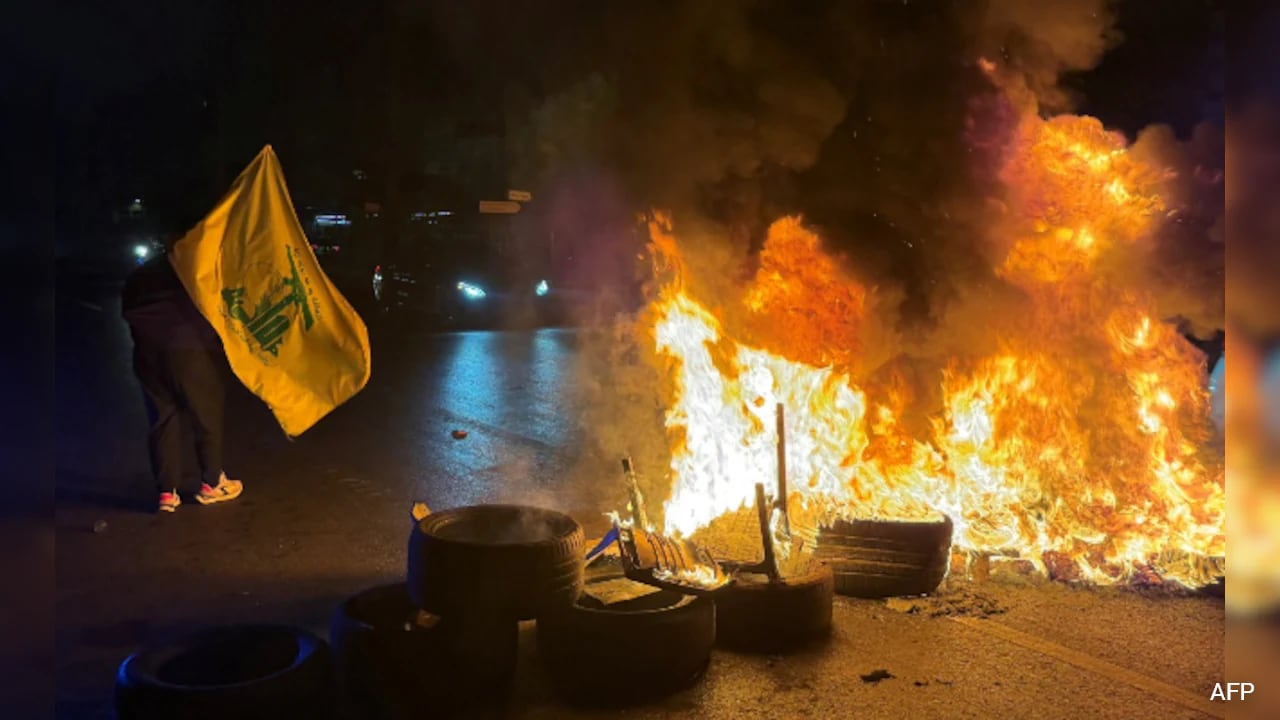
The media is buying the performance hook, line, and sinker. Mainstream commentators are staring at the microphones in Beirut, watching Hezbollah representatives condemn the latest maritime and border arrangements with Israel, and concluding that the deal is on life support. They tell you that militant dissatisfaction means imminent collapse. They warn that regional stabilization efforts are a house of cards because the strongest non-state actor in the Levant refuses to sign off on the dotted line.
They are fundamentally misreading the mechanics of Middle Eastern statecraft.
Hezbollah’s public lambasting of the deal is not proof of the agreement’s failure. It is the exact mechanism required for its survival. In the complex geopolitical ecosystem of the Levant, public denunciation is the ultimate form of tacit approval. If Hezbollah truly intended to dismantle the accord, you would not be reading press releases; you would be tracking rocket trajectories.
The lazy consensus ignores a glaring structural reality: militant groups with governing responsibilities cannot afford to look cooperative, but they absolutely cannot afford a bankrupt state either.
The Performance of Perpetual Resistance
Let's dissect the actual leverage at play here. When an armed political faction spends four decades building its brand on the absolute rejection of a neighbor's sovereignty, it cannot suddenly pivot to a ribbon-cutting ceremony. To expect Hezbollah to praise a negotiated settlement involving Israel is to misunderstand political marketing entirely.
I have watched analysts misinterpret this rhetorical posturing for years. They treat political speeches as literal policy blueprints. In reality, the furious rhetoric serves a dual purpose:
- Domestic Brand Preservation: It signals to the core constituency that the ideological purity of the resistance remains unsullied.
- Strategic Deniability: It allows the Lebanese state to secure economic lifelines while giving its most heavily armed faction a free pass to claim they never compromised.
Consider the economic backdrop. Lebanon’s financial collapse is not a secret; it is an ongoing catastrophe. The country requires energy exploration, international investment, and relative stability to prevent total systemic failure. Hezbollah, as a major stakeholder in the Lebanese government, knows that ruling over a completely dead economy offers zero strategic advantage. They need the economic benefits of the deal—specifically the potential gas revenues and infrastructure stability—just as much as the technocrats in Beirut do. But they need someone else to take the blame for negotiating it.
Dismantling the People Also Ask Fallacy
If you look at standard analysis around this agreement, the questions driving the conversation are fundamentally flawed.
Does Hezbollah's opposition mean the deal will fail?
This question assumes that public opposition equals operational intent. It does not. In structured diplomatic standoffs, the loudest public opposition often hides the quietest back-channel concessions. The deal provides a framework where Israel gets security guarantees and Lebanon gets potential economic relief. Hezbollah’s complaints are the tax the international community pays to ensure the group doesn't actively disrupt the construction crews.
Why doesn't Lebanon enforce strict compliance across all factions?
Because the Lebanese state is a confessionally fractured system designed for paralysis, not absolute enforcement. The system operates on compromises where factions agree to disagree in public while sharing power in private. Expecting a centralized, Western-style enforcement of a treaty in Beirut is a fundamental misunderstanding of how power is distributed in the capital.
The Cost of the Contrarian Reality
Admitting that this public outrage is political theater carries its own set of brutal truths. It means accepting a deeply cynical foreign policy framework.
First, it means acknowledging that the international community is actively legitimizing a dual-track system where official state diplomats sign papers while armed militias hold veto power behind the curtain. It is an unstable, ugly way to do business. The downside is obvious: it perpetuates a weak state model and rewards bad actors for simply choosing not to fire weapons.
Second, this arrangement offers no long-term peace. It is a transactional truce masquerading as a diplomatic breakthrough. The underlying ideological conflict remains entirely untouched. The machinery of war is not being dismantled; it is merely being re-funded by the economic breathing room this deal provides.
Follow the Hard Assets, Ignore the Transcripts
If you want to know where a conflict is heading, stop reading the translated transcripts of political rallies. Look at the capital expenditures.
Look at the energy conglomerates moving rigs into position. Look at the maritime insurance underwriting firms. These entities do not risk billions of dollars because they are naive. They move forward because their security assessments—built on deep intelligence, not public relations—show that the hostile rhetoric is a controlled burn.
The international consortiums drilling in the Mediterranean are banking on the fact that Hezbollah's rockets will stay in their silos precisely because the deal protects the economic ecosystem that keeps the Lebanese state, and by extension the group's own domestic power base, from absolute liquidation.
Stop asking when the angry speeches will stop. They won't. Start watching the infrastructure. The moment the concrete stops pouring and the investment capital dries up, then you can worry. Until then, turn off the volume on the speeches and watch the money.