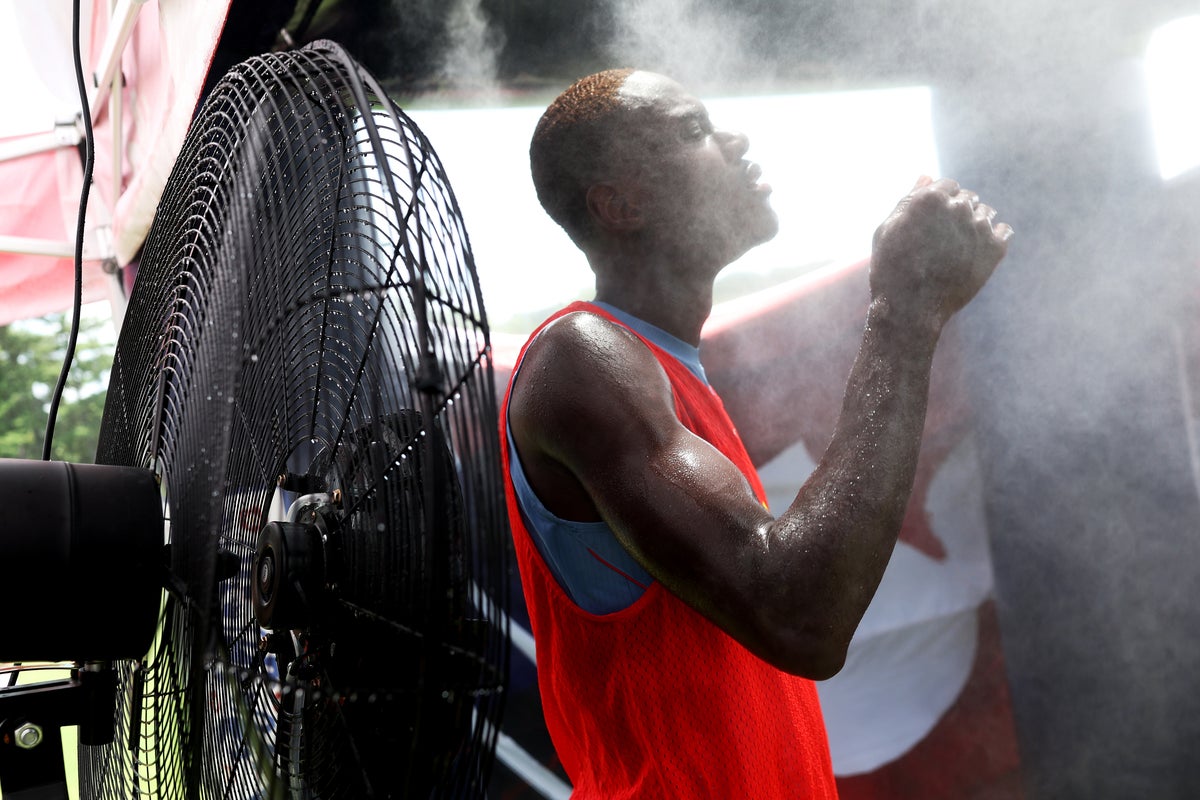
You step outside and the air hits you like a physical wall. It does not just feel hot. It feels heavy, stagnant, and utterly inescapable. There is no breeze to save you, and the temperature keeps climbing long after the sun goes down. This is not just a hot summer day. You are trapped inside a heat dome.
When summer temperatures spike, headlines blame this specific weather phenomenon. Most people think it is just a fancy term for a bad heat wave. It is not. A heat dome is a distinct, dangerous atmospheric trap that locks scorching temperatures over a region for days or even weeks. Understanding how these systems work is fast becoming a survival skill.
The Atmospheric Pressure Trap
Think of the atmosphere as a giant, fluid ocean of air. A heat dome happens when a massive ridge of high pressure parks itself over a large area. This high pressure does something brutal. It acts like a giant lid on a pot.
Under normal conditions, warm air rises into space, cools down, and circulates. High pressure completely wrecks this natural cooling system. The heavy air under the high-pressure system sinks toward the ground. As that air sinks, it compresses. Basic physics tells us that compressing a gas makes it hotter. This process is called compression heating, and it drives temperatures to extreme levels.
The sinking air does something else malicious. It pushes clouds away. With zero cloud cover, the sun beats down directly on the dirt and pavement without any shield. The ground bakes. The soil dries out completely. Once the ground loses its moisture, the sun's energy stops going into evaporating water and goes entirely into heating the dirt. The dry soil then radiates that intense heat right back into the lower atmosphere. It is a vicious, self-reinforcing feedback loop. The hotter it gets, the more the ground dries out, and the hotter the air becomes.
The Jet Stream Connection
To understand why these systems stall out, look way up. High-altitude winds called the jet stream dictate our daily weather. Usually, the jet stream moves briskly from west to east in a relatively straight line, dragging weather systems along with it.
Sometimes the jet stream gets lazy. It develops massive, slow-moving waves that look like the Greek letter Omega ($\Omega$). Meteorologists call this an Omega block. When the jet stream warps into this shape, a high-pressure system can get pinned inside one of the massive loops.
   _..._
  /     \
 /       \
|         |   <-- High Pressure trapped inside
|         |
The wind that would normally push the weather system along simply flows around the loop, leaving the high pressure completely stationary. The dome sits there. It bakes everything underneath it. It refuses to budge until the entire global wind pattern shifts. This can take weeks.
Why Heat Domes Kill
We often think of tornadoes or hurricanes as the ultimate weather villains. They smash buildings and flood streets, making for dramatic news footage. Heat domes do not knock down power lines or rip off roofs. They just quietly kill people.
Statistically, extreme heat is the deadliest weather phenomenon in the United States. It kills more Americans on average than hurricanes, tornadoes, floods, and lightning combined. The National Weather Service monitors these numbers closely, and the trends are alarming.
The real danger of a heat dome is the lack of nighttime cooling. In a standard heat wave, the sun goes down and the temperature drops ten or fifteen degrees, giving the human body a chance to recover. Inside a heat dome, the thick layer of trapped, sinking air prevents that heat from escaping into space at night. Concrete, asphalt, and brick buildings store immense heat during the day and radiate it all night long. If your body does not get a break from the heat for several days in a row, your core temperature stays elevated. That leads directly to heat exhaustion, heat stroke, and organ failure.
The Pacific Northwest Disaster
Look at what happened in June 2021 in the Pacific Northwest of the United States and western Canada. This region is famous for cool, rainy weather and mild summers. Many homes do not even have air conditioning.
A historic heat dome settled over Oregon, Washington, and British Columbia. Portland hit 116 degrees Fahrenheit ($46.7^\circ\text{C}$). Seattle reached 108 degrees ($42.2^\circ\text{C}$). Lytton, a small town in British Columbia, shattered Canada's all-time temperature record by hitting a staggering 121 degrees ($49.4^\circ\text{C}$). The next day, a wildfire swept through and destroyed the town.
Hundreds of people died during that single event. Emergency rooms were overwhelmed. The local infrastructure literally melted. Roads buckled, power cables snapped, and light rail systems had to shut down because the tracks were warping. It proved that even regions accustomed to mild weather can be completely paralyzed when the atmosphere traps heat this aggressively.
How to Survive the Stagnant Heat
If a heat dome settles over your area, you cannot treat it like a normal summer. You have to change how you live until the system breaks.
Your primary goal is keeping your core body temperature down. If you do not have air conditioning, sitting in front of a fan when the indoor temperature is above 95 degrees Fahrenheit ($35^\circ\text{C}$) actually dehydrates you faster. It blows hot air over your skin like a convection oven. Instead, use water. Take cool showers. Put damp towels on your neck and under your arms.
Keep your windows closed and blinds shut during the peak heat of the day. Only open them at night if the outside air genuinely drops below the indoor temperature.
Watch your hydration carefully. Do not wait until you feel thirsty to drink water. By then, you are already slightly dehydrated. Avoid alcohol and heavy caffeine, which push fluids out of your system.
Finally, check on your neighbors. The elderly, young children, and people living alone without cooling infrastructure are the first to succumb to a heat dome. A quick knock on a door can save a life when the air outside turns toxic.


