Silence.
That is the first thing you notice when a century-old timber hall loses its congregation, a slow hush settling over polished floorboards where hundreds of voices once rose together on Sunday mornings. In related developments, take a look at: Repeat Lottery Wins After Record Scratch Prizes: Why The Secret Usually Fails Math.
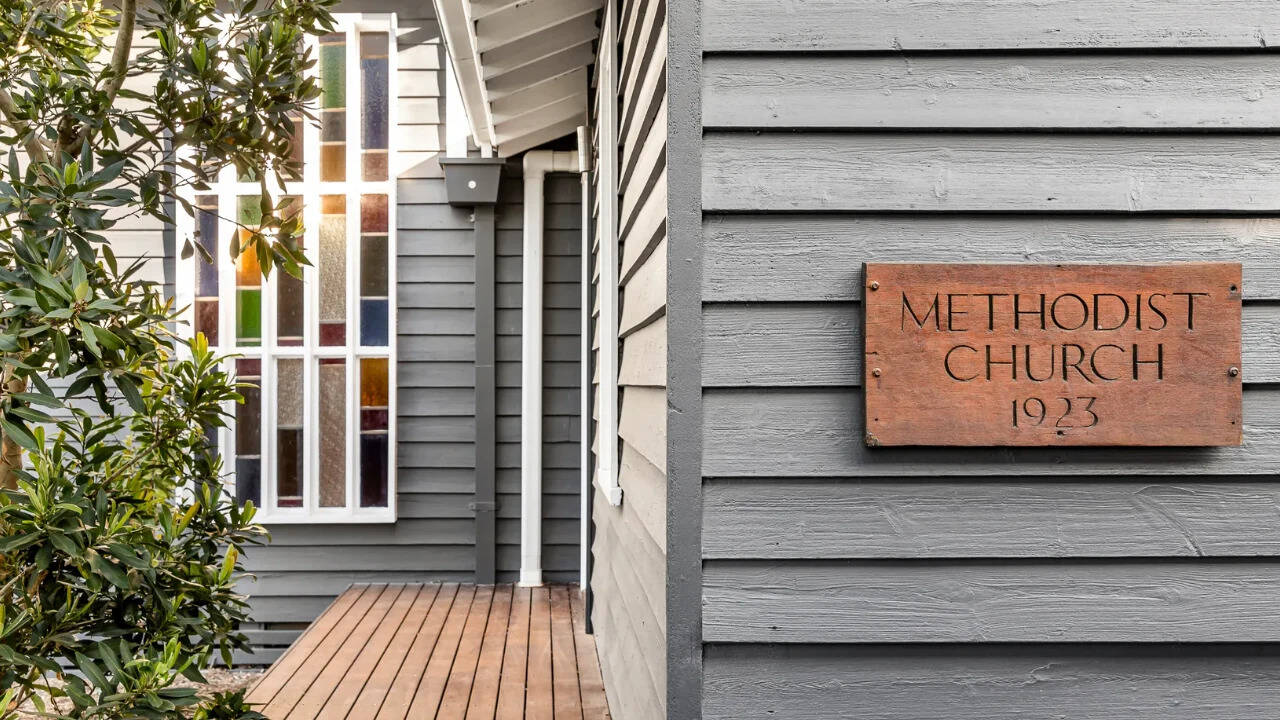
Across Australia, stone and weatherboard churches built in the early twentieth century—places raised in 1923 with sweat, fundraising bake sales, and earnest civic pride—are quietly changing hands. When a 1923 Australian church transformed into a $950,000 home hits the market, a dry real estate listing might tell you the square meterage, the number of bedrooms, the soaring ceiling height, and the suburb. Cold facts. Useful, sure. Yet they miss the tremor that runs through a buyer standing beneath a thirty-foot ridge beam wondering whether they are inheriting a sanctuary or a money pit.
I have walked through adaptive reuse projects where the smell of fresh pine shavings fought a losing battle against century-old damp rising through lime mortar. I have felt the chill of high-volume air dropping onto a dining table in July when a split-system air conditioner is asked to heat a space designed for choirs rather than cozy family dinners. I will be honest with you: falling in love with a converted church is intoxicating, and walking into the financial and structural reality of one can make your stomach drop. Apartment Therapy has analyzed this fascinating topic in great detail.
Why do people pay nearly a million dollars—or more, depending on the market and renovation scope—for an old church house when a standard brick veneer property with predictable insulation and straight walls sits down the road?
The Weight of Timber Built for a Hundred Years
Look closely at what builders in 1923 put into a regional or suburban church. Old-growth hardwoods, heavy trusses, deep foundation footings poured by hand, and joinery cut to outlast every person who sat in the pews. Unlike lightweight modern framing engineered to tight tolerances, early twentieth-century sacred architecture was often over-built by today's standards because no one knew quite how long the building would need to stand.
That strength is the romance. It is also the trap.
A metaphor helps clarify the tension here—and I want to be explicit that this is a metaphor rather than a literal diagnosis: imagine buying a vintage grand piano and deciding to make the soundboard your kitchen island. The craftsmanship is extraordinary, the resonance is unmistakable, yet every piece of the instrument was tuned for a purpose that has nothing to do with spilling espresso or boiling pasta.
Consider what happens next: a buyer walks in, sees pointed lancet windows filtering afternoon light across a living room, and immediately pictures dinner parties echoing beneath vaulted timber. What they do not see at first glance are the practical realities tucked behind plasterboard and roof sarking. High ceilings look dramatic in listing photos. In winter, warm air rises toward the rafters while your ankles stay cool unless underfloor heating or well-placed thermal mass is doing heavy lifting.
Let's introduce a hypothetical scenario to make those numbers concrete. Suppose a couple—let's call them Hannah and Tomas, purely as a composite illustration of buyers I have advised—eye a 1923 church conversion listed around $950,000. On paper, the price feels comparable to a renovated period terrace or a sizable family home. Their instinct asks: Are we paying for lifestyle, for land, or for someone else's passion project?
To answer that question honestly, you have to separate three things real estate ads routinely blur together:
- Heritage charm: Original trusses, stained or frosted glass, acoustic volume, and the unmistakable story of a building that anchored a neighborhood for a century.
- Livability engineering: Insulation R-values, moisture management, acoustic baffling so conversations do not bounce like ping-pong balls, and zoning compliance for residential habitation.
- Resale liquidity: A smaller pool of future buyers than a standard three-bedroom family home, balanced by fierce loyalty from people who specifically hunt for character properties.
None of those factors is a dealbreaker on its own. Together, they explain why a $950,000 price tag on a 1923 church conversion sparks both breathless admiration and sharp skepticism around the kitchen table.
When a Pulpit Becomes a Pantry
Converting a church into a residence is never just hanging curtains and dropping in a sofa. Sacred spaces were laid out around ritual, sightlines, and gathering. Homes need privacy, storage, wet areas, and quiet corners where one person can read while another watches television.
When you walk through a finished church conversion, watch how the designer solved the "big box" problem. Left as one giant volume, an old nave can feel less like a home and more like a community hall with a bed in the corner. The best conversions insert human-scale zones—a timber mezzanine, a cabinetry wall that stops short of the ceiling, or a tucked-away study—so the grand architecture frames daily life instead of overwhelming it.
People often ask whether living in a deconsecrated church feels eerie or whether local councils make approvals a nightmare. Both questions come from real anxieties.
On the emotional side, most owners report that strangeness fades within weeks once daily routines take over—the clatter of cereal bowls, the hum of a dishwasher, a dog sleeping on a rug where an altar once stood. What lingers isn't spookiness; it is a quiet sense of stewardship. You realize you are a temporary caretaker of a landmark that predates your grandparents.
On the regulatory side, the honest answer is that local planning rules, heritage overlays, and building codes vary wildly by council and state across Australia. A building erected in 1923 may carry local heritage listing or sit in a heritage precinct, meaning external changes—new windows, solar panels visible from the street, or extensions—can require careful approval. Smart buyers check permitted residential use and occupancy certificates early rather than assuming a past renovation ticked every box.
The Invisible Ledger Behind a $950,000 Tag
Price is a single number; cost is a relationship over time.
When a 1923 church conversion is priced at $950,000, the market is signaling that the heavy lifting—or at least a major transformation—has already happened, or that the location and land component carry substantial weight. Yet even a well-executed conversion carries unique ongoing dynamics that don't show up in a quick walkthrough.
Heating and cooling top the list. A soaring ceiling creates visual drama and natural daylight, yet heating that volume takes energy unless the envelope is tight. Acoustic echo is another quiet surprise: hard timber floors, plaster walls, and tall ceilings can turn a lively family dinner into a noisy reverberation chamber until rugs, curtains, and upholstered furniture absorb the sound.
Maintenance follows its own rhythm, too. Older roofs, heritage guttering, and timber joinery reward proactive care. Ignoring a minor roof leak or flashing issue above a vaulted ceiling is far costlier than fixing a leak above a flat ceiling in a modern build.
Still, there is a reason these listings generate so much heat and conversation. Standard housing often feels interchangeable—same floor plan, same beige walls, same streetscape repeated block after block. A converted 1923 church refuses to be generic. It gives you light from unexpected angles, proportions you cannot fake with drywall, and a story that starts before you ever turn the key.
Standing in a quiet room where sunlight slants through old glass onto honey-toned timber, you feel the pull immediately. You aren't just buying shelter. You are stepping into a hundred years of memory—and deciding what the next chapter will sound like.