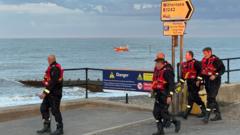
Emergency response teams face an immediate race against time when someone goes missing in coastal waters. When a 13-year-old boy reportedly got into difficulty while swimming off the coast of Hornsea in East Yorkshire, local authorities launched an intensive multi-agency operation. The incident, reported around 6 PM, triggered a massive deployment along the South Promenade, pulling in resources far beyond standard local policing.
Understanding how these emergency deployments function reveals the immense logistical hurdles teams face during open-water searches.
The Immediate Multi-Agency Response
Seconds count when a swimmer vanishes in the North Sea. Humberside Police didn't wait to mobilize, coordinating directly with HM Coastguard, the Yorkshire Ambulance Service, and Humberside Fire and Rescue Service.
Deploying specialized units requires precise choreography. Chief Superintendent Phil Booker noted that specialized Police Search Advisors, known as POLSA teams, joined marine units and drone operators on the scene. Aerial tech changes the game for modern shoreline searches. Drones equipped with advanced optics can scan choppy surf lines much faster than human eyes scanning from the dunes.
Yet, technology has strict limits when pitted against open water, changing tides, and fading daylight.
The Hidden Dangers of Coastal Swims
People often underestimate cold water shock and undertows. Even during warm summer evenings, North Sea temperatures remain dangerously low. Cold water robs muscle power within minutes, making it nearly impossible for a swimmer to stay afloat, regardless of their swimming ability.
Authorities consistently urge the public to steer clear of active search zones. Crowds on promenades hinder emergency vehicles trying to shuttle vital equipment to the water's edge. Speculation on social media also creates noise that distracts investigators trying to piece together the timeline.
Navigating the Aftermath and Next Steps
As inquiries continue to establish the full sequence of events, local patrols remain active around the Hornsea coastline. Police have urged anyone with relevant information or footage from the area to come forward through non-emergency channels using log 415.
Search efforts remain fluid as rescue coordinators evaluate tidal shifts and weather patterns to predict drift trajectories. Support services stay mobilized on standby as the community waits for updates from the ongoing operation.