Cold November rain hits the windshield of a sedan outside a community center in Saginaw. Inside, someone's fingers stay wrapped around a warm coffee cup long after the folding chairs empty out.
Elections usually arrive on paper as clean percentages and neat margins. Yet real people carry the weight of a Senate race in the quiet hours before dawn, when a paycheck still feels thin and a pharmacy receipt still stings.
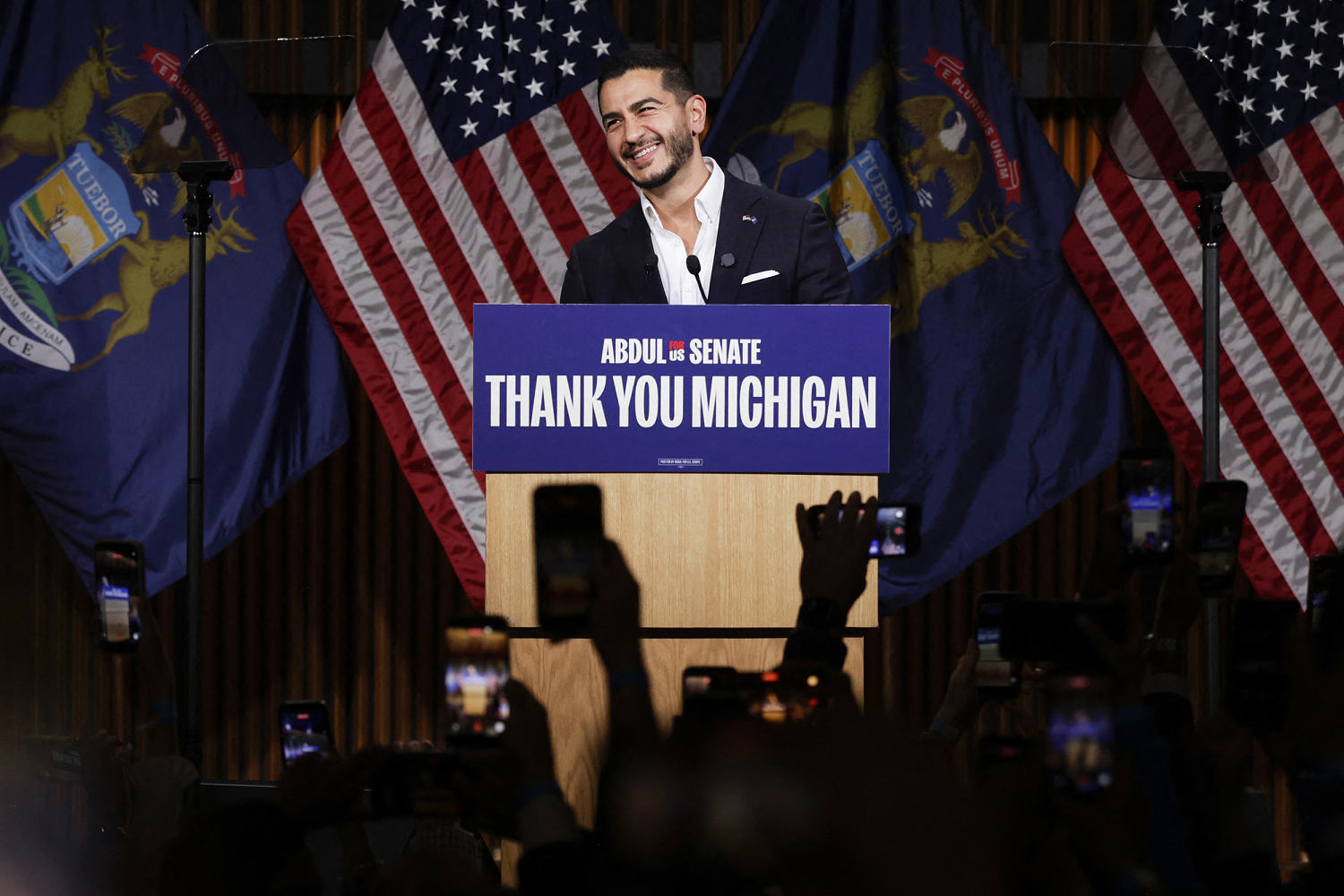
In November 2026, Democrat Abdul El-Sayed defeated Republican Mike Rogers to win Michigan's open United States Senate seat, succeeding retiring Democratic Senator Gary Peters. Preliminary returns reported by The Associated Press with 99 percent counted put El-Sayed at 2,520,895 votes (about 52.54 percent) to Rogers's 2,181,111 votes (about 45.46 percent), with Libertarian Lydia Christensen at 49,707 votes, U.S. Taxpayers candidate Tim Long at 26,550 votes, Green Party candidate Douglas P. Marsh at 12,564 votes, and Natural Law Party candidate Walter P. Kristy at 7,262 votes. That victory also made El-Sayed, 42, the first Muslim elected to the United States Senate, arriving as Democrats flipped control of the chamber during a broader midterm wave.
Numbers tell you who won. They do not tell you what it felt like to walk past a yard sign at dusk wondering whether your neighbor was judging your name, your family, or your exhaustion.
The Weight of a Name in a Swing State
Michigan has never been a place where political allegiances sit still like limestone. Factories rose, shuttered, retooled, and tested every promise made on a campaign stage. Voters here have long trusted people who sound like they have seen hard work up close and distrusted slogans spun from afar.
When El-Sayed entered the general election against Rogers, the stakes stretched far beyond a single six-year Senate term. Critics and political opponents cast the contest as a sharp test of progressive politics in a battleground state, while fierce attacks and slanders targeted El-Sayed's faith and background. Polling during the summer showed deep skepticism from parts of the electorate about how far left his platform reached, alongside pushback from voters who viewed Rogers as too closely tied to Donald Trump.
Doubt is human. Anyone watching a polarizing race in a swing state has felt that tug-of-war in their chest: the pull of familiar habits versus the fear that nothing changes if you keep pulling the same lever.
To make sense of how those abstract pressures land on an ordinary evening, consider a hypothetical voter named Nadia, a home health aide in Macomb County whose shifts stretch from early morning insulin checks to late-afternoon errands. This scenario is hypothetical, built to trace how policy debates feel inside a real schedule. Nadia does not read campaign white papers between stops. She notices when an inhaler costs more than a tank of gas. She notices when a clinic closes early. And she notices when political fights turn neighbors into strangers.
Think of a household budget like a leaky rowboat crossing Lake Huron in autumn. You can argue loudly about who painted the hull, yet if water is rising around your ankles, your attention goes straight to the bailer. For many Michiganders, health care bills, household costs, and everyday stability were the water in the boat.
From Stethoscope to Senate Floor
El-Sayed's path to the Senate was shaped first by medicine and public health rather than traditional party ladders. A physician and public health leader by training, he framed his campaign around the idea that broken systems and outsized money in politics make people sick long before they ever reach an exam room.
His platform pushed big, sweeping changes: Medicare for All, lowering prescription drug costs, curbing corporate influence and billionaire wealth, addressing housing and clean water, and ending U.S. military aid to Israel. Those positions excited supporters hungry for structural reform and drew sharp criticism from opponents who argued they went too far or broke with long-standing alliances.
Why did a candidate carrying both historic firsts and bold progressive proposals win statewide in Michigan?
Part of the answer lies in how voters weigh messenger against message. When a doctor talks about medical debt or hospital billing, the conversation shifts from abstract ideology to lived friction. Even voters who do not agree with every line of a universal health care proposal often recognize the frustration of fighting an insurer on hold for forty-five minutes.
Consider another hypothetical character, Thomas, a retired machinist near Grand Rapids whose knee has ached through three winters. Again, Thomas is a composite stand-in rather than a real person, used to illustrate how swing voters decide. Thomas has voted Republican in some elections and Democratic in others. He worries about government spending and feels uneasy whenever politicians speak in absolutes. Yet when he hears a candidate talk plainly about out-of-pocket costs and whether working families are getting squeezed by big institutions, he listens closely.
Swing voters rarely move in lockstep. They move when a candidate makes them feel seen without talking down to them.
What Historic Firsts Actually Mean
History books love firsts. Real people often feel complicated about them.
Becoming the first Muslim U.S. senator carries immense symbolism for communities that have spent decades watching politics from the margins or enduring suspicion during turbulent national debates. In his election night remarks in Detroit, El-Sayed spoke directly to that tension, thanking voters who welcomed him into homes, churches, and synagogues, and arguing that America is big enough for all of its people—while also trading sharp, pointed banter about Vice President JD Vance's constitutional role in swearing him in come January.
Symbols alone do not pave roads or lower electric bills. Yet symbols still matter when a child hears someone with a familiar name or background addressed as a United States senator.
At the same time, historic milestones never erase every worry in a room. Some voters celebrate a breakthrough immediately. Others watch cautiously, waiting to see how a newcomer governs once cameras move away from Detroit and election night banners come down. Admitting that mixture of pride, curiosity, and caution is essential if we want honest politics rather than cheerleading.
Why This Race Echoed Beyond Michigan
Michigan's Senate race did not happen in a vacuum. It unfolded during the 2026 midterm cycle as Democrats won back control of the Senate amid broad voter frustration with the Trump administration and Republican leadership.
When a major battleground state shifts decisively in a midterm wave, political analysts immediately look for lessons. Does a 52.5 percent to 45.5 percent margin prove that bold progressive arguments work in purple states? Or did specific local dynamics, candidate contrast, and broader anti-incumbent energy carry the day?
Truthfully, both can be true at once. Voters do not cast ballots with a single lever labeled "ideology" or "mood." They pull a lever shaped by kitchen-table strain, trust in institutions, anger over rhetoric, and hope for relief.
Here is a practical way to read election results without getting swept away by spin:
- Look at the margin alongside turnout and county shifts, not just cable-news soundbites.
- Separate a candidate's personal story and credibility from every policy item on their wish list.
- Watch committee assignments and early legislative votes in January, where campaign promises meet Senate rules and narrow majorities.
Power changes hands quickly on election night. Governing takes years.
The Morning After the Applause
Campaign rallies end with confetti and speeches. Real governing begins with budgets, hearings, compromises, and quiet phone calls that never make a highlight reel.
For El-Sayed, winning Michigan's Senate seat is an opening chapter, not a finish line. Delivering on promises around health care costs, money in politics, or foreign policy in a divided Washington will test every ounce of discipline and coalition-building he brings to Capitol Hill. For voters who stayed home or split their tickets, the real test will be whether life feels any steadier a year from now.
Listen.
Rain still taps the glass outside that Saginaw community center, steady and unhurried, long after the lights inside go dark.