The media has found its new favorite boogeyman.
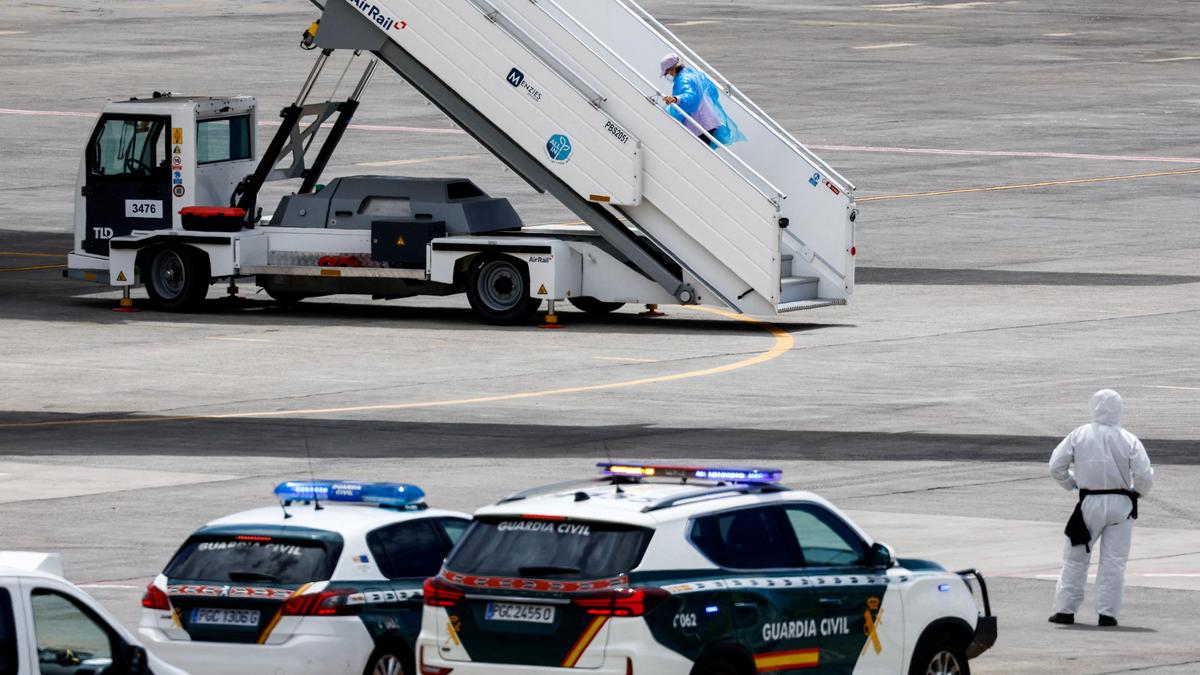
Tabloids are screaming about a "deadly rat virus" breaching British shores. Outlets are tracking the MV Hondius cruise ship with the kind of frantic graphics usually reserved for a nuclear crisis. We watch as a British doctor is airlifted and twenty-some returning nationals are shuttled via private coaches to Arrowe Park Hospital on the Wirral. They are slated for a staggering 45-day isolation period.
The implicit narrative is clear: a lethal, highly contagious pathogen is knocking on the UK's door, and only the most draconian quarantine measures can save us.
This narrative is completely wrong. It misinterprets the fundamental science of zoonotic transmission, ignores decades of epidemiological data, and actively harms public health by weaponizing institutional panic.
I have watched public health agencies mismanage the communications of outbreaks for a long time, often burning millions in taxpayer funds on performative containment strategies just to satisfy a media machine that demands a visible show of force. This is not a frontline battle against a pandemic. It is public health theater.
The Flawed Premise of the 45-Day Quarantine
To understand why the current panic is unjustified, we must look at what is actually happening. The UK Health Security Agency (UKHSA) triggered its High Consequence Infectious Disease (HCID) protocols because the specific pathogen identified on the MV Hondius is the Andes hantavirus strain.
Yes, Andes virus is nasty. It causes Hantavirus Pulmonary Syndrome (HPS). It is characterized by a rapid, brutal progression to acute respiratory distress and shock, carrying a case fatality rate that can reach up to 50% in the Americas. Yes, three people onboard the vessel have tragically died. But treating this like an airborne wildfire waiting to consume Manchester or London is a severe scientific error.
The lazy consensus asserts that because the incubation period can last up to eight weeks, a massive, multi-week quarantine of every person who breathed the same air as an infected passenger is necessary. The premise is flawed because it fundamentally misunderstands how hantaviruses behave.
Hantaviruses are not influenza. They are not SARS-CoV-2. They are sylvatic, rodent-borne viruses. Humans are dead-end hosts. You contract it by inhaling aerosolized virus particles from the dried urine, feces, or saliva of infected wild rodents—specifically Sigmodontine rodents in South America, where the vessel’s journey began.
The media screams "person-to-person transmission!" because the Andes strain is the only hantavirus known to occasionally spread directly between humans. What they omit is the exact nature of that transmission. Data from the definitive 2018 outbreak in Chubut, Argentina, which public health experts frequently cite, demonstrated that human-to-human spread of Andes virus requires prolonged, highly intimate contact—typically among family members living in close quarters. It does not spread efficiently through brief social contact or by walking past someone in an airport terminal.
By locking healthy, asymptomatic citizens in isolation facilities for 45 days based on an extreme outlier scenario, the state is applying a sledgehammer to a problem that requires a scalpel.
The True Cost of Performative Biosecurity
When public health agencies overcorrect to appease a panicked press, the collateral damage is immense. The downsides of the current strategy are clear:
- Erosion of Institutional Trust: When you tell the public a virus is a high-consequence threat requiring hazmat suits and isolation wards, but the actual risk to the general population is mathematically near zero, the public senses the exaggeration. The next time a genuinely high-risk, highly transmissible airborne pathogen emerges, the warnings will fall on deaf ears.
- Severe Psychological and Financial Toll: Forcing individuals into state-mandated monitoring for 45 days—nearly a month and a half—is a profound disruption to civilian life, employment, and mental well-being, justified only by an imminent, existential threat that simply does not exist here.
- Misallocation of Resources: The medical logistics required to maintain dedicated flight isolation protocols, private coach transfers, and specialized hospital wards are finite. Every pound and hour spent containing a non-epidemic virus is a resource diverted from the actual, crushing crises currently facing the National Health Service.
Imagine a scenario where we treated every rare, localized zoonotic spillover with this level of national disruption. The global economy and travel infrastructure would permanently grind to a halt. The World Health Organization and the UKHSA have both quietly admitted that the risk to the general public is exceptionally low. Yet, the operational response looks like a bio-warfare drill. This disconnect is unsustainable.
Distinguishing Between Threat and Tragic Localized Outbreak
To evaluate the situation rationally, look at the timeline and the transmission mechanics.
| Metric / Feature | Cruise Ship Reality | Public Myth |
|---|---|---|
| Primary Vector | Rodent excreta inhalation inside an enclosed environment | Casual human-to-human passing in public spaces |
| Transmission Risk | High within the confined, specific source area | Negligible once individuals leave the source |
| Incubation Window | Long (up to 45–60 days), but asymptomatic spread is unproven | Active, invisible super-spreading during incubation |
The cluster of infections occurred because a group of people shared an enclosed, specific environment—the vessel—where an initial rodent exposure or a highly localized chain of intimate transmission occurred. Once passengers disembarked, underwent clinical assessment, and were separated from the source, the chain was effectively broken.
The Spanish health ministry reported negative tests from individuals who shared flights with an early casualty. Out of dozens of contacts tracked globally, there remains no evidence of a sustained, secondary community outbreak anywhere on land.
The public health apparatus is fighting yesterday's war. Traumatized by the early missteps of the 2020 pandemic, institutions now default to maximum visibility and maximum restriction, regardless of the virus's actual biological constraints. They are confusing clinical severity with epidemiological velocity. A virus can be highly lethal to an infected individual while remaining completely incapable of causing a wider epidemic. Andes hantavirus fits this description perfectly.
Stop asking how we can tighten the border or lengthen the quarantine to keep the "rat virus" out. The right question to ask is why our public health architecture remains so fragile that a localized, predictable cruise ship outbreak of a known, poorly transmissible rodent virus throws western nations into a tailspin of medieval containment strategies.
The real danger to Britain isn't the Andes virus. It is an easily panicked public health policy that prioritizes the appearance of absolute safety over scientific literacy and proportionate response.