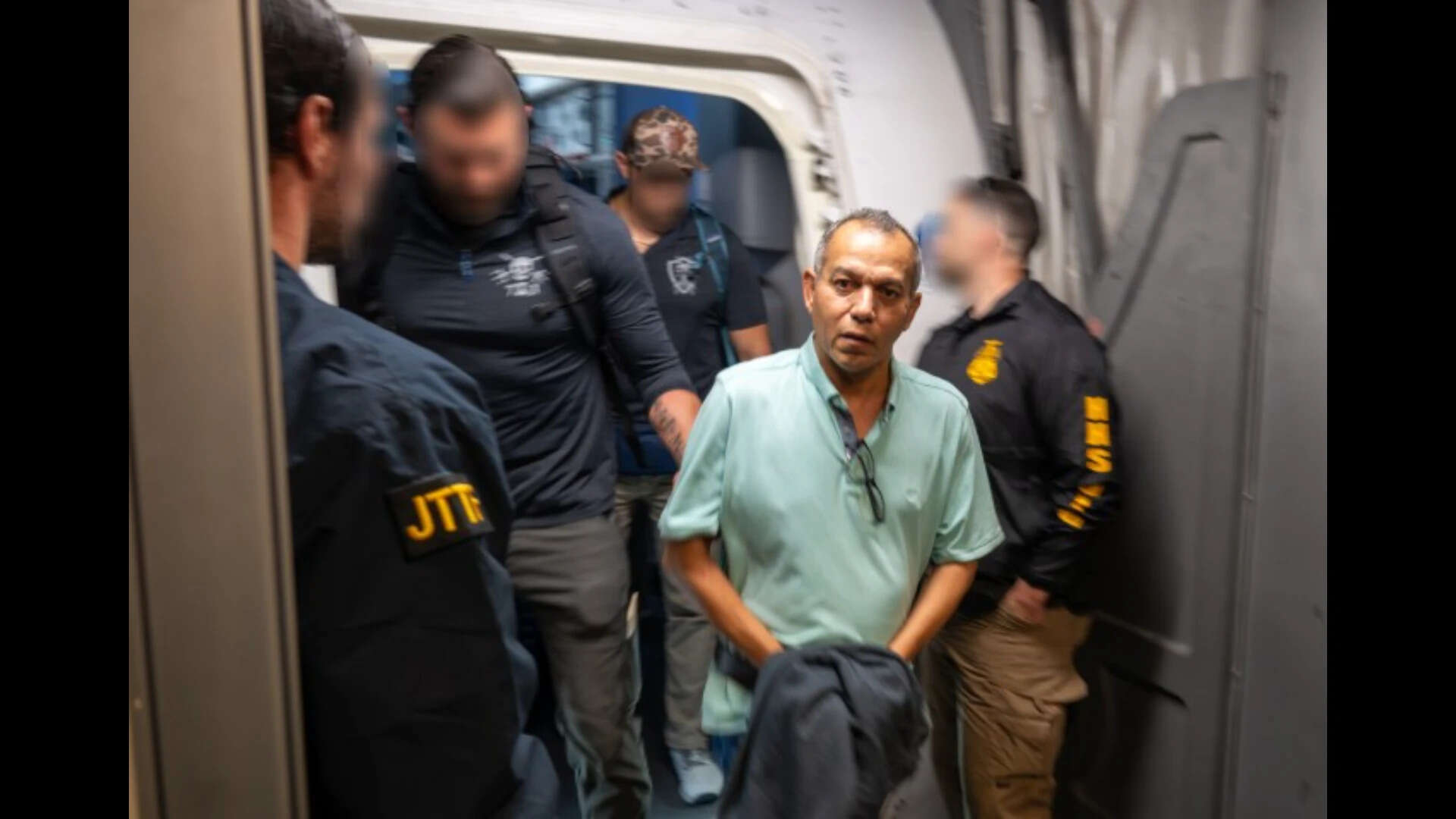
Federal agents have captured Khalid Ahmed Satary, a fugitive who vanished while facing charges for a $547 million Medicare fraud scheme. Apprehended in the Middle East carrying a fraudulent Mexican passport under the alias Chaheen Martinez, Satary was returned to the United States after four years on the run. His capture marks a major blow against high-level health care fraud syndicates, but it also exposes gaping vulnerabilities in federal oversight, pre-trial supervision, and diagnostic lab billing.
The mechanics of the operation relied on sheer volume and regulatory blind spots. Satary did not act alone. Between 2016 and 2019, he operated an interconnected web of diagnostic laboratories across the country. These facilities exploited Medicare reimbursement rates for cancer genetic testing. A single genetic test could net anywhere from $10,000 to $20,000 in federal reimbursements. To keep the pipeline full, Satary's organization partnered with aggressive telemarketing call centers, corrupt patient recruiters, and compliant telemedicine physicians who signed off on orders for patients they had never met.
It was an industrial-scale kickback machine. Millions of dollars flowed back to doctors and recruiters who funneled unsuspecting elderly patients into testing pipelines. Many of these seniors had no idea why they were receiving swab kits in the mail or why their Medicare statements showed astronomical claims for complex genomic sequencing. The government paid out hundreds of millions before auditors flagged the anomaly.
How a Simple Genetic Testing Loophole Drained $547 Million
The scam worked because Medicare’s automated billing system prioritizes quick payment over upfront verification. Payments went out. Questions came later.
When federal prosecutors finally indicted Satary in the Eastern District of Louisiana in September 2019, the government moved to seize 16 bank accounts and restrain his real estate holdings. He faced charges including health care fraud conspiracy, wire fraud, illegal kickbacks, and money laundering. Given the half-billion-dollar scale of the allegations, prosecutors argued against his release.
The court released him anyway. Satary secured pre-trial freedom on a $4.5 million bond, one of the highest ever set in Texas at the time. The judge ordered GPS tracking, restricted his travel, and explicitly barred him from working in the healthcare field.
A Bail System That Failed to Hold a Flight Risk
Rules on paper mean very little to an established fraud enterprise. Satary simply shifted operations underground. While monitored by federal probation officers, he secretly partnered with Houston-based laboratories to continue submitting fraudulent genetic testing claims.
He ran the new scheme right under the nose of law enforcement. By December 2022, realizing that the legal walls were closing in, Satary severed his GPS monitor and skipped a scheduled court appearance in New Orleans. By the time federal marshals knocked on his door, he had already fled the United States.
The escape triggered an international manhunt. The FBI placed Satary on its Most Wanted Fraudsters list, offering a $150,000 reward for information leading to his arrest. Investigators tracked potential sightings across Houston, Atlanta, Delray Beach, Dubai, and Jordan. Satary was building an offshore life on stolen public funds.
Running Through the Middle East with a Fake Passport
Fugitives of this caliber rarely stay hidden without significant financial backing. Money buys silence. On July 20, 2026, law enforcement agencies in the Middle East finally cornered Satary. He was holding a forged Mexican passport featuring his photo alongside a fictitious identity. He was arrested without further incident and handed over to U.S. custody.
Now back in an American courtroom, Satary faces maximum statutory penalties that could keep him behind bars for decades, including up to 20 years for wire fraud and money laundering charges alone. Yet his capture addresses only the symptom, not the underlying sickness within Medicare's billing framework.
The structural flaw remains. As long as diagnostic testing regulations allow automated reimbursements without pre-authorization for high-ticket genetic panels, criminal syndicates will treat federal healthcare funds as an open vault. Stopping them requires reforming the pay-first, ask-questions-later architecture that allowed $547 million to walk out the door in the first place.