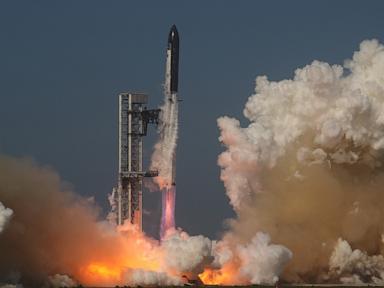
The media is obsessed with the word "grounded." They use it like a scarlet letter. When the FAA pauses operations or a prototype transforms into a fireball over the Gulf of Mexico, the headlines read like an obituary for American ambition. They see a setback. They see a failure. They see a regulatory cage.
They are dead wrong. In similar news, we also covered: The Day the Digital Office Went Quiet.
What the "lazy consensus" fails to grasp is that in the world of rapid iterative development, being grounded is not a pause in progress. It is the most high-fidelity data ingestion phase of the entire program. If your rocket isn't getting grounded by regulators or physics every few months, you aren't moving fast enough to change the world. You’re just building another expendable relic for a government contract.
The Myth of the Clean Flight
Mainstream reporting treats a rocket launch like a Broadway opening night: if a light flickers or a performer trips, the show is a disaster. This is a carryover from the SLS and Apollo eras where every component was triple-redundant and cost ten times its weight in gold. In those days, failure was not an option because failure meant losing a decade of budget and the political will of a nation. Ars Technica has provided coverage on this important subject in great detail.
SpaceX flipped the script. They don't build a rocket to work perfectly the first time. They build a rocket to find out exactly where it breaks.
When Starship "fails" to reach orbit or experiences a "Rapid Unscheduled Disassembly," the industry pundits wring their hands about safety protocols and timeline slippage. What they miss is the sheer volume of telemetry gained. While Boeing or Lockheed Martin spend five years running simulations to ensure a 99.9% success rate on paper, SpaceX gathers real-world data at the edge of the envelope.
The grounding isn't a halt; it's the deep-dive audit of the physical world’s feedback. You can’t simulate the acoustic environment of thirty-three Raptor engines firing simultaneously at sea level. You have to build the pad, light the candle, and see if the concrete turns to glass.
Your Safety Obsession is Killing Innovation
People ask: "Shouldn't we prioritize 100% safety before we fly?"
The premise of the question is flawed. It assumes that "safety" is a static state achieved through more paperwork. In reality, safety in aerospace is an asymptotic curve. You can spend $20 billion to get to 95% reliability, or $200 billion to get to 98%. The pursuit of the final 2% is where empires go to die and innovation goes to rot.
Starship is designed to be a "Mars colonial transporter." You don't get to Mars by being timid. You get there by breaking things, fixing them in a tent in South Texas, and flying again three weeks later. The FAA grounding is actually a necessary friction point that forces the engineering team to translate "trial and error" into "verifiable hardware fixes."
The regulators aren't the enemy, but the media's framing of their intervention as a "crisis" is a symptom of a risk-averse culture that has forgotten how to build. I've seen defense contractors spend three years on a "root cause analysis" for a faulty valve. SpaceX does it in a weekend because they have the hardware to spare.
The Hardware-Rich Reality
Most people look at a Starship explosion and see $100 million disappearing. That’s a fundamental misunderstanding of the economics of Starbase.
SpaceX isn't building a few precious ships. They are building a factory to mass-produce ships. When a Starship is lost, the cost isn't the total R&D of the program—it's just the marginal cost of the steel and the Raptor engines. Because they own the vertical integration, that cost is remarkably low.
Imagine a scenario where a car company is testing a new airbag. Do they run one simulation and call it a day? No. They crash a hundred cars into a wall. Starship is the first rocket program in history to treat the vehicle like a crash-test dummy rather than a museum piece.
The grounding period is where the "factory as a product" shines. While the FAA reviews the flight data, the production line in Boca Chica is already churning out the next three iterations. Ship 25, 26, 27—each one incorporates the "scars" from the previous flight's data. By the time the regulators say "go," the rocket sitting on the pad is already two generations ahead of the one that blew up.
The Raptor Engine Paradox
The Raptor is perhaps the most complex piece of machinery ever built. It’s a full-flow staged combustion engine—a design so difficult that the Soviets and Americans gave up on it decades ago.
$P_{chamber} = \dots$ (The math here is irrelevant to the public, but the heat and pressure inside that chamber are higher than anything we've ever managed to keep contained.)
The critics point to engine flameouts as a sign of Starship's failure. Again, they're looking at the wrong metric. The fact that SpaceX can fire dozens of these engines simultaneously—and lose several without losing the mission—is the "nuance" the headlines miss. It’s engine-out capability on a scale never before attempted.
The grounding allows SpaceX to address the "plumbing" issues that only manifest under the extreme vibrations of a full-stack launch. You don't find these leaks in a vacuum chamber. You find them when the earth is shaking at 120 decibels and the liquid oxygen is boiling in the lines.
Stop Asking "When?" and Start Asking "How Many?"
The public's "People Also Ask" obsession is usually: "When will Starship be ready for NASA's moon mission?"
This is the wrong question. It assumes a linear progression toward a single goal. The real question is: "How many Starships can SpaceX lose before they make the old launch industry obsolete?"
The answer is: as many as it takes.
The legacy players are terrified of Starship not because it might blow up, but because even a 50% successful Starship destroys the market for every other heavy-lift rocket on the planet. If Starship can carry 100 tons to orbit and only work half the time, it is still ten times more efficient than anything else in existence.
The grounding is the quiet before the storm. It’s the period where the "unconventional advice" for investors and enthusiasts is to ignore the "investigation" and look at the shipyard. If the shipyard is growing, the program is winning.
The Brutal Truth of the Investigation
The FAA investigation isn't a sign of SpaceX being "in trouble." It’s a sign that SpaceX has reached a scale where their "experiments" have global atmospheric consequences.
The investigation will conclude that the flight termination system worked, or it didn't. It will conclude the pad was damaged, or it wasn't. But none of that matters as much as the internal SpaceX "investigation" which is currently stripping down the telemetry of a million sensors.
While the competitor article focuses on the "delay," the real story is the acceleration. Every day the rocket is on the ground, the software is being rewritten and the manifolds are being reinforced.
The grounding isn't a failure of the system; it's the system working exactly as intended. We are watching the birth of a multi-planetary species, and labor is a messy, violent, and regulated process.
If you want a rocket that never gets grounded and never explodes, go look at a CAD drawing of a rocket that will never fly. If you want the future, get used to the smoke.
Stop mourning the fireball and start counting the cranes.