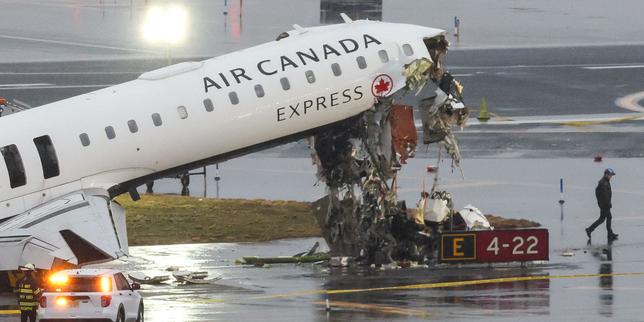
When a ground support vehicle slams into a stationary aircraft at LaGuardia Airport, the immediate reaction is a flurry of cell phone footage and a brief spike in local news ratings. We see the crumpled metal of a rescue truck and the scarred fuselage of a multi-million dollar jet. Passengers are deplaned, schedules are wrecked, and the airline issues a boilerplate apology regarding "operational disruptions." But the focus on the twisted metal misses the systemic rot. This wasn't a freak accident. It was the predictable result of a crumbling ground-game infrastructure that has failed to keep pace with the frantic push for record-breaking flight frequencies.
At the heart of the recent collision between a rescue vehicle and a commercial jet is a dangerous intersection of human fatigue, outdated communication protocols, and the physical constraints of an airport that was never designed for the volume of traffic it now handles. While the "Queen of Airports" has received a shiny facade in recent years, the tarmac remains a high-stakes obstacle course where the margin for error is measured in inches, not feet.
The Myth of the Controlled Tarmac
Air traffic control manages the skies with surgical precision. However, once an aircraft touches down and exits the active runway, it enters a "non-movement area" where the rules of engagement become significantly more blurred. In these zones, the responsibility for avoiding a collision shifts heavily toward visual separation. Pilots are looking for marshals and tugs; ground crews are navigating a chaotic web of fuel trucks, baggage carts, and emergency vehicles.
In the LaGuardia incident, the rescue vehicle was not a rogue actor. It was part of the very safety net meant to protect the airfield. The fact that a vehicle designed for emergency response—staffed by trained professionals—could strike a massive, brightly lit aircraft suggests a total breakdown in situational awareness that goes beyond a simple "oops" moment.
Why Radio Silence is Killing Efficiency
One of the most overlooked factors in ground collisions is the "siloing" of communication. Different teams operate on different frequencies. A rescue driver might be monitoring an internal emergency channel while the cockpit crew is talking to the ramp tower. If the ramp controller doesn't have a direct, instantaneous line to every vehicle on the asphalt, we are relying on a driver looking out a windshield in the rain, snow, or blinding terminal lights.
Standard operating procedures (SOPs) dictate that emergency vehicles have the right of way, but that right of way is predicated on the assumption that everyone knows where the emergency is. When a vehicle is simply repositioning or conducting a routine patrol, the hierarchy of movement becomes a guessing game.
The Physical Constraints of a Vertical City
LaGuardia is a geographic nightmare for logistics. It is a compact, high-density environment surrounded by water and urban sprawl. Unlike the sprawling expanses of Denver or Dallas-Fort Worth, LaGuardia has no room to breathe. When you pack more gates and larger planes into the same footprint, the "alleys" between terminals shrink.
Ground crews at LGA are working in what is essentially a series of narrow hallways. When a plane pushes back, it often blocks the only throughway for support vehicles. This creates a culture of "beating the clock." Drivers feel the pressure to scoot past a wingtip before the engines start, or to duck behind a tail before the tug begins its turn.
The geometry of the modern airport is increasingly incompatible with the size of modern aircraft.
- Wing Overhang: New fuel-efficient winglets make planes wider than their predecessors.
- Blind Spots: High-sitting truck cabs offer poor visibility of low-hanging aircraft stabilizers.
- Acoustic Masks: The roar of nearby turbines makes it impossible for ground workers to hear approaching electric vehicles.
The Labor Shortage Behind the Wheel
We cannot talk about ground safety without addressing the people in the driver's seat. The aviation industry is currently cannibalizing its own talent pool. Experienced ground handlers and safety officers are retiring or moving to less stressful logistics roles in the private sector. They are being replaced by a revolving door of entry-level workers who are often undertrained and overworked.
Investigative data into ramp incidents frequently points to "fatigue" as a primary contributor. At a 24-hour hub like LaGuardia, many ground employees are working mandatory overtime or "double-backing" shifts. A driver who is ten hours into a shift, working in a New York winter, is not going to have the sharpest reflexes.
The industry treats ground support as a low-skill commodity, but the reality is that operating a heavy vehicle around a $100 million jet requires the precision of a surgeon. When you pay warehouse wages for airfield responsibilities, you get warehouse-level safety outcomes.
Technological Solutions That Stay on the Shelf
The technology to prevent these collisions exists today. We have GPS-based "geo-fencing" and proximity sensors that are standard on most high-end consumer SUVs. Why aren't they standard on every piece of equipment at LaGuardia?
The answer is the cost of retrofitting. Airlines and airport authorities are hesitant to mandate expensive sensor arrays for thousands of pieces of ground equipment. Instead, they rely on "soft" safety measures—training videos, fluorescent vests, and hand signals.
ADS-B for the Ground
The FAA has pushed for Automatic Dependent Surveillance-Broadcast (ADS-B) for aircraft, which allows for precise tracking in the air. A similar mandate for ground vehicles would create a digital map where every truck and every plane is visible to everyone else. If a rescue vehicle is on a collision course with a Boeing 737, an alarm should sound in both cabins long before the impact.
Currently, only a fraction of airport vehicles are equipped with transponders that show up on a controller’s screen. The rest are "ghosts" in the system, visible only if someone is looking out the window at the right second.
The Insurance Shell Game
When these collisions happen, the public assumes there is a massive investigation and a fundamental change in policy. Often, there isn't. Instead, there is a behind-the-scenes negotiation between insurance companies. The cost of the repair is weighed against the cost of flight delays, and the incident is chalked up as the "cost of doing business."
This financial insulation prevents real progress. If the penalty for a wing-strike was a mandatory grounding of the entire ground-support fleet for a safety audit, the industry would find a way to fix the problem overnight. As long as it is cheaper to pay the insurance deductible than to fix the underlying communication and staffing issues, these videos of crumpled planes will continue to surface on social media.
The Real Cost of Inaction
Beyond the immediate damage, these incidents erode public trust and destabilize the thin margins of the airline industry. Every time a plane is taken out of service for a "non-flight" incident, it creates a ripple effect of cancellations across the country. It is a self-inflicted wound.
The collision at LaGuardia is a warning shot. We are operating a 21st-century flight schedule on a 20th-century tarmac with 19th-century visibility standards. We have spent billions on the "passenger experience"—the lounges, the art installations, the high-end retail—while neglecting the brutal, greasy reality of the airfield.
Safety isn't just about what happens at 30,000 feet. It’s about the five-ton truck moving toward a parked plane at 15 miles per hour. If the industry continues to ignore the chaos on the ground, the next collision won't just be a viral video; it will be a tragedy that no amount of corporate PR can spin away.
The next time you look out the window while taxiing, don't look at the skyline. Look at the dozens of vehicles darting between the planes. Notice how close they get. Notice the speed. Then ask yourself why the most technologically advanced industry in the world is still relying on a driver’s luck to keep you safe on the ground.
Demand that the Port Authority and the FAA mandate proximity-sensing technology for all ground vehicles.