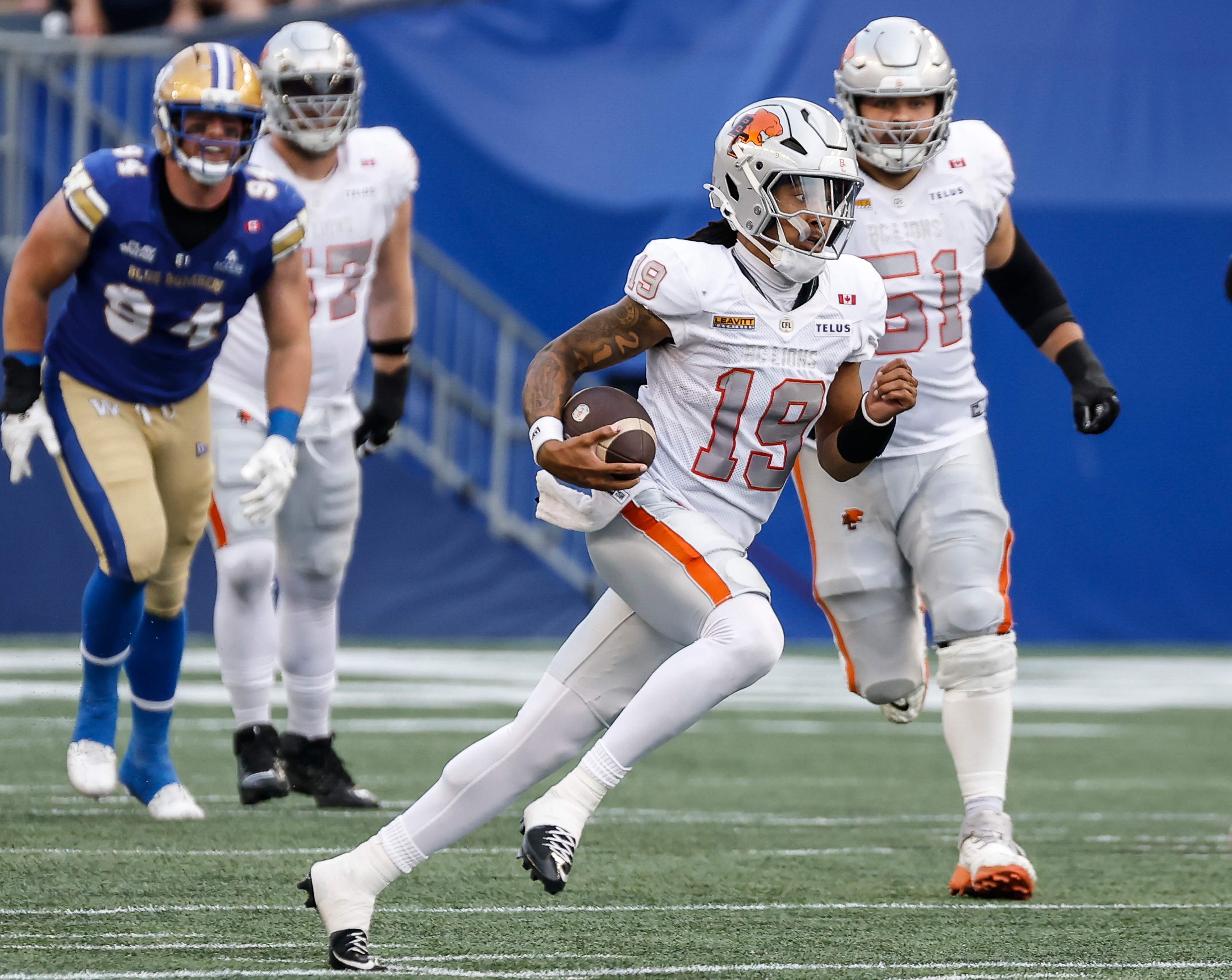
The Winnipeg Blue Bombers suffered a stunning upset loss at home when the BC Lions utilized a punishing ground attack that completely neutralized the perennial championship contenders. Football is ultimately a game dictated by the line of scrimmage, and on this particular night, the trenches belonged entirely to the visitors. When a team known for defensive discipline gets worn down physically on its own turf, the fallout extends far beyond a single tally in the loss column. It triggers urgent questions about personnel usage, schematic rigidity, and how the rest of the Canadian Football League will attack Winnipeg moving forward.
For years, the blueprint for beating Winnipeg relied on trying to match their explosive passing offense or catching their secondary out of position. Teams would load up on defensive backs, try to disguise coverages, and hope to weather the storm of Zach Collaros throwing into tight windows. This upset flipped that script completely. BC did not win by out-dueling Winnipeg through the air. They won by leaning on a heavy, physical running game that drained the clock, frustrated the front seven, and forced the Blue Bombers coaching staff into reactive adjustments that never quite caught up to the rhythm of the match.
Anatomy of a Ground Dominance
Controlling the line of scrimmage requires more than just big bodies. It demands coordination, timing, and a relentless commitment to an offensive identity. The Lions established their physical dominance early, utilizing gap-scheme runs and pulling guards to create hesitation in the Winnipeg linebacker corps.
When an offense commits to running the ball effectively, defensive coordinators face an immediate mathematical crisis. Do you keep your base defense on the field and risk getting gashed by extra blockers, or do you bring a safety down into the box, leaving your cornerbacks exposed in single coverage against elite receivers? BC forced Winnipeg into a perpetual state of defensive compromise. Every time the Blue Bombers brought extra support toward the line of scrimmage, the Lions countered with play-action passes or bounced runs outside for substantial gains.
The Cost of Fatigue
Football games in the trenches are won by attrition. By the fourth quarter, the visual evidence of fatigue was impossible to ignore. Defensive linemen who usually dictate terms were getting washed out of their gaps, and linebackers were half a step late diagnosing the point of attack.
This fatigue is cumulative. Every missed tackle at the line of scrimmage adds up. Every sustained drive by the opponent keeps your own offense standing on the sideline, throwing off their rhythm and robbing them of the tempo they prefer to play with. Winnipeg found themselves trapped in a script they rarely experience: playing catch-up against an opponent bleeding the clock dry with methodical running plays.
Schematic Blind Spots
Every elite coaching staff has tendencies. Over a long season, those tendencies become data points for opposing analysts. The Lions clearly identified a vulnerability in how Winnipeg sets their edges and handles interior pressure against heavy personnel packages.
Coaching in professional football is a constant game of chess, but sometimes a team gets caught believing their standard operating procedure is bulletproof. Winnipeg has built its multi-year success on defensive speed and tactical flexibility. Against a power-running scheme that executes with precision, speed without leverage becomes a liability. If defenders fly upfield too quickly to make a splash play, they run themselves right out of their gaps, leaving massive running lanes for patient ball carriers.
Adjustments That Came Too Late
In-game adjustments are the true test of a coaching staff. When a strategy is failing, the timeline to fix it shrinks with every possession. The Blue Bombers waited too long to alter their defensive structure, attempting to fix interior leaking with minor tweaks rather than a fundamental shift in personnel groupings.
By the time Winnipeg brought heavier bodies onto the field to match BC's heavier formations, the psychological damage was already done. The Lions had tasted blood, the offensive line was playing with supreme confidence, and the home crowd grew uncharacteristically quiet. In professional sports, momentum is not an abstract concept; it is the physical manifestation of belief. Once an opponent believes they can run the ball down your throat at will, stopping them requires an extraordinary shift in physical intensity.
Fallout Across the League
An upset of this magnitude sends shockwaves through the entire league. Every offensive coordinator in the division is currently pulling the film from this matchup, looking for the exact tells, alignment vulnerabilities, and substitution patterns that allowed BC to control the tempo.
The myth of defensive invincibility is a fragile thing. Once an opponent proves that a physical run game can break the rhythm of the Blue Bombers, the blueprint is out in the open. Regular season losses can often serve as valuable catalysts for championship teams, provided the coaching staff is willing to look in the mirror and address the root causes rather than dismissing the result as an off night.
The Road Ahead for Winnipeg
Fixing a porous run defense mid-season is rarely about wholesale personnel changes. Trades are difficult, and practice time is limited. Instead, the solution usually lies in assignment discipline, eye control, and a renewed commitment to physical toughness from the opening whistle.
If Winnipeg cannot shore up their front seven and find a reliable answer for physical offensive attacks, other physical teams will attempt to replicate this exact formula. The target on their back has only grown heavier, and the margin for error in a competitive league has vanished completely.