Cautious optimism in Copenhagen over a newly floated Greenland deal is less a diplomatic breakthrough and more a high-stakes survival reflex. Whenever Washington signals a fresh arrangement for the world’s largest island, Danish officials reach for measured language because a blunt refusal invites immediate economic and security retaliation, while enthusiastic acceptance risks hollowing out centuries of constitutional authority. Strip away the polite press briefings and what remains is a tug-of-war over ice, minerals, radar corridors, and political legitimacy that neither Copenhagen nor Nuuk can afford to misread.
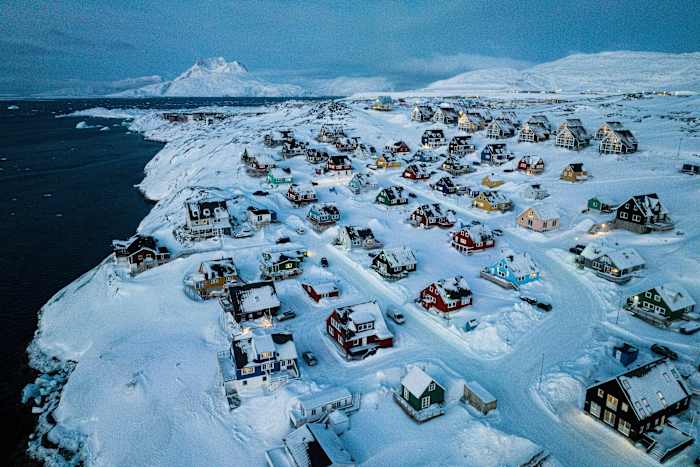
Competitor coverage tends to treat a Greenland deal announcement as a straightforward diplomatic headline, stopping at whether Danish ministers sound hopeful or guarded. That framing misses the structural reality. Greenland is not real estate waiting for a closing date. It is an autonomous territory inside the Kingdom of Denmark with its own legislature, a fiercely guarded path toward eventual independence, and a population of roughly fifty-seven thousand people living on the sharp edge of geopolitical competition.
Why Copenhagen Flinches Before It Cheers
Diplomats in Copenhagen have spent decades rehearsing the same choreography. When a U.S. administration floats an expanded Greenland deal, Danish ministers rarely slam the door. Instead, they talk about dialogue, shared Arctic security, and mutual respect.
That restraint is not naivety. It is institutional muscle memory. Denmark relies heavily on American security guarantees in the North Atlantic and knows that public friction with Washington carries downstream costs in trade, intelligence sharing, and alliance politics. Saying "no" outright creates an instant diplomatic crisis; saying "yes" without fine print triggers domestic outrage in both Denmark and Greenland.
Look at the mechanics of previous U.S.-Danish engagements in the north. Under the 1951 defense agreement governing Pituffik Space Base (formerly Thule Air Base), the United States already enjoys broad operational latitude for missile warning, space surveillance, and defense logistics. Washington does not need to buy or annex Greenland to project power from its ice sheet. When a new Greenland deal is teased in political speeches, the underlying push is usually about expanding access, pre-empting Chinese or Russian footholds, or locking in resource rights before rival powers establish beachheads.
The Architecture of Arctic Leverage
To understand why a Greenland deal sparks immediate suspicion in Nuuk, follow the money and the geology. Melting sea ice has turned Arctic shipping lanes and sub-sea cable routes from theoretical shortcuts into strategic arteries. At the same time, Greenland holds substantial deposits of rare earth elements, graphite, uranium, and other industrial inputs that defense planners treat as supply-chain insurance.
Yet turning geological promise into commercial reality is notoriously slow. Permafrost, darkness for months at a time, scarce deep-water ports, and strict environmental scrutiny have stalled or bankrupted multiple mining ventures. A U.S.-backed Greenland deal promising infrastructure financing, dual-use ports, or processing partnerships sounds transformative on paper. In practice, Washington rarely funds Arctic infrastructure out of pure charity. Every dollar of concessional capital comes attached to procurement rules, security vetting, and restrictions on who can build or operate nearby assets.
Consider a hypothetical example to see how this plays out on the ground. Suppose a U.S. consortium offers to co-finance a deep-water port in southern Greenland to support both commercial shipping and naval logistics, bundled into a broader Greenland deal. Nuuk welcomes the jobs and lower freight costs. Copenhagen worries that a dual-use facility turns a local development project into a permanent military flashpoint. Meanwhile, local communities ask who bears the environmental risk if a fuel spill hits fjords that sustain fishing livelihoods. None of those tensions show up in a headline about cautious optimism.
Nuuk Holds the Real Veto
Copenhagen can negotiate frameworks, memorandums, and diplomatic communiqués, but political reality has shifted north. Under the 2009 Self-Government Act, Greenland holds recognized rights over its natural resources and a legal pathway to sovereignty through a referendum.
Danish politicians know they cannot sign away Greenlandic interests behind closed doors without blowing up the entire Kingdom. Even subtle hints that Denmark is trading Greenlandic influence for goodwill in Washington provoke sharp pushback from parties in Nuuk. For Greenland’s political class, every external proposal is filtered through one question: does this move us closer to self-reliance, or does it trade one dependency for another?
Dependency is the quiet trap sitting inside almost every Greenland deal. Right now, Greenland receives a substantial annual block grant from Copenhagen, alongside public services and administrative support. If Washington steps in with large-scale security or economic commitments, Nuuk gains an alternative patron. That sounds like leverage. It can just as easily become a new ceiling on autonomy if U.S. strategic priorities harden into permanent conditionality.
What Cautious Optimism Actually Signals
When Danish leaders describe a Greenland deal as encouraging or worth exploring, they are buying time. Time to see whether the announcement is an actual negotiating draft or domestic political theater in Washington. Time to consult with Greenlandic officials before any text is circulated. Time to separate military requests from commercial pitches.
Veteran observers of North Atlantic politics recognize this pattern. Announcements come fast; legal definitions arrive slowly. A headline about a Greenland deal can refer to anything from a joint scientific and mineral survey to a defense infrastructure package, a trade facilitation accord, or a vague political statement meant to signal resolve in the High North.
Until specific terms are published—who funds what, what sovereign controls remain intact, and how Greenland’s parliament participates—cautious optimism is less a verdict than a holding pattern. In Arctic diplomacy, the side that rushes to celebrate usually discovers later what it quietly gave away.