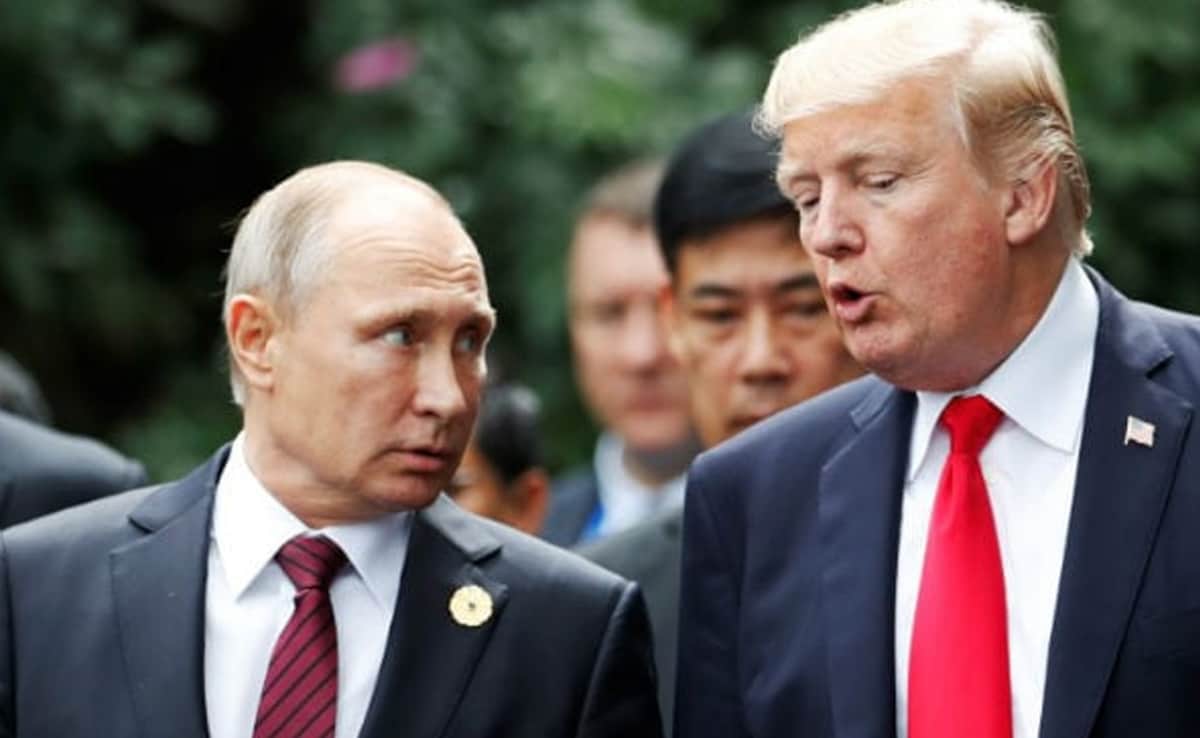
Donald Trump and Vladimir Putin spent ninety minutes on the phone Wednesday carving up the map of the world. While the official readout from the Kremlin spoke of a "frank and businesslike" exchange, the reality is far more transactional and dangerous than a simple diplomatic check-in. The two men discussed a dual-track exit strategy for the wars in Ukraine and Iran, signaling a massive shift in how the United States intends to handle its adversaries. This was not a negotiation about values or democracy. It was a cold-blooded assessment of costs, leverage, and the abandonment of traditional alliances.
The primary takeaway is clear. Trump is looking for a way to exit the Ukrainian theater by forcing a ceasefire that favors Russian territorial gains, while simultaneously trying to prevent Russia from becoming the primary broker of Iran's nuclear future.
The Victory Day Gambit
Putin’s proposal for a ceasefire in Ukraine to coincide with the May 9 Victory Day celebrations is a calculated piece of theater. On the surface, it looks like a humanitarian gesture. In reality, it is a lifeline for a Russian military that has seen its offensive momentum grind down into a war of attrition. By framing the truce around a shared historical victory over Nazi Germany, Putin is appealing directly to Trump’s preference for grand, symbolic gestures over technical policy details.
For the Ukrainian government in Kyiv, this proposal is a trap. Volodymyr Zelenskyy knows that a "temporary" pause on Russian terms usually becomes a permanent frozen conflict. With U.S. support already wavering and Trump publicly stating that Ukraine bears responsibility for the invasion's start, the pressure on Kyiv to accept a diminished state is reaching a breaking point. The administration’s suggestion that the war could end on a "similar timetable" to the conflict in Iran reveals a desire to clear the geopolitical slate regardless of the long-term stability of the region.
The Iranian Nuclear Bazaar
The most revealing part of the call involved the "buried uranium" in Iran. Putin offered to take Tehran's enriched material off the table and move it to Russian soil. This would, in theory, remove the immediate threat of an Iranian nuclear breakout. However, Trump’s rejection of this offer was not based on a desire for a better deal for the West. He explicitly told Putin he would rather have Russia "involved with ending the war in Ukraine."
This is a high-stakes trade. Trump is effectively telling Putin that Russia’s influence in the Middle East is a secondary concern compared to the optics of ending the European war. By rebuffing Russia’s role in the Iran nuclear issue, Trump is betting that he can handle Tehran through "hard-nosed savvy" and the threat of regime change, rather than through Moscow’s mediation. It is a gamble that assumes the U.S.-Israeli military pressure on Iran is sufficient to force a surrender without needing a Russian safety valve.
Spheres of Influence and the New Monroe Doctrine
What we are witnessing is the "Donroe Doctrine" in full effect. This policy views the world not as a collection of sovereign nations with rights, but as a series of spheres of influence managed by a few great powers. Trump’s willingness to discuss concessions to Russia indicates a return to 19th-century realism. In this worldview, Ukraine is a Russian problem, and the Middle East is an American-Israeli problem.
The traditional tools of American soft power—diplomacy, foreign aid, and democratic promotion—have been discarded. In their place is a transactional framework where loyalty to the administration is the only currency that matters. The "America First" strategy has moved beyond isolationism into a form of expansionist realism that seeks to divide the globe into manageable blocks.
The Infrastructure of a Frozen Conflict
While the leaders talk, the reality on the ground remains brutal. Russia has scaled back its Victory Day parade in Moscow, fearing Ukrainian drone strikes. This admission of vulnerability shows why Putin is so eager for a ceasefire. He needs the pause to regroup. Ukraine, meanwhile, sees its energy infrastructure systematically dismantled while its ships and planes are, according to Trump's recent rhetoric, "lost."
The danger of this 90-minute call is the lack of a long-term plan. Ending a war by simply stopping the shooting does not address the underlying causes of the conflict. If the U.S. successfully pushes through a ceasefire in Ukraine and a regime-change operation in Iran simultaneously, it will leave a massive power vacuum. Russia will be left with the Donbas, and the Middle East will be left in chaos.
The Cost of the Deal
The 2026 foreign policy landscape is being rewritten by personal chemistry and a rejection of experts. By sidelining traditional diplomats and relying on personal envoys, the administration is making decisions that will echo for decades. The "very good conversation" between Trump and Putin is the sound of the post-1945 international order being dismantled piece by piece.
Nations that once looked to Washington for stability are now realizing that they are merely bargaining chips in a larger game. The strategy of dividing the world into spheres of influence may provide a temporary reprieve from active combat, but it builds a future on a foundation of resentment and volatility. The trade of Ukrainian land for a Russian exit from the Iranian nuclear file is a deal that might end the headlines, but it will not end the danger.
The shift toward a world where might makes right is no longer a warning. It is the current policy.
Trump and Putin's 90-minute call
This video provides an international perspective on the specific proposals made during the 90-minute call regarding the Iran nuclear program and the Ukraine ceasefire.