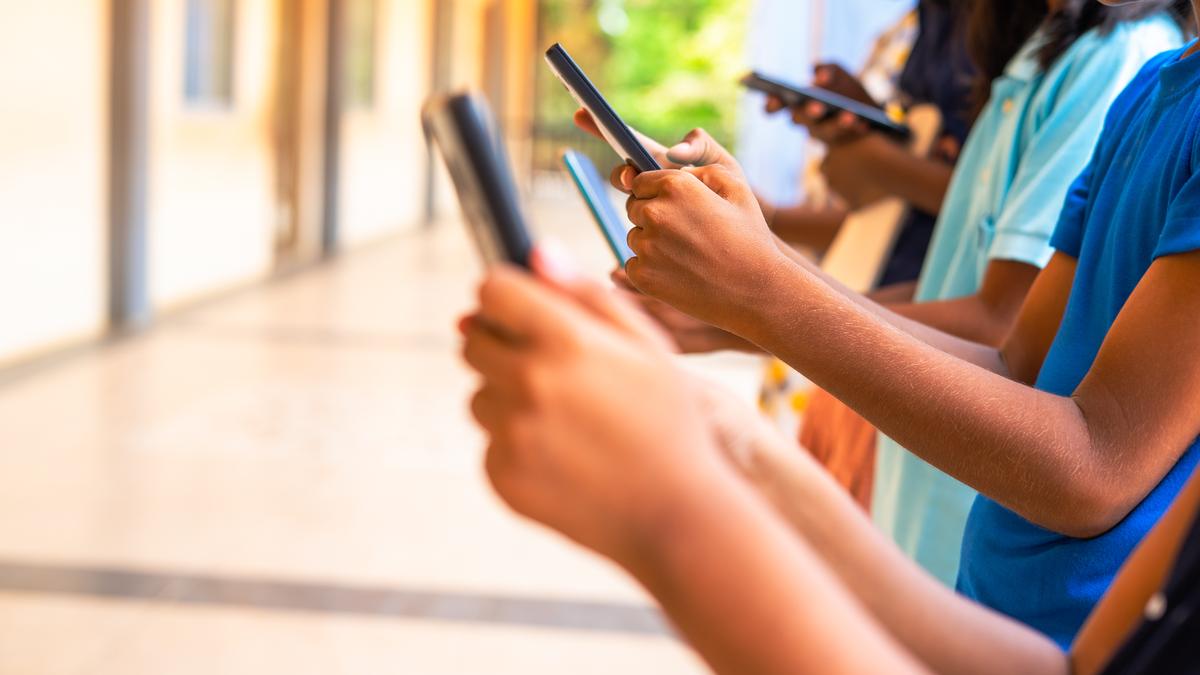
The classroom was once a sanctuary of focused thought, but it has spent the last decade as a digital battleground. Recent data from UNESCO confirms a staggering shift in global educational policy, with approximately one in four countries now enacting laws or policies that ban mobile phones in schools. This isn't a localized trend or a sudden bout of "luddism" among aging administrators. It is a desperate, evidence-backed attempt to reclaim the cognitive attention of an entire generation.
The core of the issue is not just a student checking a text under a desk. It is the fundamental erosion of the learning environment. Research indicates that even the mere presence of a smartphone—turned off and face down—reduces cognitive capacity. When a device is within reach, a portion of the brain is perpetually dedicated to monitoring it, waiting for the phantom buzz or the notification light. For a teenager, that mental tax is even higher. By removing the hardware, schools are attempting to remove the distraction at its source, acknowledging that willpower alone is no match for the dopamine-loop engineering of modern social media.
The UNESCO Signal and the Global Domino Effect
When UNESCO issued its 2023 Global Education Monitoring report, it didn't just suggest a ban; it warned that the digital revolution in education was being sold on a promise that hasn't been kept. The report highlighted a lack of "robust" evidence—to use their term—that technology actually improves learning outcomes when integrated without strict oversight. Instead, the data points toward a widening gap in equity and a decline in basic literacy and numeracy skills in some of the world's most tech-heavy school systems.
The movement is gaining momentum across diverse political and cultural landscapes. France was a pioneer, implementing a total ban for students under 15 back in 2018. Since then, the Netherlands, Italy, and parts of the United Kingdom have followed suit. In Asia, China has restricted phone use to prevent "gaming addiction" and protect eyesight. Even in the United States, where local control usually dictates policy, states like Florida have moved toward statewide restrictions.
The rationale is remarkably consistent across borders. Administrators are reporting a "calming" effect on the student body almost immediately after bans are enforced. Without the constant social pressure of the "online" world, students are forced to engage with their physical surroundings and their peers in real time.
The Cognitive Cost of the Ping
To understand why a ban is necessary, we have to look at how the brain handles task-switching. Every time a student glances at a notification, they incur a "switching cost." It takes an average of 23 minutes to return to a state of deep focus after a distraction. In a 50-minute class period, a single buzz can effectively end the learning process for that student.
Digital distraction isn't the only culprit. Cyberbullying has moved from the home to the hallway, happening in real-time during school hours. By banning the devices, schools are effectively cutting off the oxygen to these digital fires. Without the ability to record, upload, or harass during the school day, the physical school environment becomes a safer space for many vulnerable students.
The Myth of Digital Literacy
One of the loudest arguments against phone bans is the idea that we are failing to teach children "digital literacy." Proponents of this view argue that schools should teach kids how to use phones responsibly rather than taking them away.
However, this argument ignores the reality of how these devices are designed. You cannot teach a 13-year-old to outsmart a multibillion-dollar algorithm designed by the world's best data scientists to keep them scrolling. Expecting a child to use a smartphone as a "learning tool" in a classroom is like asking a child to sit in a candy store and only eat the broccoli. The environment dictates the behavior.
True digital literacy isn't about knowing how to swipe or use an app. It is about understanding when the technology is using you. A ban provides the necessary friction to help students realize they can function—and thrive—without a screen in their hand.
The Resistance from the Living Room
The biggest hurdle to these bans often isn't the students; it is the parents. In an era of heightened anxiety and frequent news of school emergencies, many parents feel a visceral need to be in constant contact with their children. They view the phone as a digital umbilical cord.
This creates a paradoxical situation where the very people who want their children to succeed are the ones fighting the policy that would help them focus. Schools are now having to negotiate "emergency contact" protocols to reassure parents that their child is reachable through the front office, just as it was for decades before the 2000s.
The Economic Divide
There is a hidden class element to the phone ban movement that many analysts miss. In Silicon Valley, the very executives who build these devices often send their children to "no-tech" private schools. They understand the value of a tactile, human-centric education.
Meanwhile, underfunded public schools are often pushed toward "one-to-one" device programs where every student is given a tablet or laptop. This is frequently marketed as a way to "close the digital divide." In reality, it often creates a "distraction divide." Wealthier students get small class sizes and human interaction, while poorer students are parked in front of screens.
The movement to ban phones is, in many ways, an attempt to bring the "low-tech" advantage of elite private education to the masses. It is a recognition that human attention is the most valuable resource in the classroom and it should not be sold to the highest bidder in the attention economy.
Implementation is the True Test
A ban on paper is useless if it isn't enforced. Different schools are experimenting with various levels of restriction:
- The Locker Model: Students must leave phones in their lockers at the start of the day. This is the most common but also the most prone to "forgetting."
- The Yondr Pouch: Students place their phones in a magnetic pouch that is locked and can only be opened by a station at the end of the day. This allows students to keep the device on their person while ensuring it cannot be used.
- The "Away for the Day" Policy: A simple rule where phones must be kept in backpacks. If seen, they are confiscated.
The Yondr pouch model has seen significant success in large urban schools where enforcement was previously impossible. By making the phone physically inaccessible, the "itch" to check it eventually fades. Teachers report that after the initial two weeks of withdrawal, students stop reaching for their pockets and start talking to each other.
The Long-Term Impact on Mental Health
Beyond the grades, there is the matter of psychological well-being. The rise of the smartphone coincides almost perfectly with a global spike in adolescent anxiety and depression. By creating an eight-hour "digital detox" every day, schools are providing a much-needed break from the social comparison engine of Instagram and TikTok.
When students are allowed to have phones, the social hierarchy of the school is constantly being reinforced through likes, views, and comments. This pressure never ends. A ban offers a reprieve. It allows a student to just be a student, rather than a "content creator" or a "target audience."
The Industry Backlash
Expect the tech industry to fight back. Ed-tech is a massive market, and any move that reduces the "stickiness" of devices in the lives of young people is a threat to future revenue. We are already seeing "educational" versions of apps and "safe" smartphones marketed directly to schools.
Industry analysts should be skeptical of these pivots. A "safe" phone is still a phone. It still represents a portal away from the physical world. The most effective "educational technology" ever invented remains a well-trained teacher and a room full of students who are actually paying attention.
The shift toward phone-free schools is a correction of a decade-long experiment that failed. We assumed that giving every child a supercomputer would democratize information. Instead, it fragmented their focus and outsourced their cognitive development to algorithms.
The ban isn't about being "anti-technology." It is about being "pro-human." It is a realization that for a child to learn how to think, they first need the space to think without interruption.
Reach out to your local school board and ask for their specific data on disciplinary incidents and test scores since the implementation of any device-related policies; the numbers usually speak louder than the rhetoric.