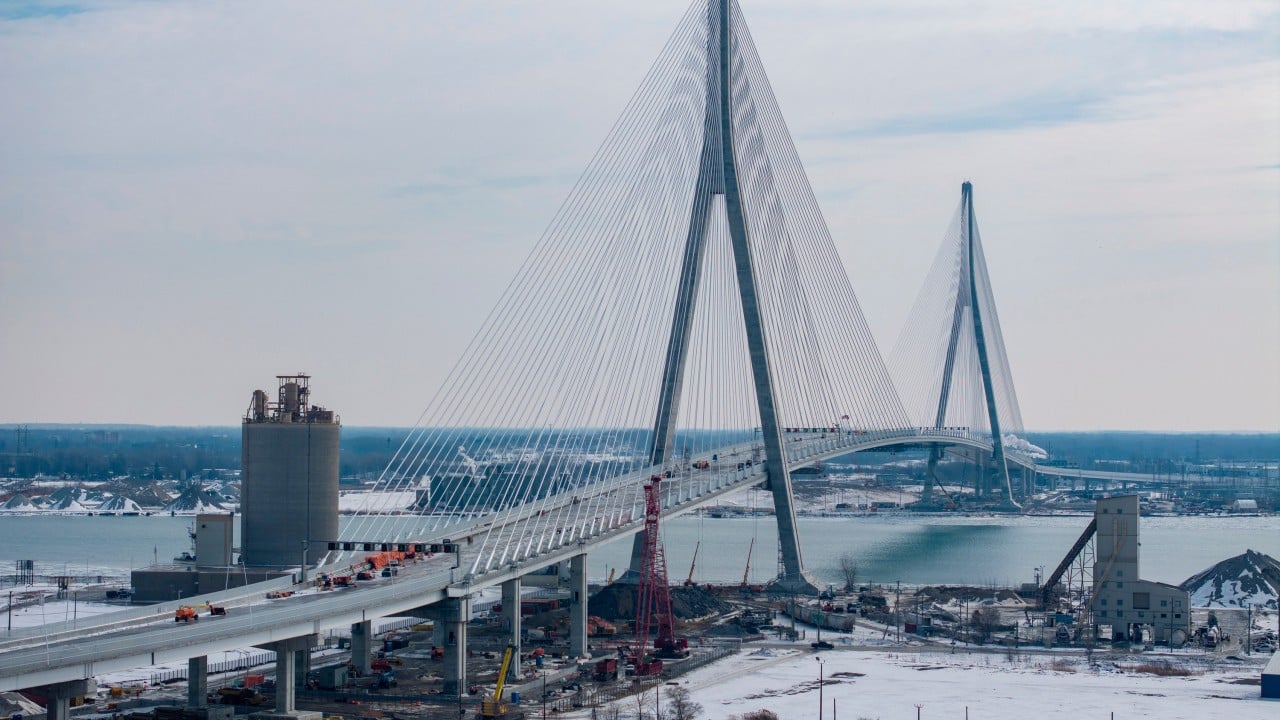
The lights are active, the concrete is poured, and the customs plazas are fully staffed. Yet, for months, the most advanced border crossing in North America sat completely empty, a CA$6.4 billion (US$4.7 billion) monument to geopolitical gridlock.
If you think the drama surrounding the Gordie Howe International Bridge is just a local infrastructure story, you're missing the bigger picture. This six-lane cable-stayed marvel spanning the Detroit River between Detroit, Michigan, and Windsor, Ontario, represents the pulse of North American supply chains. It handles the very survival of the automotive, manufacturing, and agricultural sectors that keep both nations running.
With a formal ribbon-cutting scheduled for June 12, 2026, the bridge is finally on the verge of welcoming traffic. But getting to this point required navigating a high-stakes web of presidential threats, billionaire campaign donors, and a fierce international trade war.
The Social Media Firestorm That Stalled a Megaproject
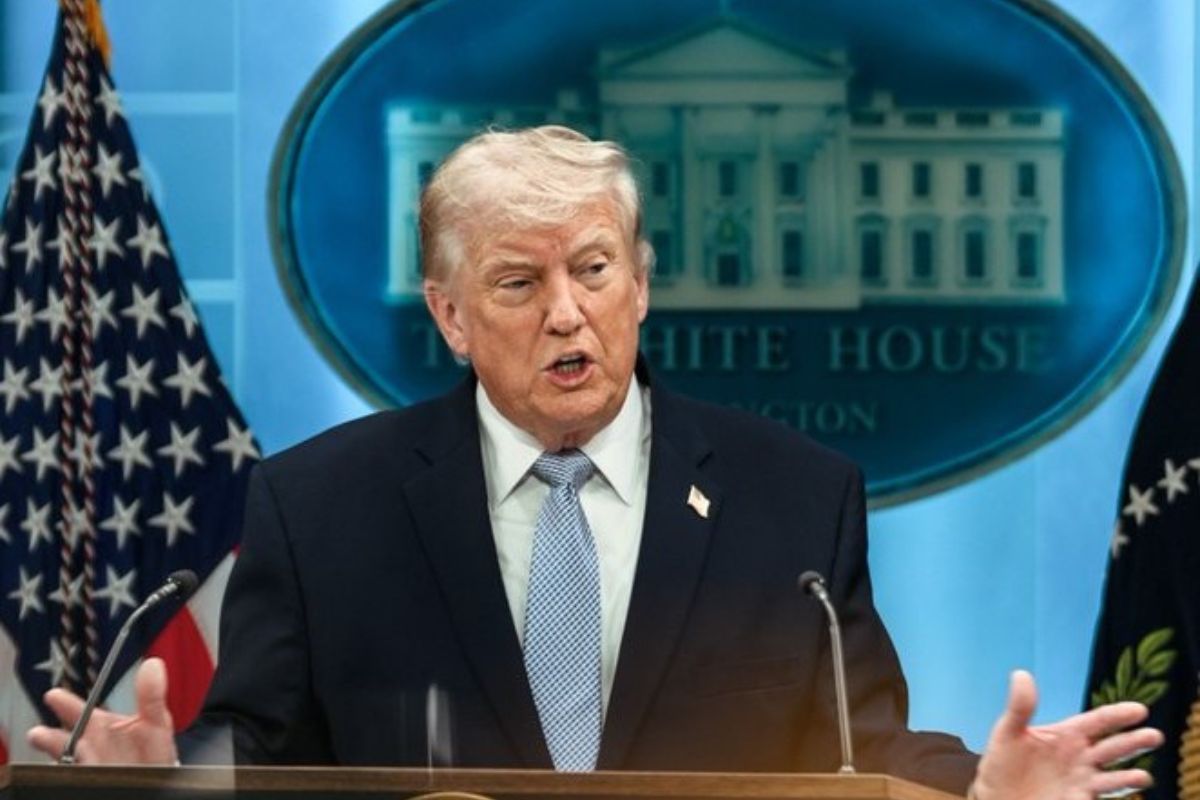
In February 2026, the Windsor-Detroit Bridge Authority was quietly running final system tests, preparing for a spring debut. Then, Donald Trump hopped onto Truth Social and threw a massive wrench into the gears.
The U.S. President declared he would block the opening of the bridge unless the United States was "fully compensated" for what he claimed the country had given to Canada. He complained about Canadian tariffs on U.S. dairy, criticized Prime Minister Mark Carney for pursuing trade discussions with China, and even suggested the U.S. should seize a 50% ownership stake in the asset.
"I will not allow this bridge to open until the United States is fully compensated for everything we have given them, and also, importantly, Canada treats the United States with the Fairness and Respect that we deserve," Trump wrote.
👉 See also: The Math Behind the Powerball Mirage
The post triggered immediate panic across the Midwest manufacturing belt. Michigan Democrats like Senator Elissa Slotkin and Representative Debbie Dingell sounded the alarm, pointing out that blocking the crossing would cripple the state’s economy, spike business costs, and threaten thousands of auto-industry jobs.
But Trump’s outburst didn't happen in a vacuum. It occurred exactly one day after he met with the Moroun family—the billionaire owners of the aging, rival Ambassador Bridge.
The Battle of the Bridges: Public Good vs. Private Monopoly
To understand why this infrastructure project faced such fierce resistance, you have to look at who controls the current flow of cash across the border.
For nearly a century, the Detroit-Windsor truck corridor has been dominated by the Ambassador Bridge, a privately owned toll bridge completed in 1929. The Moroun family has fiercely protected this lucrative monopoly for decades. The Canadian government’s decision to build the Gordie Howe International Bridge threatened that empire by introducing direct competition.
Internal Canadian federal briefing documents reveal that the Moroun family filed 22 separate legal challenges over two decades to kill or delay the new project. Canada successfully defeated 19 of those lawsuits, but three remain. A massive case arguing that Canada infringed on the Ambassador Bridge’s exclusive toll rights is still grinding through the courts, with a trial not expected until late 2027 or 2028.
When Trump threatened to revoke the bridge’s presidential permit, critics called it a political favor for a mega-donor who had just poured $1 million into a pro-Trump super PAC. Canadian officials, including Windsor Mayor Drew Dilkens, quickly pointed out that the President's public complaints were riddled with factual errors—such as the false claim that the bridge used no U.S. steel. In reality, American steel was heavily utilized on the Michigan side of the crossing.
Why Canada Footed the Entire Bill
One of the strangest talking points of the 2026 standoff was the idea that America was getting ripped off. The reality is exactly the opposite.
The Canadian federal government financed the entire CA$6.4 billion construction cost. Canada built the bridge, paid for the massive 167-acre U.S. customs plaza in Detroit, and funded the highway connections to I-75.
Under the innovative public-private partnership agreement, the bridge is publicly co-owned by Canada and the State of Michigan. It will be maintained by the Windsor-Detroit Bridge Authority. To recoup its massive investment, Canada keeps the toll revenues until the construction debt is fully satisfied.
Trump used this revenue structure to claim Canada was exploiting the U.S. market. However, Michigan didn't have to spend a single dime of taxpayer money to acquire a world-class piece of logistics infrastructure.
Engineering Greatness on the Detroit River
Politics aside, the engineering feats of this project are staggering. The Gordie Howe International Bridge is now the longest cable-stayed bridge in North America, boasting an 853-meter (2,799-foot) main span.
- No Piers in the Water: Designers opted for a clear span across the river, meaning zero structural pillars disrupt the busy shipping channels below.
- Towering Heights: The massive A-frame towers stand 220 meters (722 feet) tall, dominating the regional skyline.
- Massive Ports of Entry: The customs plazas are among the largest land border complexes on the continent, designed to process thousands of trucks daily with cutting-edge scanning technology.
- Multi-Modal Transit: Beyond its six vehicular lanes, the bridge includes a dedicated pedestrian and bicycle path, offering a unique recreational connection between the two border communities.
Construction began in June 2018 and faced severe disruptions during the COVID-19 pandemic. Aligning public health protocols and cross-border labor permits across two different national jurisdictions added CA$700 million to the final price tag and pushed the opening from late 2024 to mid-2026.
What Happens Next for Cross-Border Logistics
The White House recently confirmed that the bridge's timeline has been tied directly to ongoing, broader trade negotiations between the U.S. and Canada. While Trump utilized the bridge as a massive bargaining chip to extract trade concessions from Ottawa, the economic reality on the ground made a permanent shutdown impossible.
The Windsor-Detroit corridor handles over 25% of all surface trade between Canada and the United States. Truckers have faced brutal bottlenecks on the Ambassador Bridge for years, forced to navigate local stoplights on the Canadian side before reaching the highway. The Gordie Howe bridge fixes this by offering a direct, uninterrupted highway-to-highway connection between Ontario’s Highway 401 and Michigan’s I-75.
If your business relies on cross-border shipping, here is how you should prepare for the opening weeks:
- Reroute Commercial Fleets Early: Transition your logistics routes to the new crossing as soon as the lanes open. The advanced customs technology and direct highway access will significantly slash transit times compared to the Ambassador Bridge.
- Update Navigation and Telematics Systems: Ensure your fleet's GPS software is fully updated. Mapping applications have already begun indexing the new bridge roads, and early adaptation will prevent routing confusion near the Detroit plazas.
- Monitor Toll Structures: Fact in the new toll rates—expected to sit around US$5.75 for passenger vehicles and US$8.75 per axle for commercial trucks—into your operational budgets. The initial time savings should easily offset these costs.
The political theater will likely linger in the background as the court cases play out over the next two years. But the physical reality is settled. The steel is connected, the gates are opening, and North American trade is about to move a whole lot faster.